In 2026, the Jewish Museum Berlin (JMB) is celebrating its 25th anniversary with a wide-ranging program. Free concerts and Family Sundays, events, digital features, and exhibitions bring reflections on the past together with perspectives from the present and questions for the future. Mélanie Franke, Press officer, introduces us to this extensive programme…
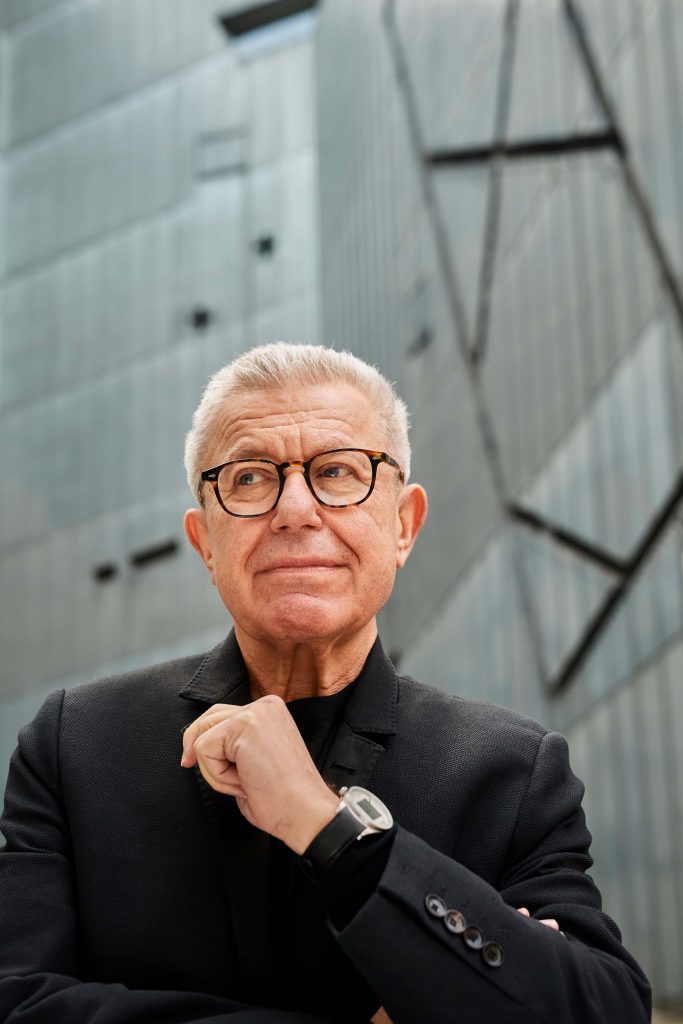
The anniversary year centers on two exhibitions. Between the Lines: Daniel Libeskind and the Jewish Museum Berlin (8 May – 1 November 2026) focuses on the museum’s architecture, its founding story, and early institutional identity, with free admission. Also marking the JMB’s 25th anniversary, the exhibition The Opposite of Now: Artistic Paths to a Different Present (4 September 2026 – 10 January 2027) invites visitors to step away from the present while encountering twelve artistic projects, and search for approaches that can change society – with featuring works by Yael Bartana, Andrea Büttner, Chto Delat International, Arnold Dreyblatt, William Forsythe, Dana Kavelina, Alexander Kluge, Daniel Laufer, Dor Zlekha Levy, Ari Benjamin Meyers, Alona Rodeh, and Eran Schaerf. Each exhibition is framed by a curated program of events.
Accompanying events for the exhibition Between the Lines included film screenings, a conversation with architect Daniel Libeskind, a book club discussion on Walter Benjamin’s influence on the museum’s design, and a panel on memory politics and the museum’s founding era.
The exhibition The Opposite of Now: Artistic Paths to a Different Present will open on 3 September with an evening of art, music by DJ Josiane and drinks and snacks in the Museum Garden. The accompanying program includes two JMB Book Club evenings on novels by Olga Tokarczuk and Naomi Alderman, conversations with Omri Boehm and Georges Didi-Huberman, a wide range of public guided tours and educational activities for families, children and teens.
From June to December, the JMB’s Family Sundays offer free workshops, tours and creative activities for families with children and teens, covering topics from Jewish holidays and food to architecture, art and history. The series concludes with a Hanukkah concert in the Glass Courtyard on 6 December. From September onwards, all Family Sundays include free admission to the exhibition The Opposite of Now.
On 23 August, the FRIENDS OF THE JMB, will celebrate their 25th anniversaries with a free Summer Party featuring live music, workshops, tours of the JMB and ANOHA, as well as food and drinks in the museum garden.
In June, ANOHA, the Children’s World of the JMB, celebrated its fifth anniversary with a family festival for children and families.
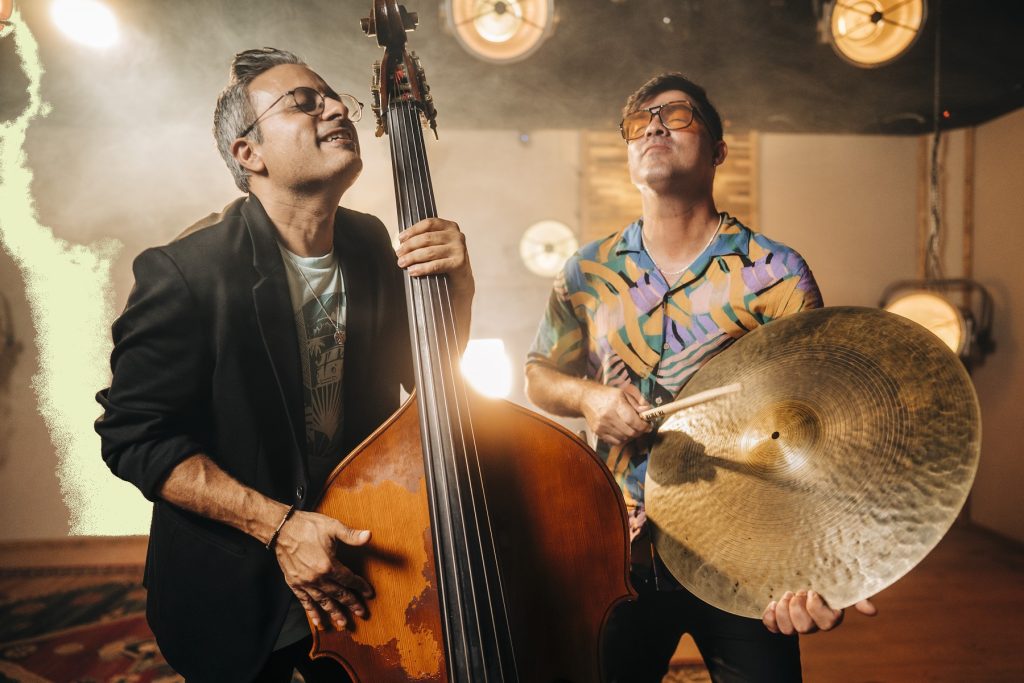
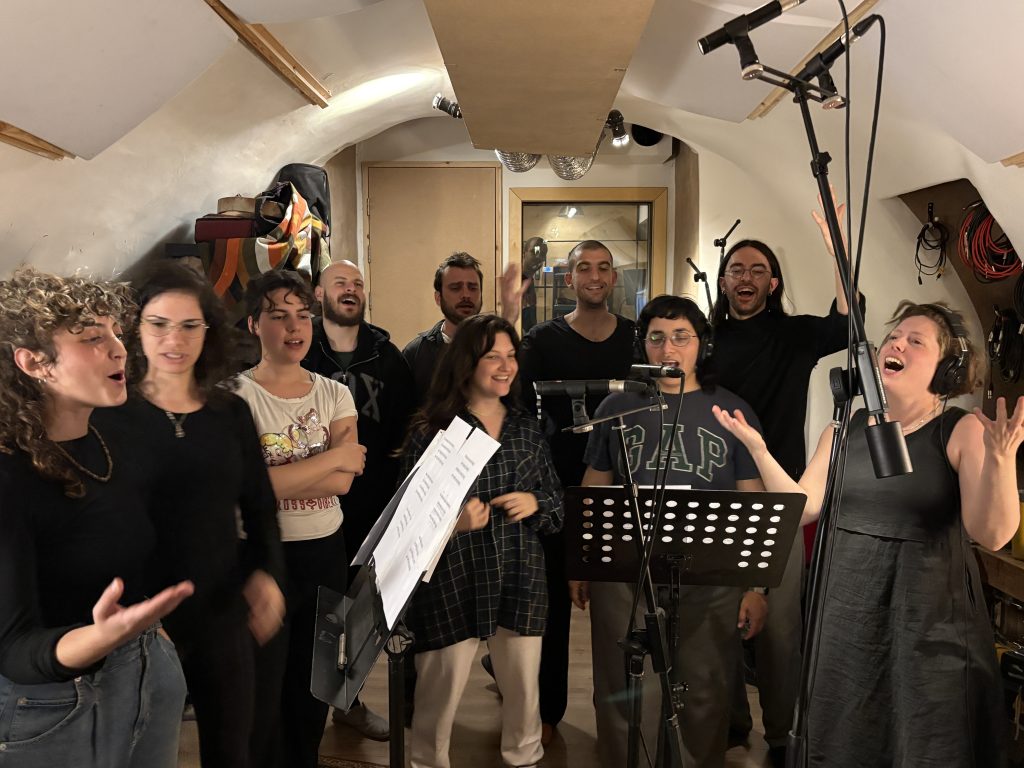
The Zukunftsmusik concert series has been another highlight of the anniversary year, featuring jazz, world music and contemporary pop. Upcoming events include a concert by Alli Neumann on 8 September and the Hanukkah concert on 6 December.
As part of its anniversary year, the JMB launched a redesigned version of its digital community platform Jewish Places, which maps Jewish life and culture across Germany. The project will be further expanded through local partnerships and outreach activities in seven German cities.
Julia Friedrich, Director of Collections and Exhibitions and co-curator of the exhibition alongside Shelley Harten, also answers our questions:
What prompted the willingness to organize the exhibition “The Opposite of Now“?
Rarely has our need for a different present, for overcoming the existing state of affairs, been as great as it is today. But at the same time, even imagining just the very first steps on the path towards that has rarely been so difficult. This contradiction is the starting point for the exhibition, which the museum has now mounted for its anniversary. The twelve specially developed projects may inspire us to counter a stifling status quo with alternative visions: those handed down through history, new ones, and ones of our own. The exhibition wants to encourage the public to explore its own social imagination, to perceive its flaws and limits, and perhaps also to summon up its buried potential. As diverse as the works are, they all engage with utopian thinking as a practice in the here and now, aimed at a better state of affairs.
Featuring works by Yael Bartana, Andrea Büttner, Chto Delat International, Arnold Dreyblatt, William Forsythe, Dana Kavelina, Alexander Kluge, Daniel Laufer, Dor Zlekha Levy, Ari Benjamin Meyers, Alona Rodeh, and Eran Schaerf.
Do you feel there’s a tikkun olam willingness in the sharing of Jewish heritage after those last three difficult years?
It’s clear to many Jews and non-Jews alike that the world badly needs a change for the better, “repairing”, and that is what tikkun olam means. But the fact that the term has this tangible aspect does not, unfortunately, mean that we can already imagine where we should begin. What does this say about the state of the world, and how do we find our way out of it – these are the kinds of questions the artworks in our exhibition The Opposite of Now explore. Some draw on the ideas of thinkers like Ernst Bloch or Adorno, who worked towards a better society during dark times. As far as Jewish traditions are concerned, the concept of return and new beginning also plays a major role. No matter how constricted a situation may be, people created it, and people can change it. As Hannah Arendt put it: “With the creation of man, the principle of beginning came into the world.”