Once again, this year, the Museo Sefardi is organising a number of cultural events. We spoke to Sonia Ferreras Ruiz, Head of Communications, who told us about the events linked to the European Days of Jewish Culture, amongst other things…
Jguideeurope: Which events will you organize this year for the European Jewish Culture Month?
Sonia Ferreras Ruiz: Once again, we are pleased to take part in the European Days of Jewish Culture, whose theme this year is “Love”. To mark the occasion, we have organised a temporary exhibition focusing on the museum’s collection of ketubbot (Jewish marriage contracts), exploring their historical evolution and the different forms they have taken across Jewish communities around the world.
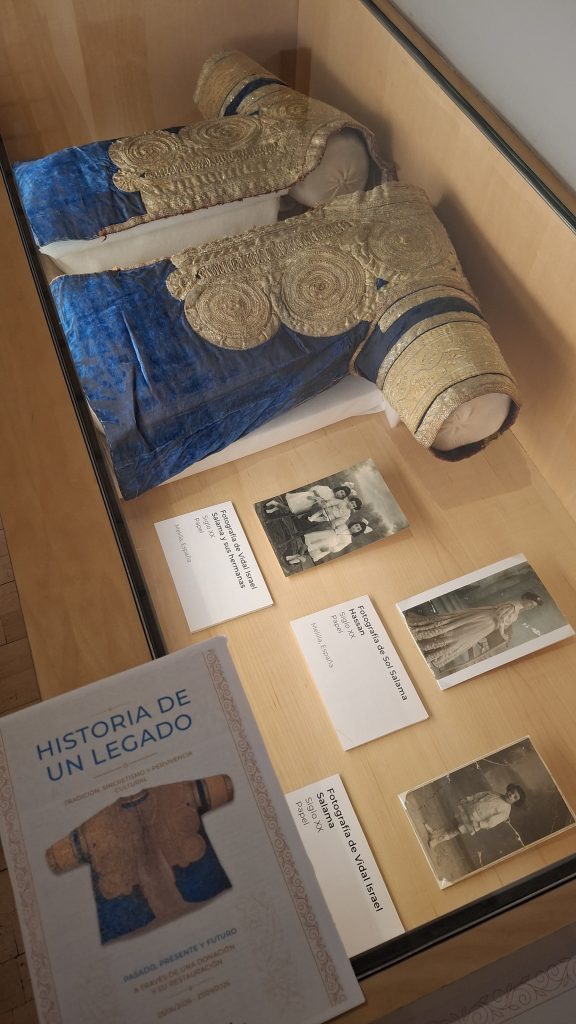
In addition, we will be displaying, on loan, a ketubbah from Melilla as part of our “Piezas en Tránsito” project. It will be presented alongside the temporary exhibition, providing further context for the Sephardic presence in the city of Melilla. In connection with this loan, on Monday 28 September we will host a lecture on the history of the Jewish community of Melilla.
Alongside these exhibitions, on Saturday 12 September we will present an educational concert featuring traditional Sephardic instruments as part of “Heritage Night”, organised by the city of Toledo. On Sunday 13 September, we will offer an adult workshop related to Rosh Hashanah, followed on Sunday 26 September by a family workshop celebrating Sukkot, during which a sukkah will be installed in the museum’s East Patio.
Is the city of Toledo participating actively in the promotion of the Museum?
The Museum is one of Toledo’s leading cultural and tourist attractions and, as such, receives considerable support and attention from the City Council and other local stakeholders involved in the city’s cultural and tourism development. We work closely with these partners to promote the Museum and increase the visibility of its exhibitions, programmes, and activities.
Do you feel there’s a will from the Spanish visitors to overcome geopolitical conflicts and learn more about Spanish Jewish heritage?
Overall, I would say yes. Based on my experience, many Spanish visitors show a genuine interest in learning more about Spain’s Jewish heritage and are able to appreciate its historical and cultural significance independently of the current geopolitical context. Naturally, motivations and perspectives vary from person to person, but overall, I find that visitors approach the subject with curiosity, a willingness to learn, and an openness to dialogue.
What seems to be to greatest challenge to overcome eventual cultural tensions?
As a museum, we believe that one of our greatest challenges is to create an environment that encourages learning and dialogue. Our role is not to resolve geopolitical debates, but to provide historical and cultural context that helps visitors better understand both the heritage we preserve and the human experiences behind it. We believe that knowledge and meaningful engagement with history can help reduce prejudice, foster mutual respect, and encourage greater understanding.