This year, the team at the Association Mémoire Juive de Béziers is organising numerous projects, in the wonderful spirit of Tikun Olam that they are fostering for us. An interview with its director, Chantal Viotte-Rabinovitch…
Jguideeurope: Do you feel there is a desire to contribute to Tikun Olam through the sharing of Jewish cultural heritage following these three difficult years?
Chantal Viotte-Rabinovitch: I was recently speaking with Steve Suissa, who was visiting Béziers for a performance of the play Golda. One of his remarks particularly struck me: “In the face of darkness, culture and education remain our finest weapons for repairing the world.” I cannot speak on behalf of everyone involved in Jewish heritage. However, this conviction resonates deeply with our own approach here in Béziers.
I was also struck to find this same idea when I recently re-read the motto of the Fondation du Judaïsme “To look at the world as it is and try to repair it” Its president sums up this mission in three verbs: preserving memory, embracing the present, building the future. I recognise in these three verbs the key themes that also inspire our work in Béziers.
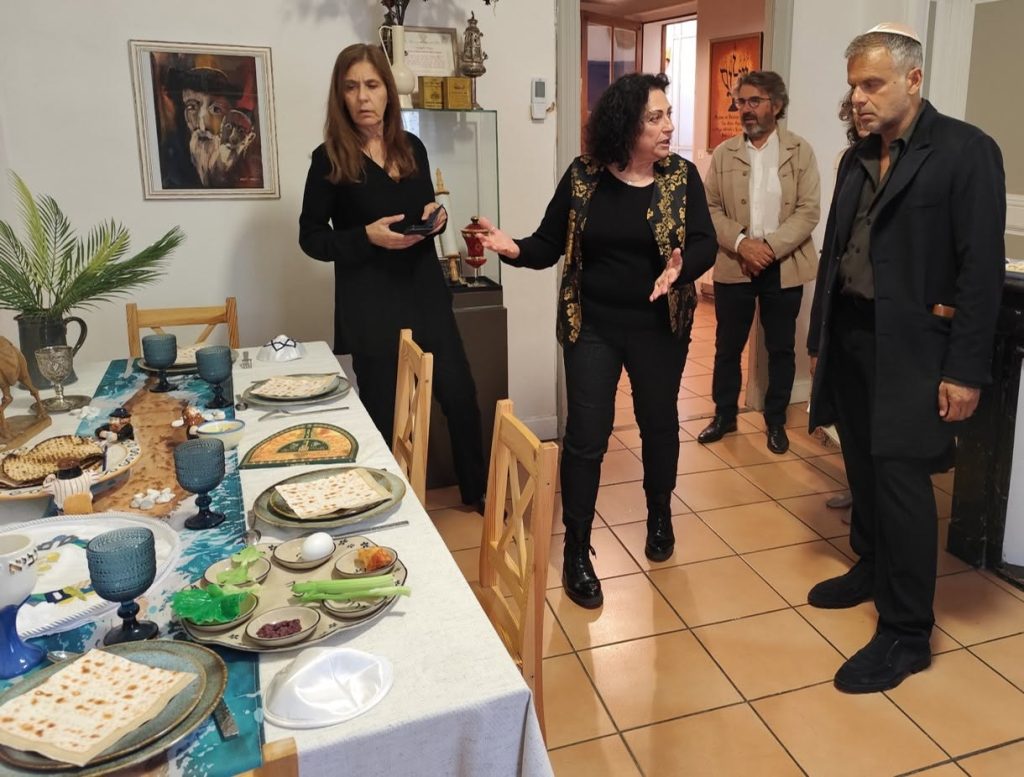
Tikun Olam is a vast and profound concept in the Jewish tradition. On our modest scale, we try to contribute to it by creating spaces where fear, ignorance, prejudice or tensions can give way to understanding. I deliberately use the word ‘spaces’ in the plural, as this refers not only to a physical place such as our museum, but also to spaces for encounter, dialogue and reflection.
From the very beginning, our approach has combined the promotion of Béziers’ Jewish history and heritage with a commitment to combating discrimination. The Heritage and Tolerance tours, our educational initiatives, our work on remembrance of the Holocaust, storytelling sessions, workshops and the meetings we organise with Christian communities and our Romani friends all contribute to this same aim: to forge connections where prejudice erects barriers.
Since 7 October, this mission has taken on a new dimension. The museum has become a place where anyone can come to ask questions, engage in dialogue and gain understanding in a calm atmosphere. We welcome Jewish visitors who are rediscovering their history, culture or identity – sometimes after years of estrangement – and are seeking a place to reconnect with that part of themselves. A visitor recently wrote to us saying that this was the first time they had been able to discuss these subjects in a calm and relaxed manner. This testimony touched us deeply.
One of the museum’s symbols is a work by the painter Thoufeek Zakria depicting a menorah illuminating the world, whose seven branches are formed by the Hebrew letters of the word Shalom. This image expresses what drives us. If tikun olam means making a modest contribution to greater knowledge, respect, brotherhood and hope, then yes, I believe that sharing Jewish cultural heritage plays a full part in this healing of the world.
What events are planned in Béziers for the EDJC?
As we do every year, we will be present for two days in the former Jewish quarters of Béziers to introduce visitors to the Juderia, the Portale Judaicorum, the Bourg Saint-Louis and all those places that preserve the memory of the Jewish presence in Béziers over the centuries.
The starting point is the Béziers Centre for Judaism, located at 19 Place Pierre Sémard, where visitors will be given a map of the tour. Visitors can then wander freely through the former Jewish quarters. At each key stop, our guides, dressed in medieval costume, will welcome them to recount a chapter of Béziers’ Jewish history and help them discover the historical remains.
This year, in line with the theme of the European Days of Jewish Culture – which focuses on love in Judaism – we have chosen to honour a fascinating figure from Béziers’ history: Yedaïa Bedersi, a Jewish poet, philosopher and physician, born in Béziers, where he lived until the expulsion of the Jews from the Kingdom of France in 1306.
A famous Spanish author, Juda ben Shabbetaï, had written a misogynistic work entitled Sone ha-Nashim (‘He Who Hates Women’). A few decades later, the young poet Yedaïa Bedersi, then barely eighteen years old, took up his pen to respond with Ohev Nashim (‘He Who Loves Women’).
Through this astonishing medieval literary dispute, we will recount the story of this great Jewish intellectual from Béziers and demonstrate that, in the Middle Ages, the Jews of Béziers were fully engaged in the major debates of their time. Whilst some authors saw women as the source of all problems, Bedersi countered this with a far more positive view, highlighting their essential role in the family, education and the passing on of knowledge. Anecdotes, readings from texts and light-hearted interactive activities will enable the audience to get to know Bedersi and understand his position in this debate.
This commemoration will thus allow us to highlight another dimension of Béziers’ Jewish heritage. Alongside the buildings, ruins and historic neighbourhoods that we showcase every year, there also exists an intangible heritage comprising texts, poetry, thought and memory. With Yedaïa Bedersi, it is this voice from medieval Béziers that we wish to make heard once more today.
This will also enable us to explore different forms of love within the Jewish tradition: conjugal love, familial love, attachment to one’s community, but also love for one’s hometown, whose name he chose to bear, just as his father had done before him. He expressed the full pain of exile when he was forced to leave Béziers following the expulsion of the Jews from the Kingdom of France in 1306. Through his work, we are therefore also inviting the public to rediscover a vital chapter in the history and collective memory of Béziers.
Are you organising any other events in Béziers at the start of the new school year?
As we do every year, the start of the new school year will be marked by our educational initiatives focusing on the memory of the Holocaust, aimed at schoolchildren.
We are currently preparing a major project based on the book What I Saw in Auschwitz – Alter’s Notebooks, by Roger Fajnzylberg. Roger is the son of Alter Fajnzylberg, a deportee and survivor of the first convoy to leave Compiègne and Drancy for Auschwitz on 27 March 1942. His book is based on the exceptional account written by his father upon his return from deportation, between 1945 and 1946.
Available in the form of a book, a comic strip and teaching resources, this work provides a particularly rich resource for secondary school pupils and teachers. We recently presented this initiative to the operational project manager at the Cité éducative, who immediately recognised its full educational value, particularly thanks to the inclusion of the comic book and the teaching resources designed for teachers. An initial preparatory meeting is already scheduled for early July at the museum with the relevant headteachers, ahead of a major event to be held at the start of the new school year featuring Roger Fajnzylberg, during which he will present his book, share the extraordinary story of his father and engage with secondary school pupils on the subject of Holocaust remembrance.
Finally, Hanukkah has become a major event in Béziers. Every year, the Jewish community, in partnership with Béziers City Council, invites the public to witness the lighting of the large hanukiah on the Town Hall square, before sharing traditional Hanukkah doughnuts.
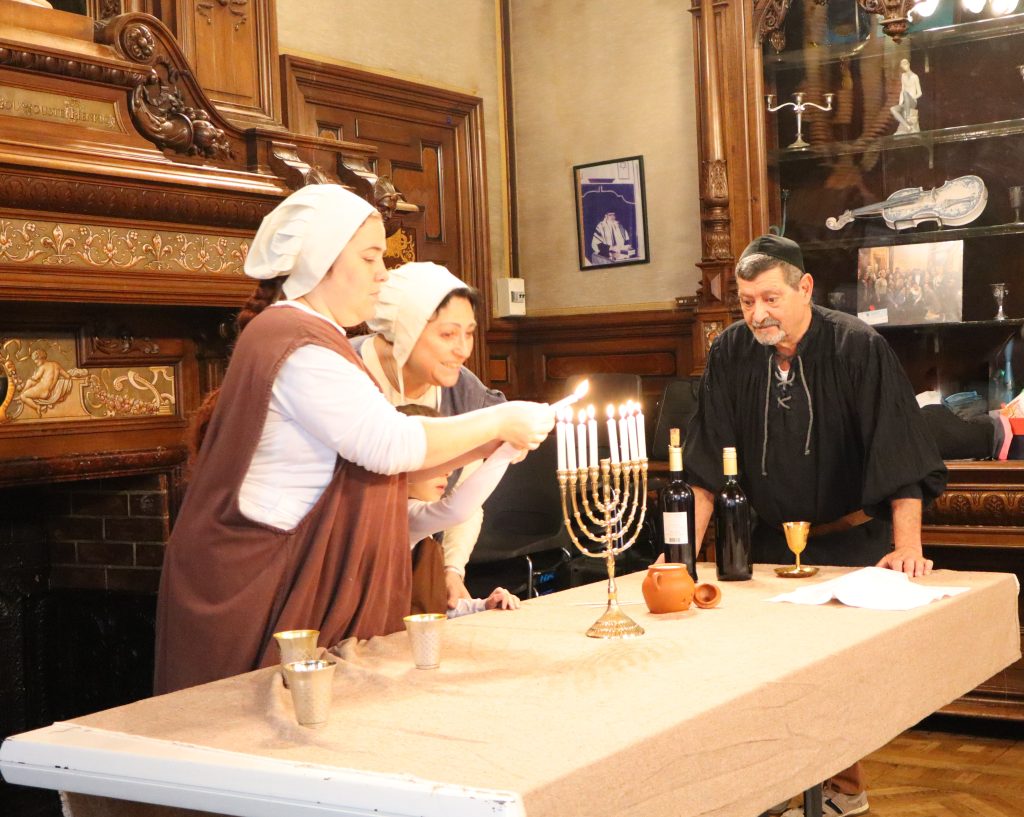
As part of these festivities, the Jewish Museum of Béziers is offering, as it does every year, an immersive tour as part of its Discovering Judaism series. Entitled ‘A Hanukkah in 1306, or the Hidden Light’, it invites visitors to step inside a Jewish home in Béziers in the aftermath of the expulsion of the Jews from France. By the light of the hanukkiah candles, they share in the intimacy of a family that continues to pass on its traditions despite adversity. The lighting of the candles, blessings, stories, songs and Hanukkah specialities bring to life the warm atmosphere of a festival passed down from generation to generation.
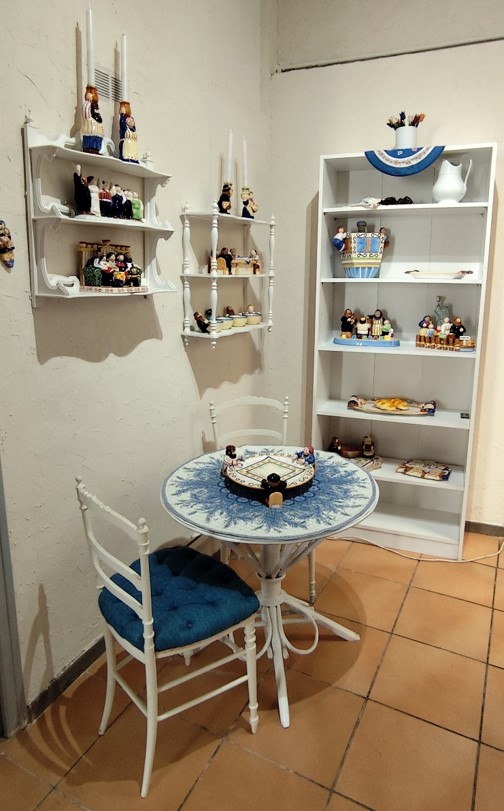
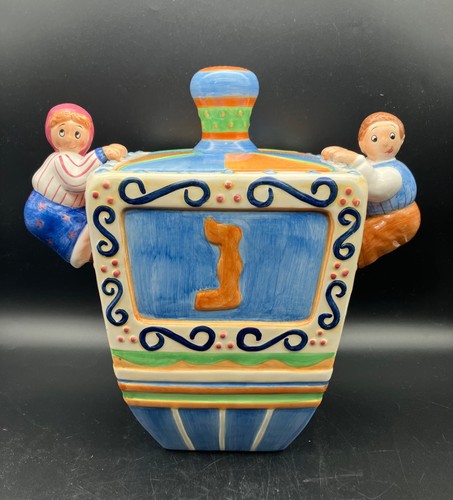
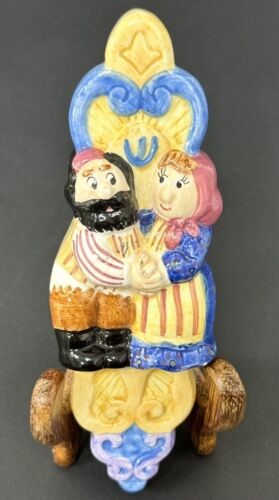
This tour, which will take place on Sunday 13 December, will also be an opportunity to discover our new section dedicated to Bubbelés, which includes, in particular, a magnificent collection of Hanukkah candlesticks illustrating the richness of Jewish traditions surrounding the Festival of Lights.
Have any new objects or documents been added to the museum’s collection?
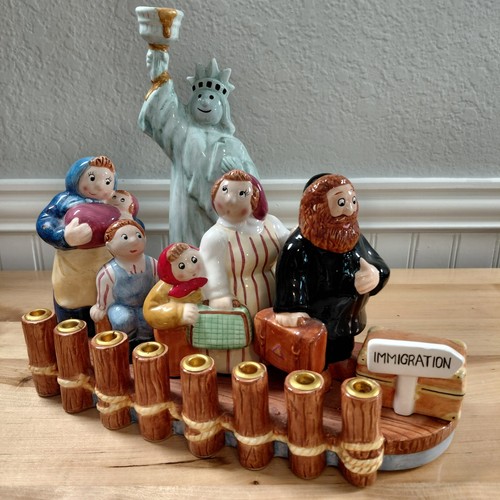
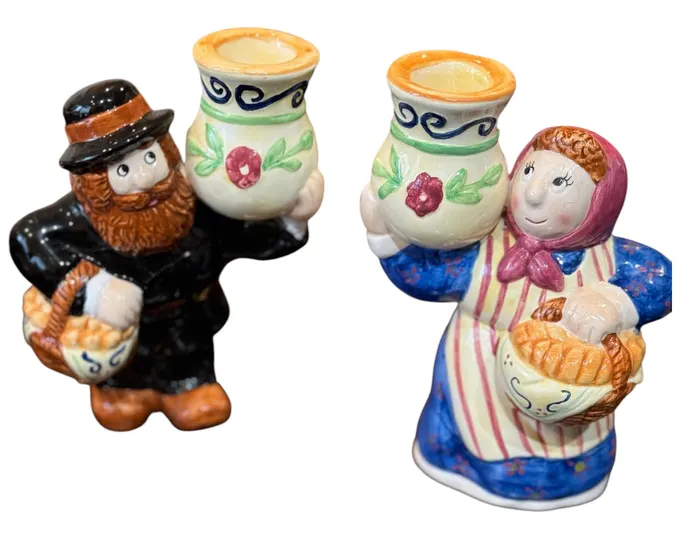
Last year, in the pages of JGuideEurope, I spoke of my passion for the creations of a Chinese company which, during the 20th century, produced charming traditional objects in a simple, warm style for American Ashkenazi Jewish families. As production ceased in the 1980s, these pieces have now become extremely rare.
Since then, the collection has expanded considerably to the point where it now constitutes an exceptional heritage collection, both in terms of its rarity and the number and diversity of the objects, featuring pieces dedicated to Shabbat, Hanukkah, Passover, Rosh Hashanah and other aspects of Jewish family life. To my knowledge, this is a unique collection in France.
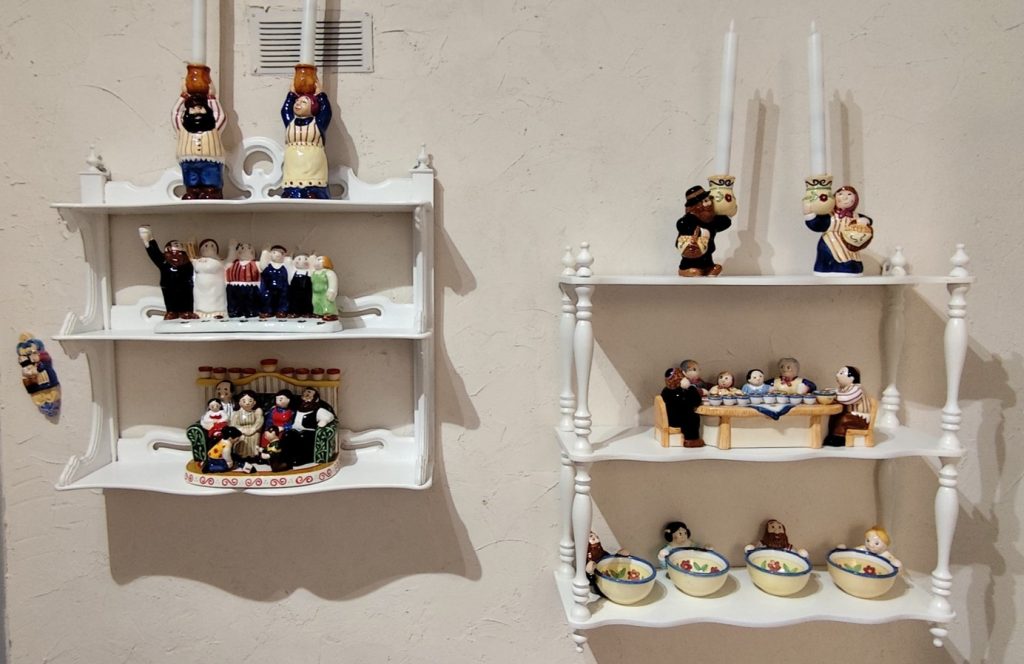
Furthermore, these acquisitions have given rise to an entirely new museum project to which we now dedicate a permanent exhibition space: ‘Les Bubbelés – Figures of the Jewish Home in Celebration’.
The name ‘Bubbelés’ is inspired by the Yiddish bubbeleh, an affectionate term that could be translated as ‘little darling’, ‘sweetheart’ or ‘beloved’ ’. Behind their apparent simplicity, these little figures have become the ambassadors of an original educational project and offer us an accessible and vibrant way to engage with Jewish culture. They open doors to various levels of understanding, just as the symbols and stories of Judaism have always done.
Younger children simply discover the Jewish festivals and traditions through them. But they also provide a way to explore the values underpinning these traditions: the passing on of knowledge between generations, respect for parents, shalom bayit, the importance of education and remembrance. Finally, they can pave the way for deeper reflection. For instance, a pair of Shabbat candlesticks depicting a Jewish couple tells the story of lighting the candles on Friday evening. But it can also evoke the importance of the Jewish home, the light passed down from generation to generation, and even the Jewish people’s calling to bring light into the world. The Bubbelés will be at the heart of numerous educational workshops: rag dolls, modelling, storytelling and creative activities.
Although the official opening of this space is scheduled for July, members of a Jewish cultural association were given a sneak preview. They were utterly charmed by this world and immediately recognised its full potential as a tool for outreach and cultural transmission. Gradually, this project is becoming a new hallmark.
On the one hand, the museum brings to life the thousand-year history of the Jews of Béziers through engraved stones; on the other, with the Bubbelés, it offers a window into Jewish life. Together, these two approaches now define the unique identity of the Jewish Museum of Béziers.