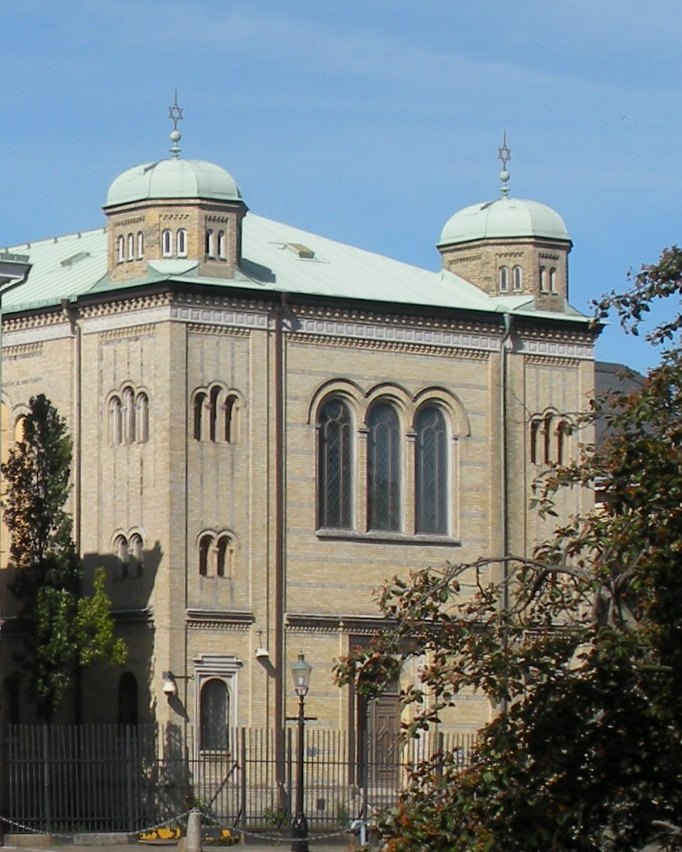
The present synagogue was built in 1855. Its interior combines Moorish, Romanesque and Byzantine styles, whilst the exterior features Scandinavian and Celtic motifs. The cultural activities on offer are just as varied and interesting. Here’s our interview with Shahar Isak, Project Manager at Judiska Församlingen.
Jguideeurope: Are you participating in the EDJC? If so, which events will be organized in Goteborg?
Shahar Isak: Yes, we are participating also this year with great enthusiasm. Our community has chosen to interpret the theme of Lovet through the lens of Love and Food – a combination that feels deeply natural in a Jewish context, where the table has always been a place of memory, warmth, and belonging.
On Sunday, September 6th, we will host an afternoon of short, engaging lectures tracing how food and love are woven together across Jewish history and tradition, from the kitchens of Eastern Europe to the flavors of Italy and the Middle East. We are delighted to welcome the following speakers: Elisabeth Punzi, Jenny Högström Berntson, Ehud (Udi) Steenberg and Samuel Engelhardt. The lectures will be followed by a mingel with light refreshments, lovingly prepared by Sofia Johnsson.
Are you organizing other cultural events in autumn (conferences, exhibitions…)?
Yes, we have a rich autumn programme ahead. Just a few days after the Day of Jewish Culture, on September 10th, we will host an evening with Theo Loefler — a young Jewish singer-songwriter and comedian whose one-man show En judisk trubadur has been performed at Scalateatern in Stockholm. Through original music and sharp, warm humour, he takes the audience on a journey through Jewish life and identity. The event will take place outside our own premises, bringing Jewish culture to a broader Gothenburg audience.
During the Gothenburg Book Fair, on September 24th, we will host a conversation with Dr. Daniel Schatz, political scientist, about his book Från Stockholm till Jerusalem — a timely and personal exploration that we expect will resonate strongly with both our community and the wider public.
On October 11th, we are proud to present a concert in the Great Synagogue as part of the Gothenburg International Organ Festival — a beautiful opportunity to open the doors of one of the city’s most magnificent historical spaces.
In November, we will arrange a klezmer music masterclass, celebrating the rich musical tradition that has been so central to Jewish cultural life for centuries.
Throughout autumn, we also continue our bi-weekly study group meetings, and we will round off the year with a festive Yiddish culture evening for Hanukkah.
Which place in Goteborg linked to Jewish heritage should be better known?
Without a doubt, the Great Synagogue on Östra Larmgatan. Built in 1855, it is one of Gothenburg’s most beautiful and historically significant buildings — yet many residents have never stepped inside. Its architecture, its memorial wall, and the stories embedded in its walls reflect over 200 years of Jewish life in this city.
But beyond the synagogue itself, we would also point to the old Jewish cemetery on Östra Kyrkogården, a quiet and often overlooked place that bears witness to generations of Jewish families who shaped Gothenburg’s history in medicine, culture, trade, and civic life.
We welcome school groups and visitors for guided tours of the synagogue throughout the year, and we hope that our upcoming Göteborgs Judiska Kunskapscenter, a pedagogical center currently in development, will make this heritage far more accessible and visible to the broader public in the years to come.
Do you feel there’s a tikkun olam willingness in the sharing of Jewish heritage after those last three difficult years?
Yes, deeply so. The past three years have been hard, but here in Gothenburg we have genuinely felt that people want to come closer, to listen, to understand. We see it when school groups visit the synagogue, when our events fill up, when neighbors and institutions reach out. That means a lot to us. Every open door is a small act of repair, and we intend to keep opening them.