This year, the European Days of Jewish Culture are taking on a magnificent challenge: in the face of rising hatred, prejudice and discrimination, they have chosen ‘Love’ as their theme for 2026! This is a courageous and ambitious endeavour to repair the world – the tikkun olam that has been so central to Judaism for millennia. Here’s our interview with European Director Victor Sorenssen…
Jguideeurope: How did you decide to propose the theme of “Love”?
Victor Sorenssen: The theme of the European Days of Jewish Culture is always selected through a collaborative process involving our wide network of national coordinators, partner institutions, cultural professionals and stakeholders who participate in the EDJC Working Group. After gathering proposals and reflections from across the network, a theme is recommended and then presented to the Board of the AEPJ for validation.
This year, we felt that LOVE was both a beautiful and deeply relevant theme for the moment we are living in. At a time marked by polarization, conflict and growing social tensions, we wanted to focus on something universal that speaks to human connection, care, solidarity and hope. Jewish culture offers countless ways of exploring love — through family, community, spirituality, literature, music and memory, making it an inspiring lens through which to engage broad audiences across Europe.

Do you think there’s a tikkun olam virtue and ambition to such a theme?
Absolutely. While the European Days of Jewish Culture are primarily a cultural initiative, there is undoubtedly a dimension that resonates with the spirit of tikkun olam. Exploring themes such as love encourages empathy, dialogue and mutual understanding. It invites people from different backgrounds to discover Jewish culture not through stereotypes or political debates, but through shared human experiences and values. In that sense, the ambition is not only to celebrate Jewish heritage, but also to contribute, however modestly, to building stronger and more inclusive societies.
How many countries will participate this year?
We estimate that around 30 countries will participate in the 2026 edition of the European Days of Jewish Culture, continuing a tradition that has made the initiative one of the largest transnational cultural events dedicated to Jewish heritage and culture in Europe. Thousands of activities are expected to take place between September and November across the continent.
Can you share an emotional moment from last year’s edition?
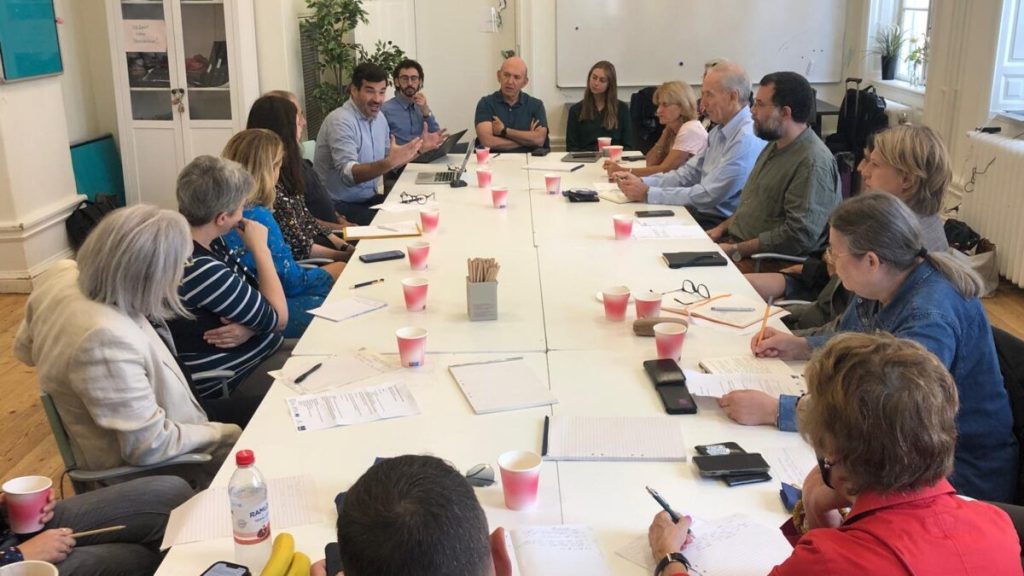
One particularly meaningful moment was the opportunity to experience the official kick-off of the 2025 edition in Stockholm, Sweden. Beyond attending the opening events and activities, we had the chance to discover first-hand the remarkable work being carried out there in the fields of Jewish culture, heritage and education.
The visit allowed us to meet dedicated professionals, institutions and community representatives who are developing innovative approaches to preserving and sharing Jewish heritage. Since then, new collaborations and exchanges have emerged, demonstrating one of the most beautiful aspects of the European Days of Jewish Culture: the creation of lasting connections between people and institutions across Europe.
Do you feel that such cultural encounters help fight the rising antisemitism witnessed since 2023?
Yes, we firmly believe that culture, dialogue and personal encounters are among the most effective tools we have to combat prejudice and antisemitism. Of course, cultural initiatives alone cannot solve such a complex challenge, and we should not be naïve about the scale of the problem we are facing today.
However, the European Days of Jewish Culture create opportunities for people who may have little or no direct contact with Jewish life to enter synagogues, museums, cultural centres and historic sites, often for the first time. They allow visitors to meet communities, hear stories, ask questions and engage with Jewish culture in all its diversity and complexity.
Antisemitism thrives on ignorance, stereotypes and dehumanization. Cultural encounters help create the opposite: knowledge, curiosity, empathy and human connection. For this reason, we consider the European Days of Jewish Culture not only a celebration of heritage, but also a meaningful contribution to building more open, respectful and resilient societies.