This interview with Robert Baruh Waltl, director of the Jewish Centre in Ljubljana, highlights a wonderful initiative to share Slovenia’s Jewish cultural heritage. This will be particularly evident during the forthcoming European Days of Jewish Culture…
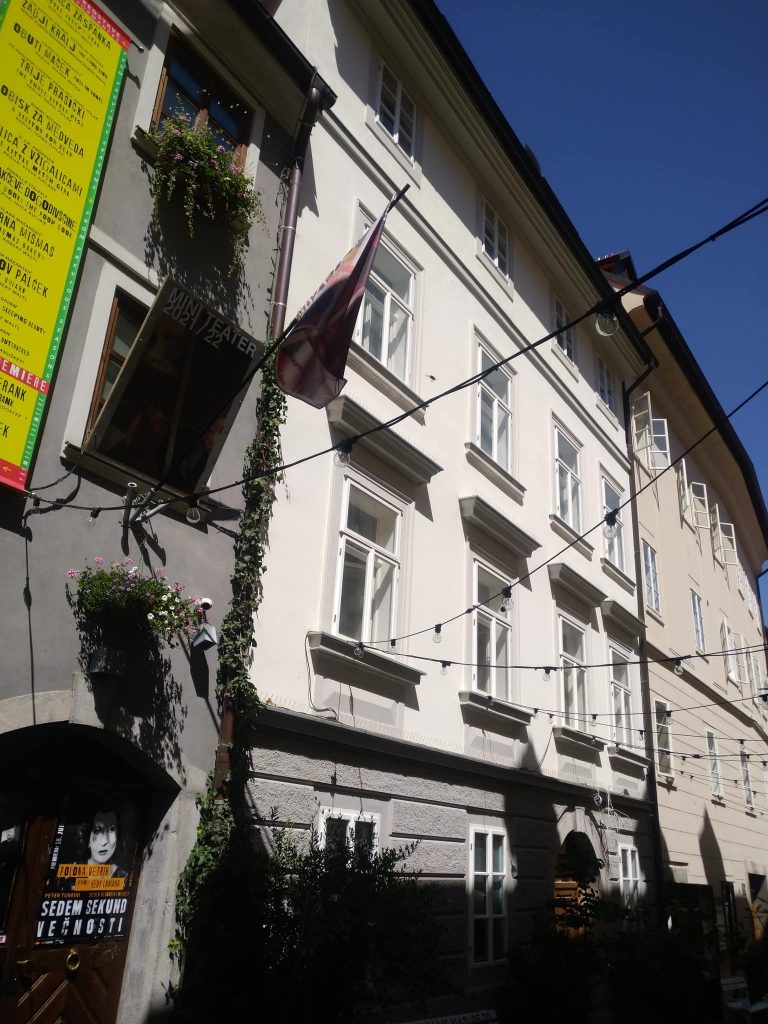
Jguideeurope: Which events will you organize in autumn for the European Days of Jewish Culture?
Robert Baruh Waltl: This year’s European Days of Jewish Culture, taking place from 3–6 September 2026, will be among the most ambitious editions we have ever organized. Hungary is our Guest of Honour, and the programme reflects the richness of Central European Jewish culture through theatre, music, literature, film, exhibitions, gastronomy, and public discussions.
The festival will open on 4 September with the inauguration of our new permanent exhibition, followed by a Shabbat service and an open-air concert by the Hamsa Band. During the weekend, Križevniška Street will become a lively cultural space featuring kosher street food, children’s workshops, literary and music events dedicated to Nobel Prize laureate Imre Kertész, performances for children and adults, guided tours, an international IHRA round table on Holocaust remembrance and historical trauma, concerts, and the screening of the Academy Award-winning film Son of Saul with actor Géza Röhrig.
The European Days of Jewish Culture will also be celebrated on 29 August in Domanjševci, in the Prekmurje region, through a special programme organized by the Košček sreče Institute, led by Katja Čibej Fras and Boris Čibej, our long-standing partners in preserving the Jewish heritage of northeastern Slovenia. Our goal is to present Jewish culture not only as a part of history, but as a living, diverse, and contemporary element of Slovenian and European society.
Are there other cultural events scheduled this autumn at the Center?
Yes. The European Days of Jewish Culture will mark the beginning of an exceptionally rich autumn season at the Jewish Cultural Center Ljubljana.
From 3–10 November, we will organize another edition of the House of Tolerance Festival, one of Slovenia’s leading festivals dedicated to Holocaust remembrance, human rights, intercultural dialogue, and contemporary social issues through theatre, film, literature, exhibitions, and educational programmes.
At the end of November, Mini teater and the Jewish Cultural Center Ljubljana will present a major new theatre production based on the writings of the acclaimed Slovenian author Dušan Šarotar, whose family survived the Holocaust in Prekmurje. The production “Star map” will be directed by the internationally renowned theatre director Ivica Buljan, continuing our long-standing commitment to artistic projects dealing with memory, identity, and the legacy of the Holocaust.
Throughout the season we will continue performing many of our productions that have become an important part of our educational and cultural work, including The Diary of Anne Frank, The Jewish Dog, Stories from Odessa, The Vampire Goes to School, and Herzl’s Fantasies.
We are also excited to launch two new European cooperation projects, SHARE and REACT, as well as to continue our work within the European project TRUST, in which we are proud partners together with institutions from across Europe. These projects will bring numerous educational, artistic, research, and public programmes to Slovenia over the coming years.
At the same time, we sincerely hope that this new chapter will also bring long-awaited changes in the relationship between the Slovenian state and its Jewish community. Despite the significance of our work in culture, education, remembrance, and intercultural dialogue, the Jewish Cultural Center and the Jewish community have never received systematic state funding for their regular operation. We hope that this will finally change.
We also hope to see a decline in antisemitism in Slovenia and an end to the media isolation that our institution has experienced since the terrorist attacks of 7 October 2023 and the subsequent war in Israel. We firmly believe that culture, education, and dialogue remain the strongest response to prejudice, hatred, and intolerance.
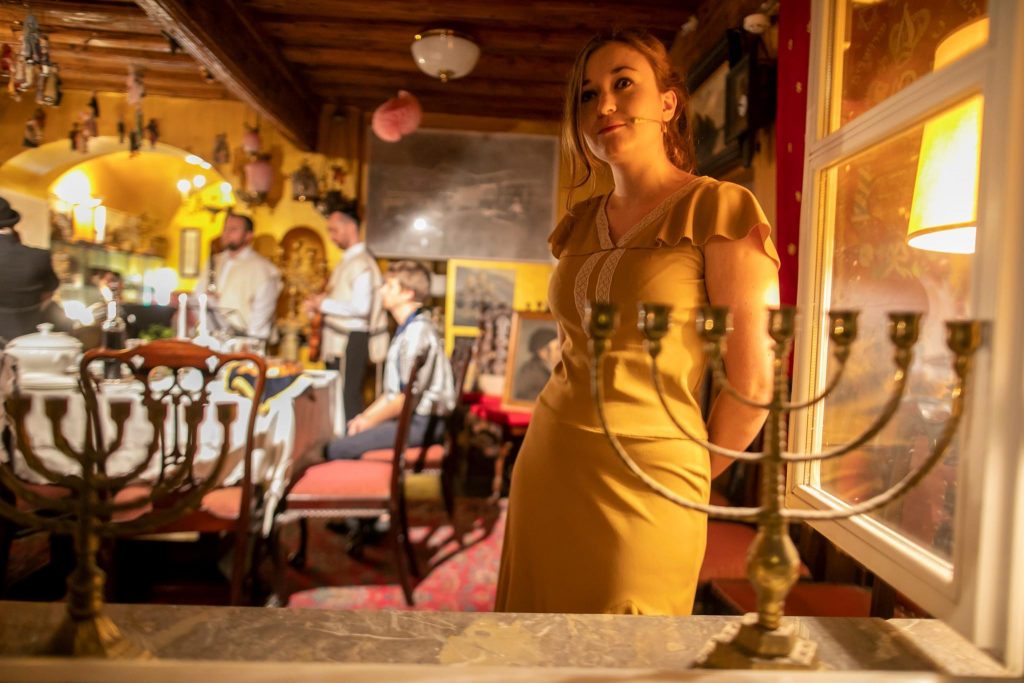
What will be presented to the public at the upcoming permanent exhibition of the Jewish Cultural Center?
The exhibition, “We Have Nothing but a Name – Jewish Presence in the Territory of Slovenia from the Roman Empire to the Present Day,” is the first comprehensive permanent exhibition dedicated to the history of Jews in the territory of present-day Slovenia.
It presents nearly two thousand years of Jewish life—from Roman archaeological finds and medieval Jewish communities, through the flourishing Jewish communities of Prekmurje, Maribor and Ljubljana, the devastation of the Holocaust, post-war Yugoslavia, and finally the rebirth of Jewish religious and cultural life in independent Slovenia.
Visitors will encounter original historical objects, rare documents, photographs, multimedia installations, personal testimonies, and stories of individuals and families whose lives formed an inseparable part of Slovenian history.
For us, however, this exhibition represents something even more significant. With its opening, we feel that we are bringing to a close a journey that has lasted for more than a decade. Through our long-term projects Undeleted and We Are Still Here, we have worked patiently and persistently to restore Jewish history and memory to Slovenia’s public consciousness. For generations, Jewish presence had almost disappeared from the country’s historical narrative. Step by step—through theatre productions, exhibitions, educational programmes, publications, memorial projects, research, and international cooperation—we have sought to restore those missing voices and reconnect Jewish heritage with Slovenian society. This permanent exhibition is the culmination of that work. It is not simply an exhibition about Jewish history—it is an exhibition about restoring an essential part of Slovenia’s own history.
The exhibition also serves as a public tribute to the Slovenian Righteous Among the Nations. They occupy a central place within the exhibition as an expression of our deepest gratitude to the courageous women and men who risked their own lives during the Holocaust to save Jews from persecution and extermination. Their moral courage reminds us that even in humanity’s darkest moments, individual choices could make the difference between life and death. Their stories deserve to stand at the heart of our shared historical memory.
We hope that every visitor will leave not only with new historical knowledge, but also with a deeper understanding that diversity, memory, responsibility, and dialogue are among the greatest values of every democratic society.
Do you feel it’s a symbol of growing curiosity and enthusiasm regarding Slovenian Jewish heritage?
Absolutely. When we established the Jewish Cultural Center Ljubljana, our ambition was not only to preserve Jewish heritage but also to make it accessible to everyone. During the past decade, we have witnessed remarkable growth in public interest—from school groups, students, researchers, diplomats, tourists, and the wider Slovenian public.
It is true, however, that over the past two years we have noticed a decline in visits from Slovenian schools and, in particular, university students. We believe this is, at least in part, a consequence of the increasingly polarized public atmosphere surrounding the war in Gaza and the rise of anti-Jewish sentiment that has accompanied it. We sincerely hope this trend will be reversed and that educational institutions will continue to see dialogue, historical understanding, and Holocaust education as essential parts of their mission.
At the same time, we have experienced a significant increase in international visitors. More and more tourists from the United States, Canada, Australia, the United Kingdom, and many other European countries are discovering the Jewish Cultural Center Ljubljana and seeking to learn about the rich and often overlooked history of Jewish life in Slovenia.
More and more people want to understand the history of the Jewish communities that once lived throughout Slovenia, their contribution to the country’s cultural, economic, and intellectual development, and the tragic consequences of their destruction during the Holocaust. I believe this growing interest also reflects a broader understanding that Jewish history is not a separate history—it is an integral part of Slovenian history.
The new permanent exhibition therefore represents much more than a museum project. It symbolizes Slovenia’s growing willingness to rediscover an important part of its own past, to preserve it for future generations, and to recognize Jewish heritage as an inseparable part of the country’s cultural identity.
For us, it is also a message of hope. After decades of absence and silence, Jewish life in Slovenia is once again visible—not only as a memory of what was lost, but as a living community that continues to contribute to the cultural and social life of the country. I hope this exhibition will become a place of learning, dialogue, encounter, and mutual respect, inspiring future generations to value diversity and to stand against antisemitism, racism, and all forms of intolerance.