The stunning Polin Museum has a packed programme of cultural events lined up for the 2026–2027 season. Nina Nowakowska, Senior Media Relations Officer, introduces us to these events and highlights the courageous efforts of Polish individuals involved in this initiative…
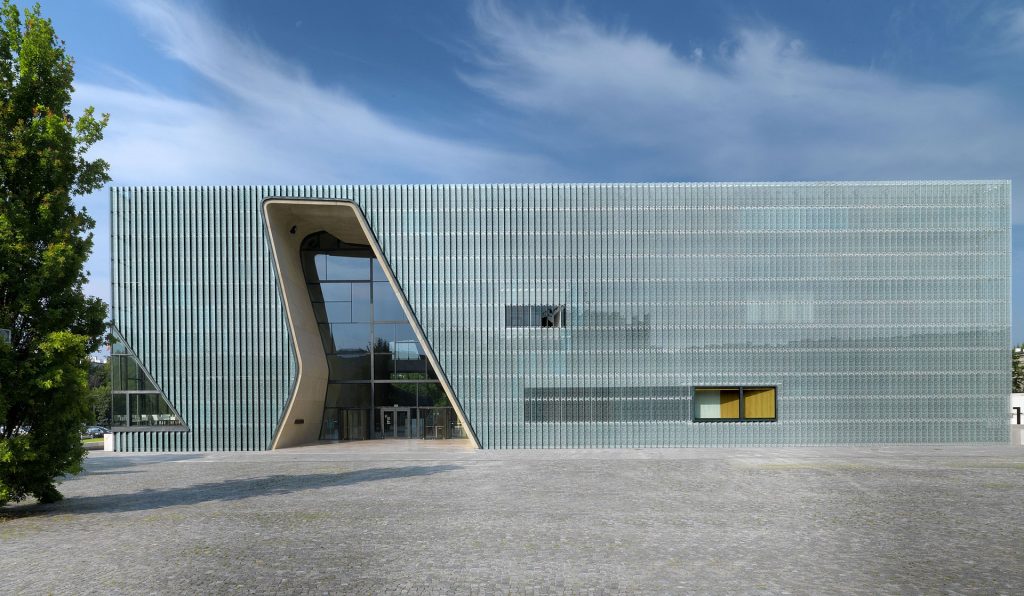
Jguideeurope: In July 2025, the POLIN Museum and the Ministry of Foreign Affairs signed a partnership to preserve Jewish Heritage. Are some cultural or educational events scheduled to mark this partnership?
Nina Nowakowska : As part of this agreement, steps are being taken to establish the Polin Alliance. Discussions are underway with Jewish institutions around the world, particularly in South America (Mexico, Argentina, Chile), South Africa, and Europe, regarding joint programmatic activities and exchanges. The Polin Alliance is intended to be a multilateral partnership bringing together in Poland both the Polin Museum and non-governmental organizations, as well as organizations around the world. The collaboration between Polin and the Ministry of Foreign Affairs involves building a network for future cooperation in the areas of culture and education. The opening of the “Bonds” Gallery – the final section of our permanent exhibition – is significant in that it features films about the Polish-Jewish diaspora around the world, and cooperation in this area is always a central topic in our discussions with future partners.
How is the Polish Jewish heritage perceived in Poland today?
This is a very difficult question, and it would certainly be worthwhile to conduct appropriate research on the subject. The POLIN Museum’s mission in this regard is, above all, to promote the heritage of Polish Jews and to educate the Polish public that this is also part of their heritage – our national heritage. To this end, the POLIN Award competition was established. The award has been presented since 2015 and it honors individuals and organizations that – often quietly, away from the spotlight – preserve the heritage of Polish Jews from oblivion. In 2025, the winner of the POLIN Award was Marek Chmielewski – the village head of Orla, a local government official involved in the activities of many nongovernmental organizations, and an activist with the Forum for Dialogue Network. We therefore believe not only in the power of museum education and the message conveyed by our exhibitions, but also in the efforts of local activists. We feel that, despite the difference in scale, it is precisely these individuals who have a huge impact on how Jewish heritage is perceived in their communities.
Which exhibitions will you organize in 2026-7?
Recently, on June 17, we opened an intimate exhibition “Helena Rubinstein: Beauty Is Your Destination,” which will run through September 7, 2026. The exhibition presents Helena Rubinstein from several perspectives: in her professional life – her most famous role as a businesswoman; in her private life – family and social life – as a socialite and organizer of salon life, a patron of the arts, and a collector. We seek to answer the following questions: Why does the figure of Helena Rubinstein continue to fascinate so many people? What qualities and circumstances enabled her to achieve such great success? Can her biography serve as an inspiration in today’s world? The exhibition’s title comes from Helena’s own words – the title of one of the chapters in her autobiography, „My Life for Beauty”.
The exhibition was made possible by the donation, in 2023 and 2025, of Helena Rubinstein’s personal memorabilia and an archival legacy comprising over a thousand items to the POLIN Museum’s collection. The donor is Suzanne Slesin, a New York-based journalist and art historian related to Rubinstein and the author of the biography „Helena Rubinstein: Over the Top…”. Although little time has passed since the opening, we can already see that the exhibition is drawing significant interest.
Another exhibition we’ll be opening soon – and one we’re very excited about – is “Barnett Newman. From Scratch.” For the first time in Poland, we will be presenting the work of Barnett Newman, one of the most important artists of the 20th century, who revolutionized contemporary art. His monumental, abstract paintings emerged from the experience of humanity’s crisis in the wake of the Holocaust, totalitarian regimes, and the specter of nuclear war. The works selected for the exhibition will be presented as an attempt to give form to suffering, fear, and emptiness – to what, after World War II, required new ways of representation. For us, the aspect of identity is, of course, key – Newman, the son of Jewish emigrants from Poland, maintained a close connection to the Jewish world in his work and brought a new perspective, rooted in Jewish tradition, to abstract art. Although he did not experience the Holocaust directly, he was deeply moved by the tragic fate of European Jews and frequently referred to it in his paintings. His art will be presented for the first time in the very place where part of that history unfolded – here in Warsaw, in Muranów. At the site of a tragedy that not only shaped contemporary Jewish identity but also influenced Newman himself – as a Jew, an artist, and a philosopher. We believe this will be a real treat for those interested in contemporary art – not only from Poland, but from all over Europe. The exhibition will be open from February 19 to July 26, 2027 – so there is still plenty of time, but intensive preparations are already underway.
Is there a place linked to Jewish heritage in Warsaw you feel should be known better?
I think there are many such places in Warsaw – especially in Muranów, where the Jewish quarter once stood. One of them is the bunker of the Jewish insurgents, known as the “Anielewicz Bunker,” located at the intersection of Miła and Dubois Streets, not far from the POLIN Museum. Toward the end of the Warsaw Ghetto Uprising, fighters from the Jewish Combat Organization (ŻOB) hid there along with their commander, Mordechaj Anielewicz. On May 8, 1943, the bunker was surrounded by the Germans, who began pumping gas into it. Refusing to surrender, 120 fighters, including Mordechaj Anielewicz, committed suicide. In 1946, a mound was erected over the destroyed bunker and named Anielewicz’s Mound. Due to its similarities to the events that took place at the ancient Jewish fortress of Masada, which was besieged by the Romans, the bunker on Miła Street can be called the “Warsaw Masada.” We hope, however, that thanks to the “Daffodils” educational campaign, which the POLIN Museum has been running for fourteen years now, the topic of the Warsaw Ghetto Uprising – as well as the Anielewicz Bunker itself – will become better known to the residents of Warsaw.