On the day of tishah b’ab commemoration of the destruction of the Temple of Jerusalem, the old synagogue resounds to these words in Spanish: “Hemos perdido Sion pero tambien hemos perdido. España tierra de consolacion” (We have lost Zion, but we have also lost Spain, land of consolation”).
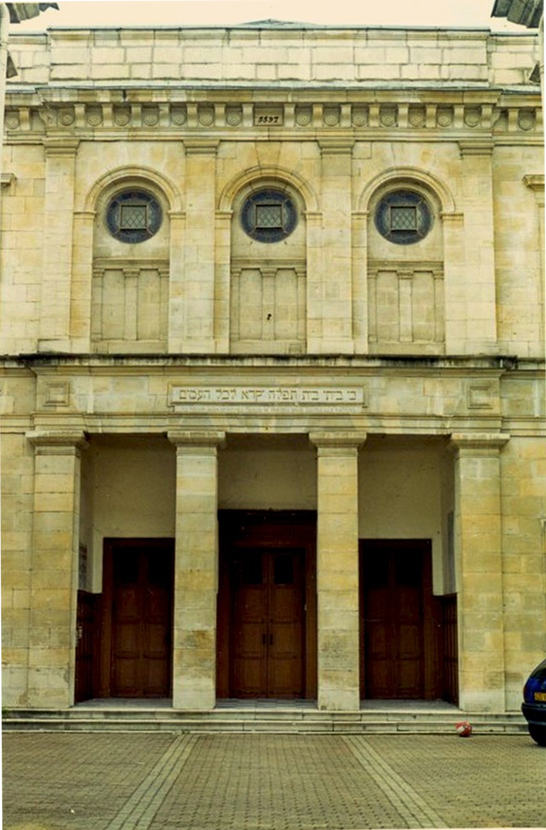
Bayonne’s synagogue was built in 1837, but its Holy Ark, kept from the earlier place of worship, dates back to the reign of Louis XVI. It is said that even some of the Torah scrolls are of Spanish origin, from before the expulsion of 1492. They are said to have been brought by Marranos fleeing persecution.
Located at the corner of the avenue des Foix and avenue du 14 Avril, the cemetery was created in 1660. It contains the tombs of the community leaders and, surprisingly, those of eighteenth-century Jewish corsairs.
Chocolate at Saint-Esprit-les-Israélites
In the seventeenth century, the Jewish immigrants from Spain were cast out of central Bayonne and settled in Saint-Esprit. This quarter became known in popular parlance as Saint-Esprit-les-Israélites because Jews constituted the majority of its population, which was extremely rare in France. It was a Jew of Spanish origin, Gaspar Dacosta, who introduced the art of chocolate-making to Saint-Esprit, and indeed in France.
The Suzanne et Marcel Suarès Museum of Bayonne Judaism , opened on 2 November 2022, pays particular tribute to the Marranos, Spanish and Portuguese Jews, and traces the history of regional Judaism. It is located on rue Maubec, close to the town’s synagogue. The museum retraces their history and presents the community. In particular, the museum aims to show the contribution of Bayonne’s Jews to the city.
Following the anti-Semitic act of cutting down the tree planted in memory of Ilan Halimi in Epinay-sur-Seine in August 2025, many town halls decided to plant trees in his memory and to mark their involvement in the fight against anti-Semitism, which has been ravaging Europe since 7 October and the exploitation of conflicts in the Middle East.
Among these town halls is that of Bayonne, where an olive tree was planted on 21 September 2025 in the Gardens of the Synagogue, following a ceremony attended by elected officials and local authorities.
Sources: Sud-Ouest