Location
Turkey
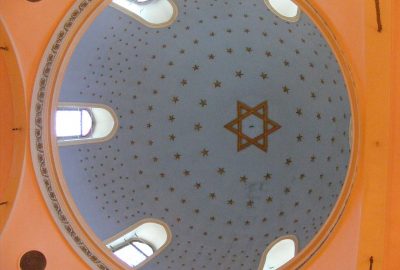
In the beautiful synagogue of Ahrida, one of the oldest in Istanbul, the tevah assumes the shape of a caravel symbolizing not only Noah's Ark but also the vessels that in 1492 transported the ...
In the beautiful synagogue of Ahrida, one of the oldest in Istanbul, the tevah assumes the shape of a caravel symbolizing not only Noah's Ark but also the vessels that in 1492 transported the ...
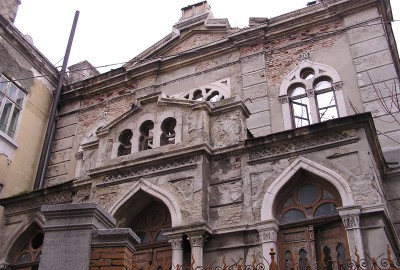
In a medieval miniature, Bulgarian Czarina Sara figures beside her husband, Czar Alexander, a two children, Shishman and Tamara. A Jewish queen, Sara of Turvono was obliged to convert to ...
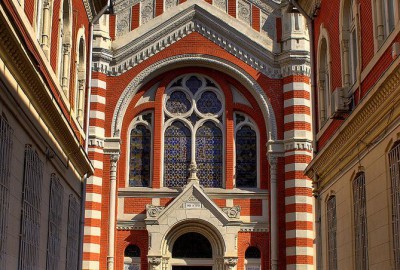
There is little evidence of a Jewish presence on the coats of the Black Sea before the arrival of Roman legions in the early second century C.E. Vestiges, coins, and inscriptions preserved in a ...
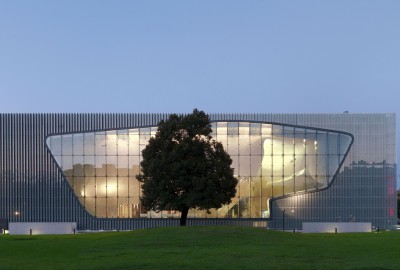
Poland represents the most illustrious and tragic chapter in European Jewish history. For centuries, this country was the most welcoming to Jews fleeing Germany, Spain, and southern Europe; the ...

Below the bell tower of Prague's Jewish city hall, there are two clock faces. One displays Roman numerals, and the other Hebrew letters. The hands of the first clock revolve in the normal ...
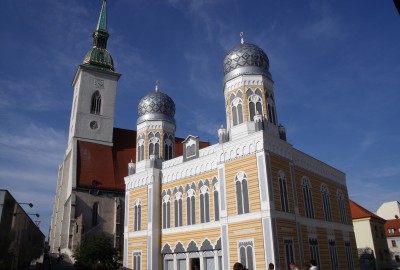
The history of Jews in Slovakia -dating from the sixteenth century under the protection of the Hapsburg- intersects that of their fellow believers in Hungary and the Czech Republic. Jews in these ...
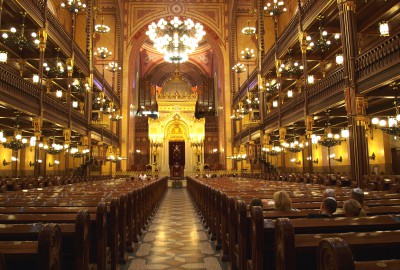
At the Jewish Museum of Budapest, a replica of a tombstone dating from the third century bears the image of a menorah. This relic attests to nearly 1700 years of Jewish presence in the Carpathian ...
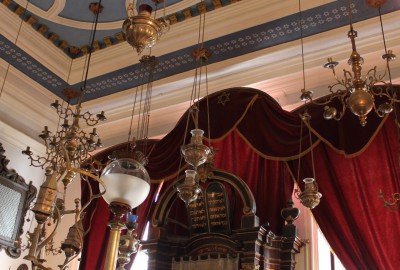
Jewish settlers had to wait until the death of Austria's Catholic and very anti-Semitic Archduchess Maria Theresa and the ascension of her her tolerant son, Joseph II, to gain the right to ...
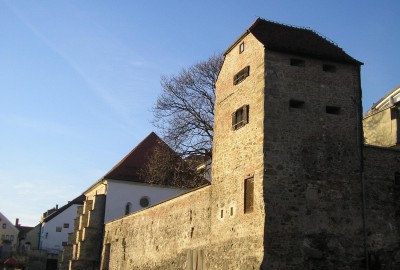
A Slavic land under Germanic rule for many centuries, Slovenia finally gained independence in 1991. The fate of the Jewish population here depended largely over the years on the good will of its ...
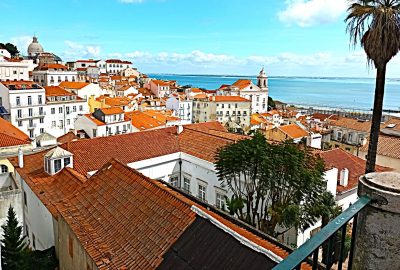
Portugal became an autonomous kingdom under Henry of Burgundy, a prince of French origin. His son, Alfonso I, was the first king of Portugal (1114-85). The history of its Jewish population ...
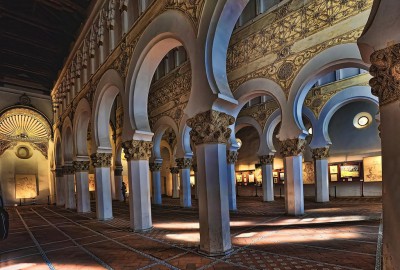
There are numerous legends surrounding the arrival of the Jews in Spain. They were propagated by Jewish and Christian chroniclers, especially in the sixteenth century. Some say they came in the ...
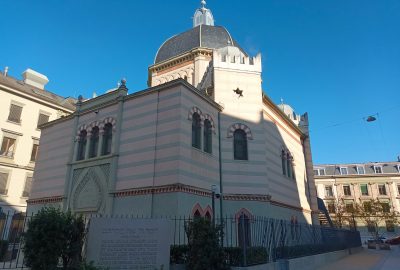
Jewish craftsmen and merchants settled in Switzerland's Roman cities between the third and fourth centuries, but the first documents that mention them date only from the thirteenth century. ...
Brückenstraße 10, 54290 Trier Tel: +49 (0) 651 970680 https://www.fes.de/marx/index_gr.html
Bilker Str. 12-14, 40213 Düsseldorf Tel: +49 (0) 211 8992902 https://www.duesseldorf.de/heineinstitut/
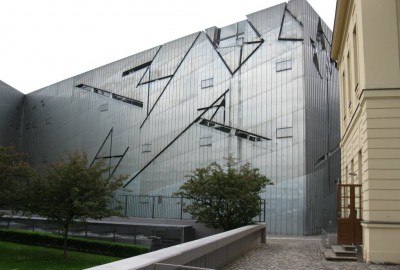
At the end of the nineteenth century, an international conference took place sponsored by the Zionist Organisation that was dedicated to the problem of the future national language of the Jewish ...
Kazerne Dossin, 153 Goswin de Stassartstraat, 2800 Mechelen Tel : +32 15 29 06 60 https://www.kazernedossin.eu
21, rue des Minimes, 1000 Bruxelles Tel: + 32 (0) 2 512 19 63 Musée Juif de Belgique – Art et histoire du judaïsme et des Juifs en Belgique. (mjb-jmb.org)
154, rue Roosendael, 1090 Brussels Tel : +32 475 40 26 49 http://www.cisu.be/
80, rue des Primeurs, 1090 Bruxelles Tel: +32 (0) 2 332 25 28 http://www.beth-hillel.org/
32, rue de la Régence, 1000 Brussels Tel: +32 (0) 2 512 43 34 The Great Synagogue Europe | Synagogue | Bruxelles (synaregence.eu)
2, rue Joseph Dupont, 1000 Bruxelles Tel: +32 (0) 2 512 43 34 http://www.jewishcom.be/
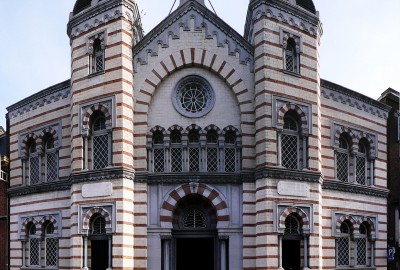
The history of the Belgian Jews is similar to that of the Jews of western Europe generally, involving migrations and internal changes as the old communities came under the influence of other ...
Prinsengracht 263-267, 1016 GV Amsterdam Tel: +31 (0) 20 556 7105 http://www.annefrank.org/fr/
Nieuwe Uilenburgerstraat 91, 1011 LM Amsterdam Tel: +31 (0) 87 876 5225 http://www.beithachidush.nl/
Nieuwe Uilenburgerstraat 173-175, 1011 LN Amsterdam Tel: +31 (0) 20 622 5333 https://www.gassan.com/
Mr. Visserplein 3, 1011 RD Amsterdam Tel : + 31 (0) 206245351 Portugees-Israëlietische Gemeente – Official Website of the Portuguese Jewish Community of Amsterdam (esnoga.com)
Plantage Kerklaan 61A, 1018 CX Amsterdam Tel: +31 (0) 20 620 2535 https://www.verzetsmuseum.org
Plantage Middenlaan 24, 1018 DE Amsterdam Tel: +31 (0) 20 531 0310
Waterlooplein 2, 1011 NV Amsterdam Tel: +31 (0) 20 552 4074 Waterlooplein flea market Amsterdam – The oldest flea market