Location
Rotterdam
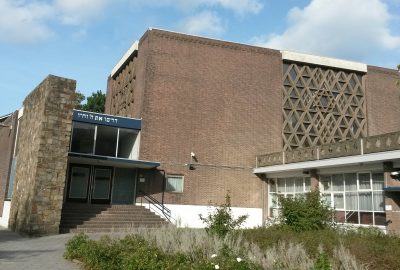
In 1610, the city fathers of Rotterdam issued permits to engage in trade within the city to a small number of Portuguese Jewish merchants. The permits guaranteed freedom of worship and the right ...
In 1610, the city fathers of Rotterdam issued permits to engage in trade within the city to a small number of Portuguese Jewish merchants. The permits guaranteed freedom of worship and the right ...

Cluj is today Transylvania’s most important city. The Jewish presence became significant here only starting in the late eighteenth century. The community, divided between those of ...
The last Polish city before the Ukrainian border and former Austrian Fortress that fell to the Russians in the first World War, Przemysl is also a city with a strong Jewish community dating going ...

Jews began to settle in Rzeszów in the fifteenth century and, in the seventeenth century, built two synagogues, both of which remain, almost side by side. They are fairly easy to find, ...

From Bialystok, a detour toward Tykocin is imperative: it has effectively preserved the structure and architecture of an old shtetl. This town, tiny today, was in times past more important than ...
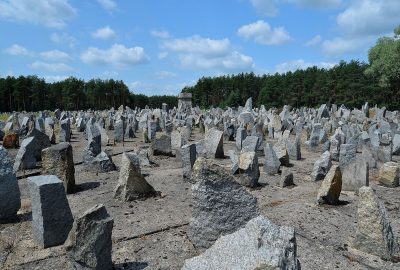
Arriving in Treblinka by train recalls the horror of the Warsaw Ghetto inhabitants’ final trip from the Umschlagplatz to the gaz chambers. To reach Treblinka from Malkinia, the railway line ...
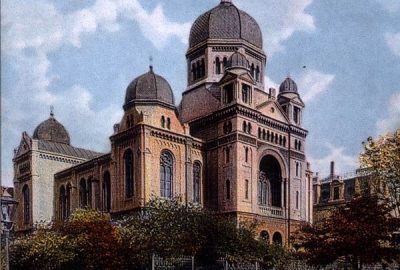
Lodz is a large Polish industrial city where a significant Jewish working class, along with merchants and rich industrialists, were concentrated in the nineteenth century. A fine representation ...
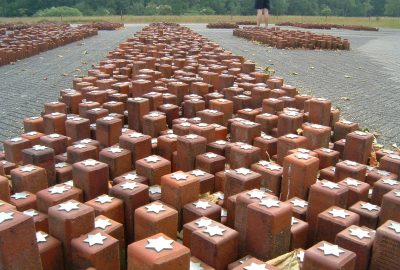
A memorial was erected in 1983 in the former transit and deportation camp in the northeastern Netherlands. It depicts two broken railway tracks, a symbol of the dead trains. The monument was ...
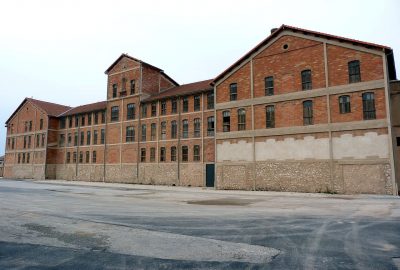
When war was declared in September 1939, the authorities opened an assembly camp in a tileworks in the village Les Milles. Here they assembled foreign nationals from the hostile powers: anti-Nazi ...
During the Nazi occupation, this village in the department of Ain was the scene of a raid ordered by Klaus Barbie on 6 April 1944. Forty-four Jewish refugee children and their seven teachers were ...

Below the bell tower of Prague's Jewish city hall, there are two clock faces. One displays Roman numerals, and the other Hebrew letters. The hands of the first clock revolve in the normal ...
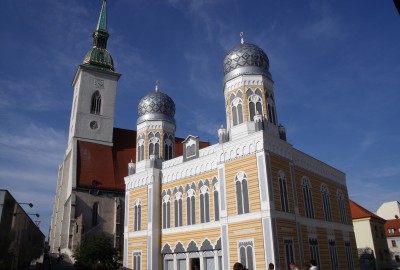
The history of Jews in Slovakia -dating from the sixteenth century under the protection of the Hapsburg- intersects that of their fellow believers in Hungary and the Czech Republic. Jews in these ...
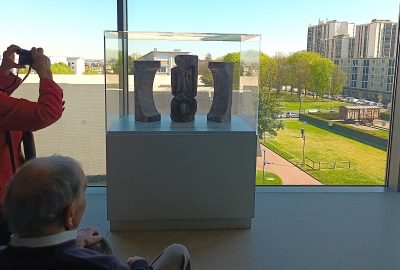
It’s a strange feeling when you arrive in Drancy. The former internment camp and the Shoah Memorial opposite it are located near the junction of the avenues Jean Jaurès and Henri Barbusse. ...
110 Avenue Jean Jaurès – Esplanade Charles de Gaulle, 93700 Drancy Tel : +33 1 42 77 44 72 Mémorial de la Shoah – Musée et centre de documentation Mémorial de la Shoah de Drancy