Site
Jewish Museum of Switzerland
Kornhausgasse 8, Basel Tel: +41 (0) 61 261 95 14 http://www.juedisches-museum.ch/
Kornhausgasse 8, Basel Tel: +41 (0) 61 261 95 14 http://www.juedisches-museum.ch/
Hintere Judengasse 6, 67547 Worms +49(0) 6241 853 470 1 https://www.juedischesmuseum-worms.de/juedisches-museum-EN/
Untermainkai 14/15, 60311 Frankfurt am Main Tel: +49 (0) 69 21235000 http://juedischesmuseum.de/
Rosenthaler Str. 39, 10178 Berlin Tel: +49 (0) 30 288865600 http://www.annefrank.de/
Niederkirchnerstraße 8, 10963 Berlin Tel : +49 (0)30 254 5090 http://www.topographie.de/en/
Lindenstraße 9-14, 10969 Berlin Tel : +49 (0)30 259 93 549 http://www.jmberlin.de/
190 Cheetham Hill Rd, Manchester M8 8LW Tel: +44 (0) 161 834 9879 http://www.manchesterjewishmuseum.com/
Place Mariejol, 06600 Antibes Tel: +33 (0) 4 92 90 54 20 http://www.antibes-juanlespins.com
Place Saint-Jean de Malte, 13100 Aix-en-Provence Tel: +33 (0) 4 42 52 88 32 http://www.museegranet-aixenprovence.fr
29-31 Rue de la République, 13200 Arles Tel: +33 (0) 4 13 31 51 99 http://www.museonarlaten.fr/
Avenue 1ere division de la France libre, presqu’île du cirque romain, 13635 Arles Tel: +33 (0) 4 13 31 51 03 http://www.arles-antique.cg13.fr
70, Route de Lambraz, 01300 Izieu Tel: +33 (0) 4 79 87 21 05 http://www.memorializieu.eu/
30, rue des Marchands, 68000 Colmar Tel: +33 (0)3 89 41 90 60 http://www.musee-bartholdi.fr/
Cour des Boecklin – 17, rue Nationale, 67800 Bischheim Tel: +33 (0)6 15 40 61 09 musee@ville-bischheim.fr
3, place du Château, 67000 Strasbourg Tel : +33 3 68 98 50 00 http://www.musees.strasbourg.eu/
23-25, quai Saint-Nicolas, 67000 Strasbourg Tel : +33 3 68 98 50 00 http://www.musees.strasbourg.eu/
6, rue du général Leclerc, 67440 Marmoutier Tel: +33 (0)3 88 02 36 30 Musée de Marmoutier
62, Grand Rue, 67330 Bouxwiller Tel: +33 (0)3 88 70 97 17 Musée Judéo Alsacien de Bouxwiller|Accueil|
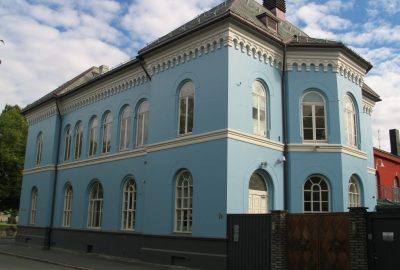
Trondheim’s synagogue is doubly unusual: it is the northernmost synagogue in Europe and the only one that has served as a train station, before the building became a synaogue in 1925! Jews ...
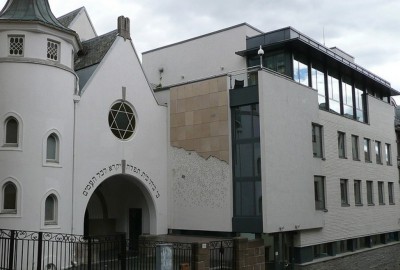
Visitors walking on the street named after Norway's national poet Henrik Wergeland (1808-45) will be reminded that it was Wergeland who was behind the law that allowed Jews to immigrate to this ...
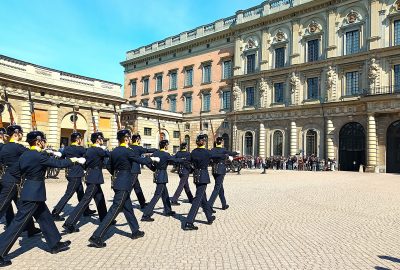
When we think of Stockholm, we often envision the Viking past. Certainly, they are part of the history of the city, the country and the region. There’s even a Viking museum in Stockholm. ...
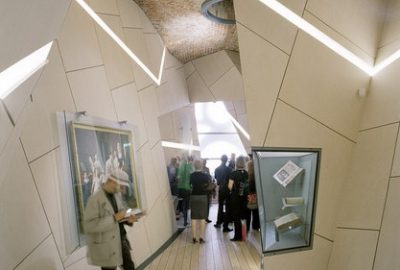
The Jewish community of Copenhagen has been active since the end of the 17th century. Today, most of Denmark’s 7,000 Jews live in Copenhagen. Abraham Salomon of Rausnitz was its first ...
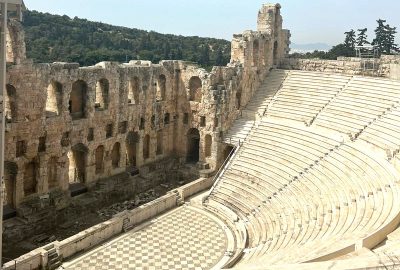
3,2,1… go! Set off on a marathon walk through time, 2500 years to be precise, to discover the monuments of Athens and its Jewish cultural heritage. Starting with the Panathenaic Stadium. An ...
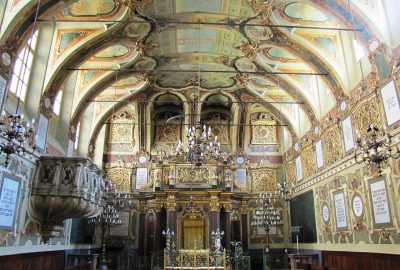
The Ashkenazic synagogue of the lovely, rich city of Casale Monferrato on the floodplain of the Po River was constructed in 1596, in the center of the old Jewish quarter. It is one of the oldest ...
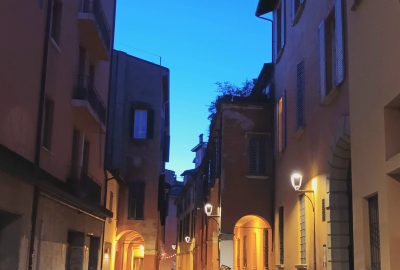
Bologna is famous for having been one of Europe’s leading cities in the Middle Ages. Thanks to its large population living within its walls, the wealth of local agriculture, the development ...
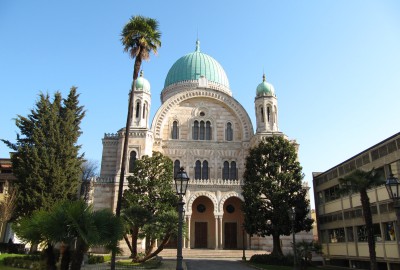
The former ghetto of Florence was located in the heart of the old city center near the market in a zone totally destroyed and the end of the twentieth century, situated today between Via ...

The Jews in the capital of Italy are perhaps the oldest Romans of all. They have settled in the same ancient neighborhoods in the heart of the Eternal City for 2000 years, making their homes in ...
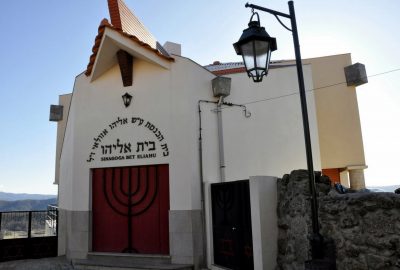
The little community of Belmonte of between 100 and 300 souls was “discovered” in 1920 by the engineer Samuel Schwarz. Its existence was revealed to the world by Frédéric ...
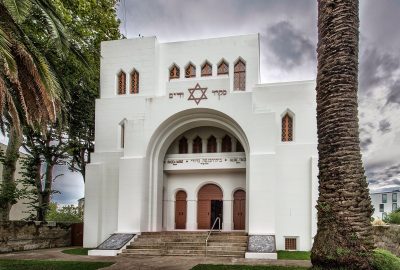
Porto is the capital of northern Portugal. It is the country’s second largest city after Lisbon. It is best known for its historic monuments and its wine. The Jewish presence dates back to ...
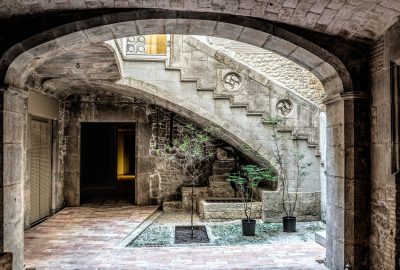
Gerona was the second most important community in Catalonia, both for its size (1000 men and women in the twelfth and thirteenth centuries, but only 100 or so in the fifteenth) and for the ...