Location
San Nicandro
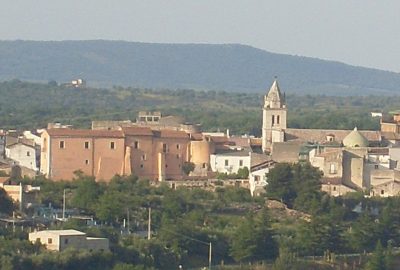
It was in San Nicandro that the first mass conversion to Judaism since the end of antiquity took place. All the converts emigrated to Israel shortly after 1948, so unfortunately there is nothing ...
It was in San Nicandro that the first mass conversion to Judaism since the end of antiquity took place. All the converts emigrated to Israel shortly after 1948, so unfortunately there is nothing ...
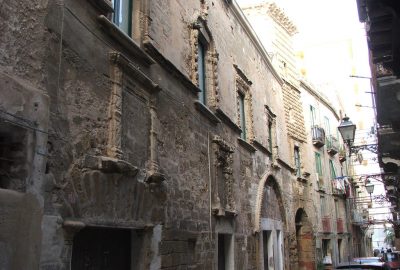
The communities of the southern peninsula were the wealthiest and best integrated in all of Italy during the Middle Ages. This was particularly true of Sicily, where more than 37,000 Jews lived, ...

The Jews first arrived in Ancona around 1000 C.E. In the fourteenth century, the city hosted a significant Jewish community, whose activities were organized around the port and commerce with the ...

The history of the Jews in Senigallia is similar to that of the Jews of Urbino or Pesaro. In the eighteenth century, the Jews numbered 600 of a total population of approximately 5,500 ...
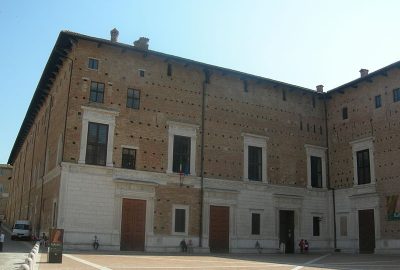
The first traces of a Jewish presence in Urbino date to the fourteenth century, when Daniel of Viterbo received authorization to work as a banker and merchant. The Jewish community prospered ...
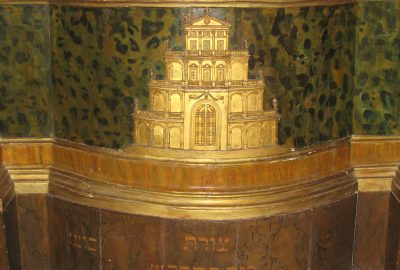
Documents attest to a Jewish presence in Pesaro dating back to 1214. The expulsion of the Jews from the papal states in 1569 led numerous Jewish families to Pesaro, which became the most ...
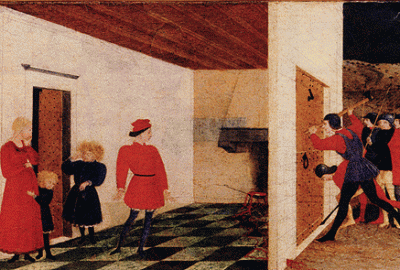
The presence of Jews in the Marches dates from as early as the twelfth century. The community developed especially after the expulsion of Jews from Spain, Sicily, and the Kingdom of Naples. There ...
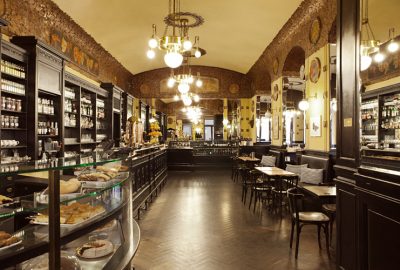
A rich and influential Jewish community lived in Trieste, a large port city of the Austro-Hungarian Empire that became Italian only after the First World War. During the nineteenth century and ...
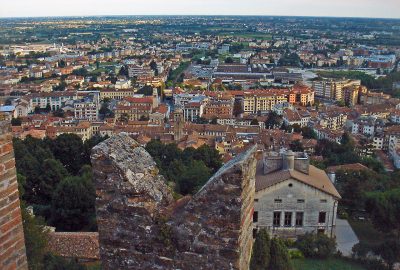
In this little town, as in so many other towns in Venetia, there was a small but flourishing Jewish community. One can see the street of the former synagogue, whose interior ornaments and ...
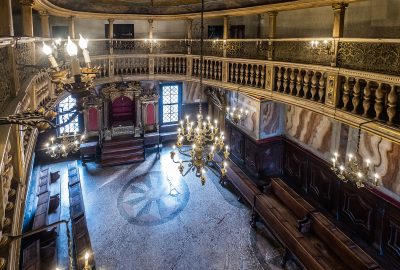
On 20 March 1516, Zaccaria Dolfin, an influential Venetian patrician, announced a radical turn in the history of the Jew of the Serenissima: “It is necessary to send all the Jews (zudei) to ...

In the fourteenth century, Padua was one of the great centers of medieval Judaism, with a celebrated rabbinical academy where students from all over Europe came to study. These students were also ...
The Veneto region, as its name suggests, makes a visit to the mysterious and inspiring Venice a must, even inspiring a certain William Shakespeare to set several of his greatest plays there ...
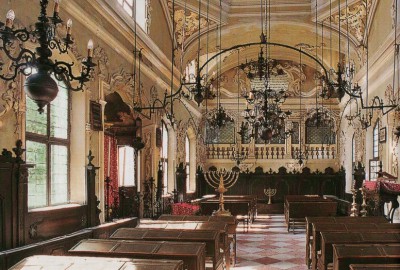
Under the protection of the Gonzaga dukes, Jewish life flourished in the city of Mantua during the course of centuries. At the beginning of the seventeenth century, some 7,000 Jews lived in the ...
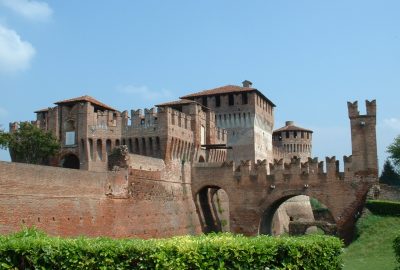
The only noteworthy place of remembrance in the area surrounding Milan is the small town of Soncino in the province of Cremona. In the fifteenth century, a Hebrew printing house operated there, ...
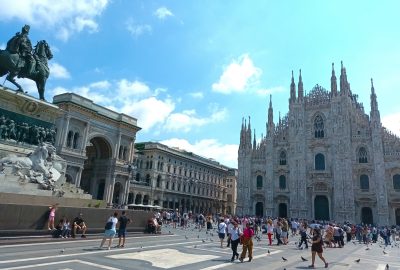
The Jewish presence in Milan dates back to the Roman period. Hebrew inscriptions from this period have been found by archaeologists. A Milanese synagogue dated back to at least the 4th century, ...
Until the middle of the nineteenth century and the unification of Italy, very few Jews lived in Lombardy. Today, however, Milan represents the second largest Jewish population in Italy after ...
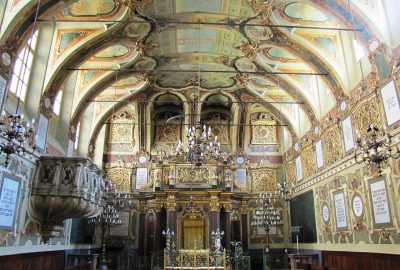
The Ashkenazic synagogue of the lovely, rich city of Casale Monferrato on the floodplain of the Po River was constructed in 1596, in the center of the old Jewish quarter. It is one of the oldest ...

The of this administrative center is unique for two reasons. First, its liturgy is special: called astigiano in Italian and Appam in Hebrew, its language is named after the initials of the three ...

The Jewish presence in Mondovi appears to date back to the end of the 16th century, and they played an active part in the town’s economic life. Among them was Donato Levi, who founded the ...

In the small town of Cherasco, in the province of Cuneo, you can make an appointment to visit a very interesting on private property. Hardly bigger than a living room, the synagogue features ...

Saluzzo’s small Jewish quarter maintains its former appearance in the area around Via Deportati Ebrei. In one of the courtyards on this street stands a building containing a on its third ...
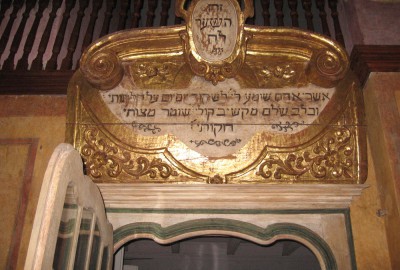
The most elegant of the region’s Baroque synagogues is found in the little city of Carmagnola near Turin. The city’s Jewish community was forced to live in a ghetto beginning in 1724. ...
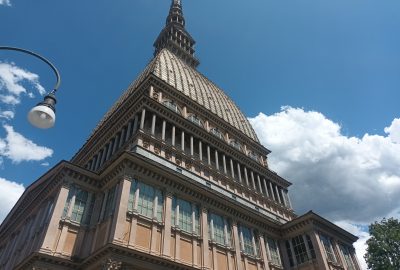
Turin is one of the finest examples of the crossroads of Jewish cultures: Ashkenazim from the north, Provençals following the expulsion, Sephardim following the Inquisition, Italians for 2 ...
Unjustly slighted as a tourist destination, Piedmont is one of the richest regions of Jewish heritage in Italy, with magnificent small Baroque synagogues like those of Carmagnola, Casale ...
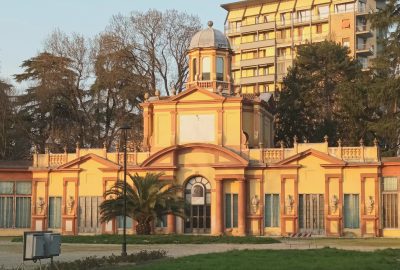
Modena has the great merit of being known for quite different monuments. Architectural and religious monuments, as in many Italian cities, and gastronomic masterpieces such as its famous vinegar. ...

Ferrara, a sublime city with a medieval centre listed as a World Heritage Site, does not appear to be a vast, museum-like enclosure encircled by a city. On the contrary, its historic centre is ...
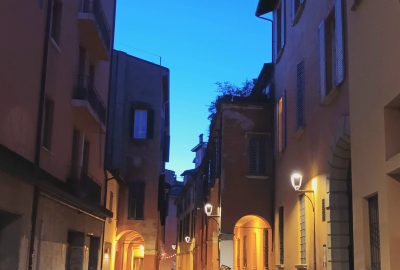
Bologna is famous for having been one of Europe’s leading cities in the Middle Ages. Thanks to its large population living within its walls, the wealth of local agriculture, the development ...
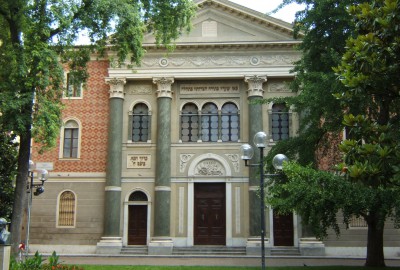
The rich region of Emilia-Romagna is definitely worth a week visit. Located on the south of the floodplain of the Po River, it includes cities like Bologna, home to a museum that is a model of ...
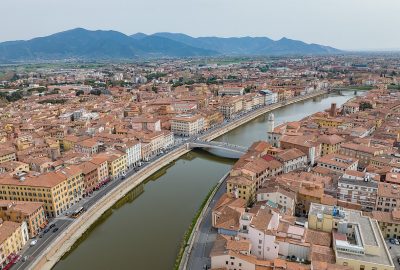
The Jewish presence in Pisa probably dates back to the 12th century, but could be older. Benjamin of Tudela described the city as follows: “All the inhabitants are courageous; no king or ...
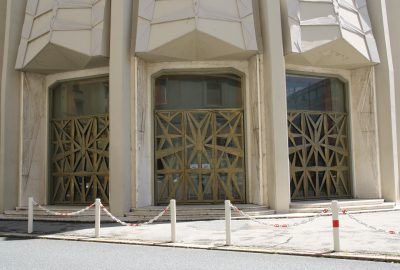
A visit to Livorno is required in the name of remembrance, even if the urban renewal projects of the early twentieth century around the port and the bombings of the Second World War in 1943-1944 ...