
Location
Bardejov
Bardejov possessed a large Jewish quarter where some 5,000 Jews lived before World War II. This small medieval city of 35,000 inhabitants lies thirty-seven miles north of Presov, near the Polish ...
Bardejov possessed a large Jewish quarter where some 5,000 Jews lived before World War II. This small medieval city of 35,000 inhabitants lies thirty-seven miles north of Presov, near the Polish ...
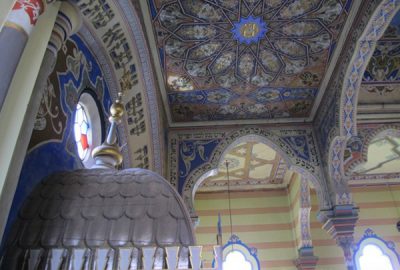
Not far from Kosice, Presov was also an important center of Jewish life. More than 6,000 Jews from the city and surrounding villages were killed during the war. Today fewer than 100 Jews live ...

The capital of eastern Slovakia, Kosice is a large industrial city of 250000 inhabitants. Its sizable Jewish community was almost totally annihilated during the Second World War. The city os now ...
In this region, you can visit ancient synagogues in Bardejov, Kosice and especially the sublime Presov synagogue. Unfortunately, there are fewer traces of Jewish life in Stropkov.
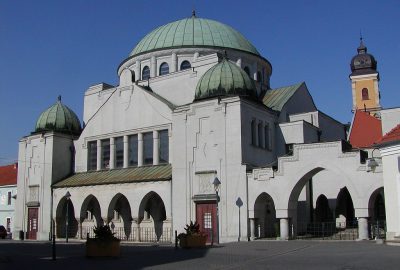
Trencin is a city of roughly 60,000 inhabitants, and you will find on Vajanskeho Street a beautiful synagogue dating from the beginning of the twentieth century. Although now an exhibition space, ...
Bratislava was one of the European centres of Judaism, when Rabbi Hatam Sofer lived there. Neighbouring Trencin boasts a beautiful synagogue dating from the early 20th century.

Half a day will suffice to see the in Szeged, one of the most interesting ones in Hungary (1903). With its Baroque dome, Roman columns, and Byzantine-inspired bellows, the monumental building is ...
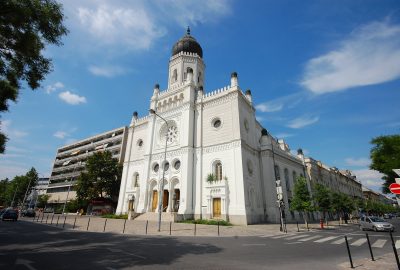
Kecskemét is worth a stop for its two synagogues. The largest is in (nineteenth-century) Romantic style. Today it houses the , where expositions and conferences are regularly held on ...
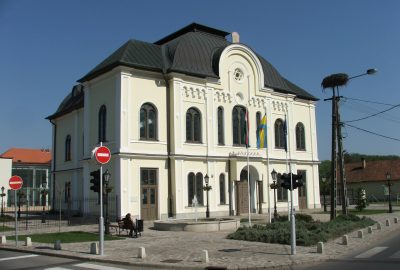
The region is famous for its rebbes, heads of Hasidic communities whose followers revered their thaumaturgical and magical powers. The city of Sátorajújhely, where 4,000 Jews lived in 1939, ...

Built in 1795, the looms over the old Jewish quarter with its elegant white facade. With the Protestant church on the other side of the small valley, it symbolizes the religious balance of a ...
In the seventeenth century, the Jews of Galicia and Silesia (modern-day Poland and Ukraine) were drawn to this region by trade in tokaj, a syrupy, amber-tinted wine very popular at the courts of ...
This region of rolling hills punctuated by vineyards merits a two-day visit for memory’s sake. There remains, in fact, little evidence of Jewish life here, as most of it was eradicated by ...
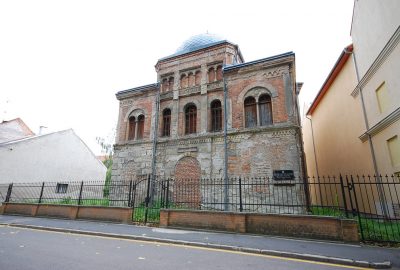
Within this Baroque city, where splendid thirteenth-century houses have been transformed into museums, restoration projects have brought two medieval synagogues back to life. Built in the early ...
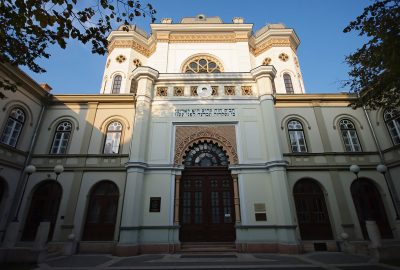
The immense gray dome of stands out against the industrial landscape. Completed in 1870, the structure reflects the prosperity of the city’s Jewish middle class -lawyers, bankers, and ...
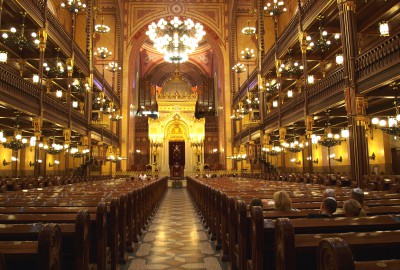
Visiting Budapest requires at least three days. The capital was born from the unification of three cities: Buda and Óbuda on the western shore of the Danube, and Pest on the eastern shores. ...
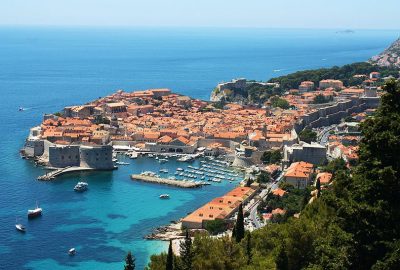
The earliest refugees from the Iberian Peninsula arrived in Ragusa (present-day Dubrovnik) at the end of the fifteenth century, at a time when the republic, still under nominal supervision by ...
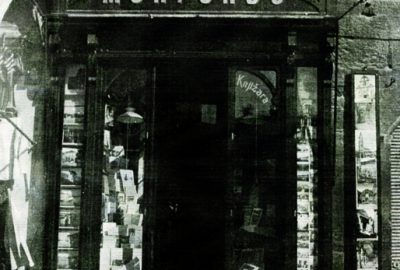
Archaeologists have recently unearthed traces of a Jewish presence in Salona (Solin), capital of Roman Dalmatia and sister city to Split, that dates as far back as the first centuries C.E. Salona ...
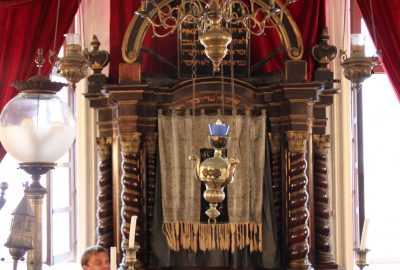
The several hundred Spanish Jews who arrived on the shores of the Adriatic had a key role for centuries in the development of these coastal principalities, and contributed greatly to their growth ...
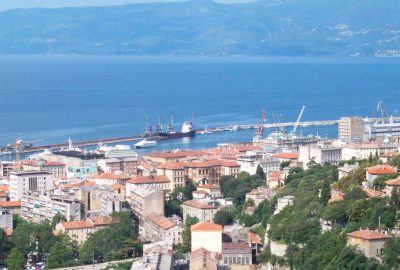
The Ashkenazic synagogue, built in the nineteenth century after a design by Hungarian architect Lipot Baumhorn, was destroyed in 1944. The Sephardic synagogue, built in 1928, is still used by the ...
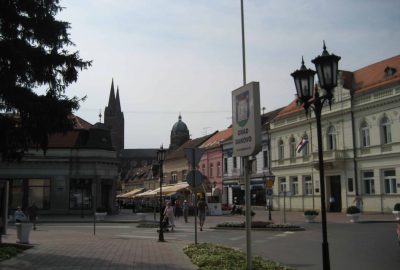
Created in 1879, the Jewish cemetery in Dakovo possesses the unique feature of containing individual burial sites for victims of the Shoah. A total of 566 Jewish victims of Dakovo’s Ustashi ...
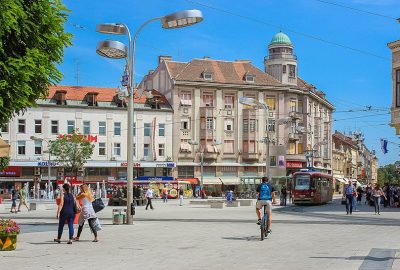
In 1847, fifty or so families helped found the community in Osijek, Slavonia’s main city. A school and synagogue were quickly built, presided over by Rabbi Samuel Spitzer, author of ...
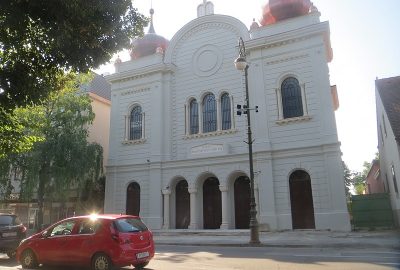
Varazdin is an important trading town located between Vienna and Trieste. The Jewish presence probably dates from the 18th century, mainly from Moravia, Hungary and Austria. They worked there ...
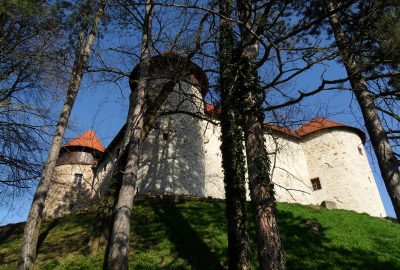
The Jewish presence in Karlovac probably dates back to the mid-19th century. A synagogue was built in Karlovac in 1870. It served the community until 1960, when it was destroyed. A commemorative ...
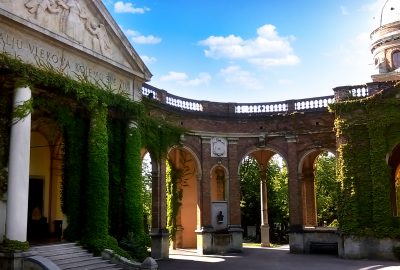
Zagreb is the capital of Croatia. The Jewish presence probably dates back to the 10th century, originating from surrounding areas but also from Spain and France. A place of prayer was mentioned ...
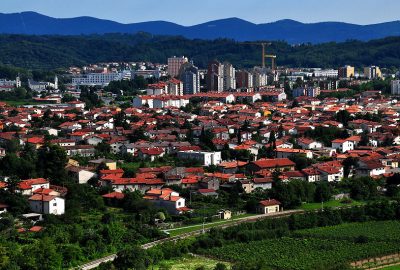
Nova Gorica was divided between Italy and Slovenia after the Second World War. It is on the Italian (Gorizia) side that one should look for major evidence of a past Jewish presence. In the ...
Not one of the regions where Slovenian Jewish life was most intense, you’ll find traces of it in the towns of Koper, Nova Gorica, Piran and Stanjel.
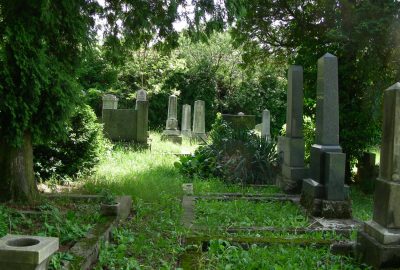
The Lendava city council is working to renovate the old synagogue, built in 1866, and turn it into a cultural center featuring a permanent exhibition on local Jewish history. Seriously damaged by ...
In this region, there are few traces of Jewish life in Kidiricevo, Murska Sobota and Ptuj. However, Lendava and Maribor still have synagogues. The synagogue in Maribor is one of the oldest in ...

The region’s sovereigns, the Esterházy dukes of Hungary, granted the Jews special protection within the seven districts of Burgenland. Since 1670, the region has been one of the most ...
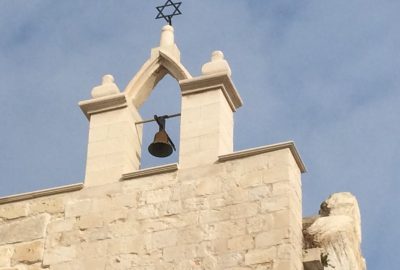
During the late Middle Ages, the city of Trani was home to a significant minority population of Jews. This community reached a high point during the thirteenth century. The giudecca of Trani was ...