
Location
Colmar
The Jewish presence in Colmar probably dates from the 13th century. Administrative documents confirm this presence. A synagogue was destroyed in 1279. The community grew, in particular thanks to ...
The Jewish presence in Colmar probably dates from the 13th century. Administrative documents confirm this presence. A synagogue was destroyed in 1279. The community grew, in particular thanks to ...
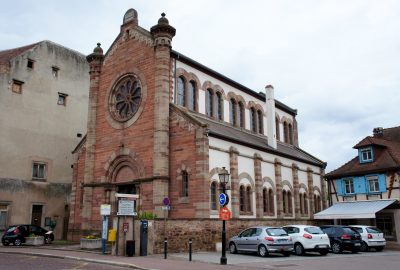
Traces of the old Jewish community can still be seen in this charming tourist town. On ruelle des Juifs, an arched doorway with an engraving in Hebrew signals the entrance to the old synagogue, ...
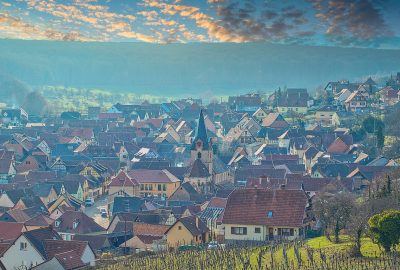
The Jewish presence in Rosenwiller dates back at least to the 14th century, a writing by Charles IV, mentioning the Jewish cemetery. A letter dealing with a dispute with a certain Haym de ...

In this suburb of Strasbourg, one can see a fine eighteenth-century mikvah. A room dedicated to Davis Sintzheim (the first Grand Rabbi of France and director of the Talmudic school ...
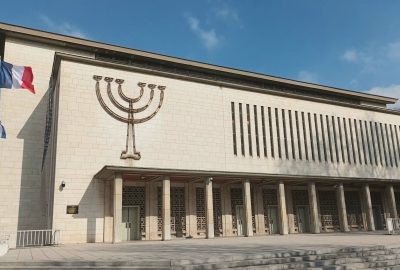
Strasbourg, the regional capital, is also home to the European Parliament, as witnessed by the European flags welcoming you at the train station. This magnificent city, at the heart of many ...

This small town lying in the shadow of an old abbey once had a very active community. You can still see the birthplaces of its two famous Jewish sons: the painter , who was born here in ...
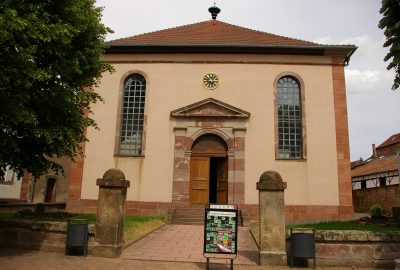
The Jewish presence in Bouxwiller seems to date from the 14th century. The princes of Hanau-Lichtenberg adopted Protestantism and were open-minded towards Judaism and its presence during the ...
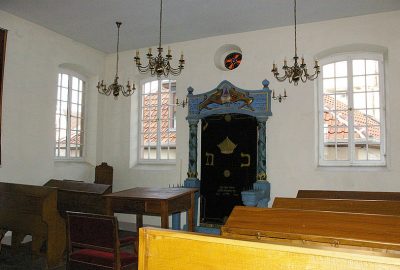
The Jewish presence in Pfaffenhoffen probably dates from the beginning of the 14th century. In 1683, the first synagogue in Pfaffenhoffen was built. However, it was destroyed shortly afterwards. ...
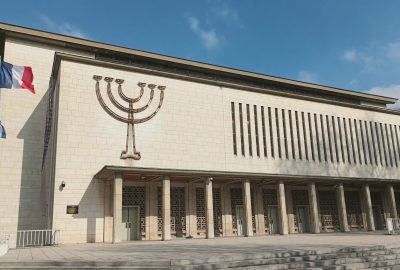
Alsace is rich in Jewish history. In the village of Schirrhoffen, for example, in around 1850, the population of 650 included some 450 Jews. Today, there are over 200 specific sites (synagogues, ...
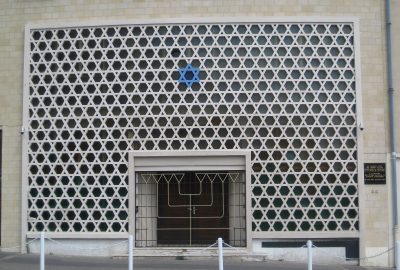
Traveling rabbis served the small local communities, made up of several or more families (some ten at Evreux and Lisieux, around two hundred at Le Havre). The only sizable community structure, a ...
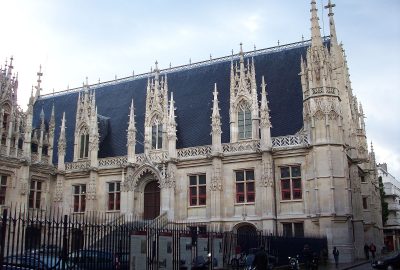
In medieval times, there was an intense intellectual life around the synagogue’s Talmudic school in what was called “Le Clos aux Juifs” (the Jews’ Enclosure). Contrary to ...
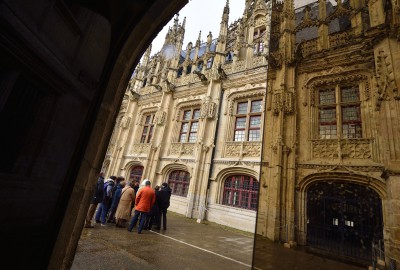
Jewish life in Normandy was focused around Caen and Rouen. The Jewish community lives in the region since the Roman empire until their expulsion in 1182. During the Middle Ages, Normandy was the ...
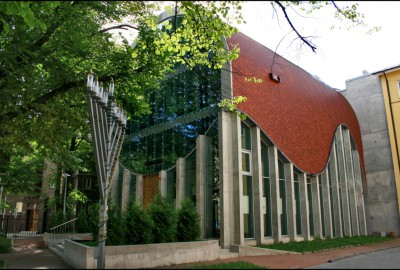
The Estonian Jewish community is the smallest of the Baltic states, and historically, the one that played the least important role in Yiddishland before the Shoah. Indeed, the community never ...
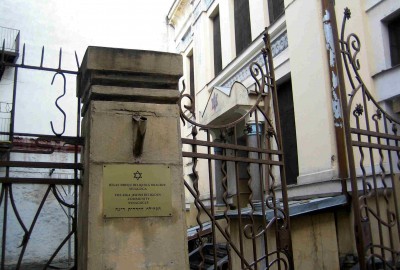
The Jewish community of Latvia traces its origins to the middle of the fourteenth century. Numbering today some 15000 persons, it developed in the principalities of Kurland and Livonia, ...
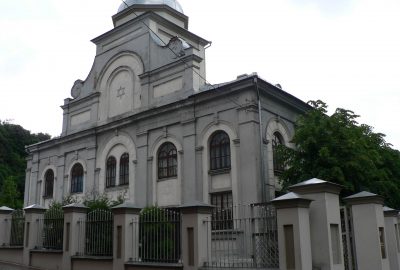
The Jewish community of Lithuania numbers only some 6000. People It is no more than a shadow of what it once was: until the Shoah, it was a center of the Yiddish-speaking lands. In a sense, ...
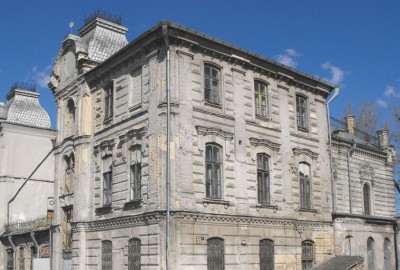
The Republic of Belarus is a state formed of the disintegration of the Soviet Union. It has retained, however, close ties to Moscow. Historically, Belarus belonged to Lithuania in the fourteenth ...
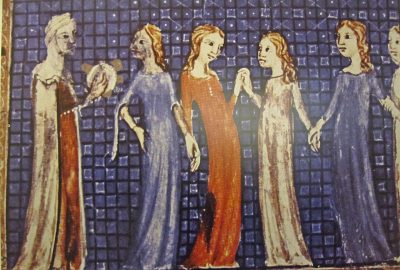
In Sarajevo, where most of Bosnia's Jews lived, the earliest refugees from the Iberian Peninsula began arriving around 1565, having first stopped in Italy, Greece, Bulgaria, and other regions ...
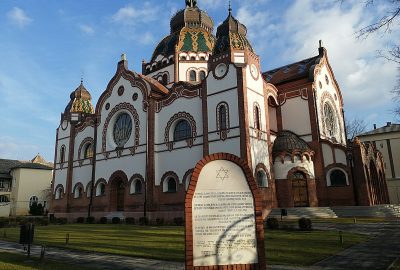
Serbia and Voivodina form, along with Montenegro, a nation that had been called The Federal Republic of Yugoslavia until 4 February 2003, when it was renamed Serbia and Montenegro. The Serbian ...
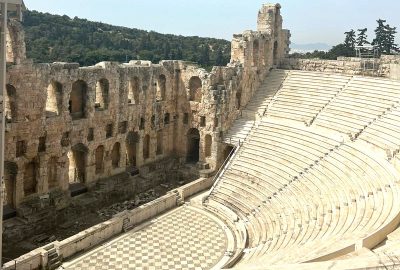
Below the Acropolis is Athens, a marble plaque engraved with a menorah has been uncovered amid the clutter of the Agora, near a statue of Emperor Hadrien. Perhaps it used to rest on one of the ...
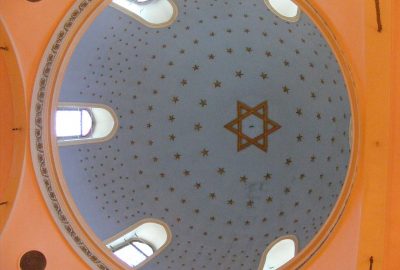
In the beautiful synagogue of Ahrida, one of the oldest in Istanbul, the tevah assumes the shape of a caravel symbolizing not only Noah's Ark but also the vessels that in 1492 transported the ...
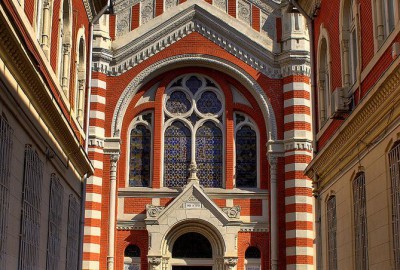
There is little evidence of a Jewish presence on the coats of the Black Sea before the arrival of Roman legions in the early second century C.E. Vestiges, coins, and inscriptions preserved in a ...
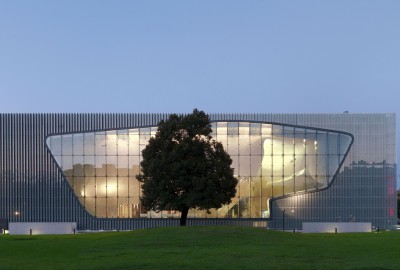
Poland represents the most illustrious and tragic chapter in European Jewish history. For centuries, this country was the most welcoming to Jews fleeing Germany, Spain, and southern Europe; the ...

Below the bell tower of Prague's Jewish city hall, there are two clock faces. One displays Roman numerals, and the other Hebrew letters. The hands of the first clock revolve in the normal ...
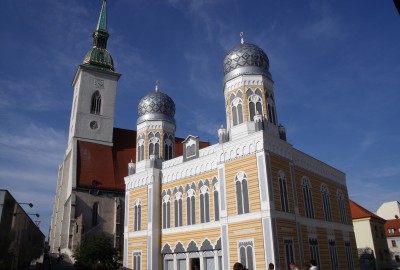
The history of Jews in Slovakia -dating from the sixteenth century under the protection of the Hapsburg- intersects that of their fellow believers in Hungary and the Czech Republic. Jews in these ...
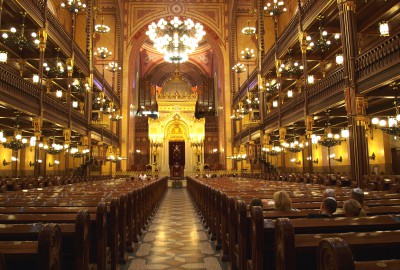
At the Jewish Museum of Budapest, a replica of a tombstone dating from the third century bears the image of a menorah. This relic attests to nearly 1700 years of Jewish presence in the Carpathian ...
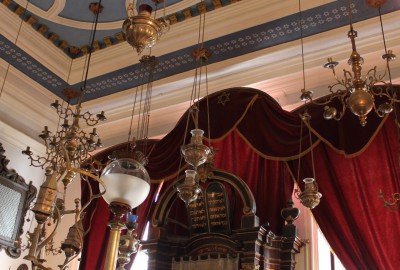
Jewish settlers had to wait until the death of Austria's Catholic and very anti-Semitic Archduchess Maria Theresa and the ascension of her her tolerant son, Joseph II, to gain the right to ...
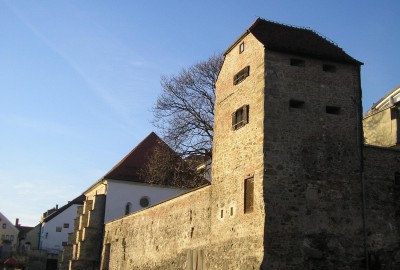
A Slavic land under Germanic rule for many centuries, Slovenia finally gained independence in 1991. The fate of the Jewish population here depended largely over the years on the good will of its ...
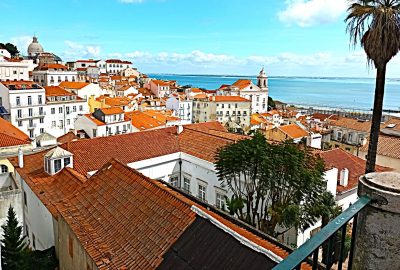
Portugal became an autonomous kingdom under Henry of Burgundy, a prince of French origin. His son, Alfonso I, was the first king of Portugal (1114-85). The history of its Jewish population ...
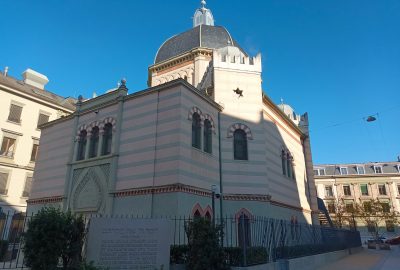
Jewish craftsmen and merchants settled in Switzerland's Roman cities between the third and fourth centuries, but the first documents that mention them date only from the thirteenth century. ...
Brückenstraße 10, 54290 Trier Tel: +49 (0) 651 970680 https://www.fes.de/marx/index_gr.html