Location
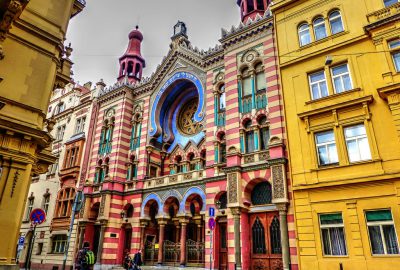
Prague
Stuccoed in pink, green or yellow, grand neo-Renaissance and neo-Gothic buildings line the Parizká, the Avenue of Paris. Since the fall of the wall, elegant boutiques have been flourishing on ...
Stuccoed in pink, green or yellow, grand neo-Renaissance and neo-Gothic buildings line the Parizká, the Avenue of Paris. Since the fall of the wall, elegant boutiques have been flourishing on ...
What if you climbed on the shoulders of the Golem or travelled between Kafka’s lines through enchanting Prague or beyond its walls to discover all the traces of Jewish presence in many ...
In this region, you can visit ancient synagogues in Bardejov, Kosice and especially the sublime Presov synagogue. Unfortunately, there are fewer traces of Jewish life in Stropkov.

Half a day will suffice to see the in Szeged, one of the most interesting ones in Hungary (1903). With its Baroque dome, Roman columns, and Byzantine-inspired bellows, the monumental building is ...
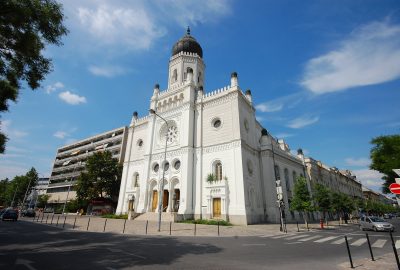
Kecskemét is worth a stop for its two synagogues. The largest is in (nineteenth-century) Romantic style. Today it houses the , where expositions and conferences are regularly held on ...
The region is famous for its rebbes, heads of Hasidic communities whose followers revered their thaumaturgical and magical powers. The city of Sátorajújhely, where 4,000 Jews lived in 1939, ...

Built in 1795, the looms over the old Jewish quarter with its elegant white facade. With the Protestant church on the other side of the small valley, it symbolizes the religious balance of a ...
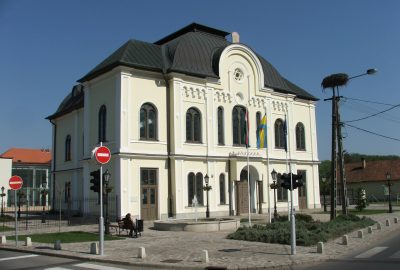
In the seventeenth century, the Jews of Galicia and Silesia (modern-day Poland and Ukraine) were drawn to this region by trade in tokaj, a syrupy, amber-tinted wine very popular at the courts of ...
This region of rolling hills punctuated by vineyards merits a two-day visit for memory’s sake. There remains, in fact, little evidence of Jewish life here, as most of it was eradicated by ...
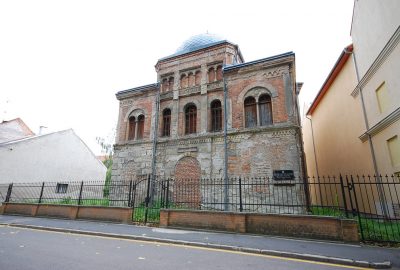
Within this Baroque city, where splendid thirteenth-century houses have been transformed into museums, restoration projects have brought two medieval synagogues back to life. Built in the early ...
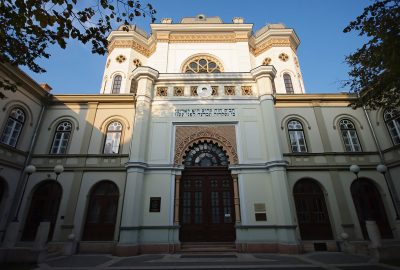
The immense gray dome of stands out against the industrial landscape. Completed in 1870, the structure reflects the prosperity of the city’s Jewish middle class -lawyers, bankers, and ...
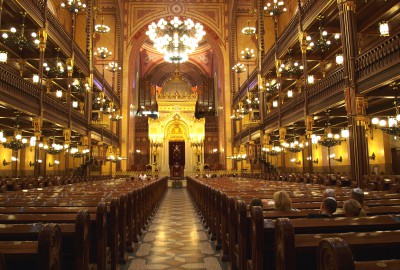
Visiting Budapest requires at least three days. The capital was born from the unification of three cities: Buda and Óbuda on the western shore of the Danube, and Pest on the eastern shores. ...
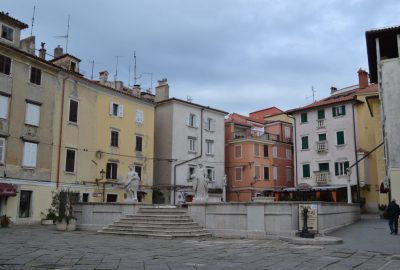
Piran is a former possession of the City of Doges, which explains its Venetian atmosphere. It contains some beautiful architecture, including a replica of the Campanile in the Piazza San Marco. ...
Not one of the regions where Slovenian Jewish life was most intense, you’ll find traces of it in the towns of Koper, Nova Gorica, Piran and Stanjel.
In this region, there are few traces of Jewish life in Kidiricevo, Murska Sobota and Ptuj. However, Lendava and Maribor still have synagogues. The synagogue in Maribor is one of the oldest in ...

The region’s sovereigns, the Esterházy dukes of Hungary, granted the Jews special protection within the seven districts of Burgenland. Since 1670, the region has been one of the most ...
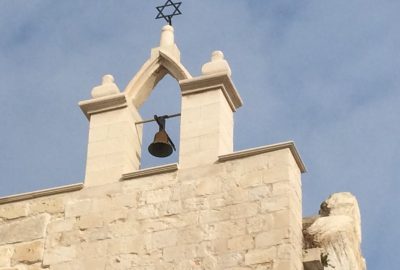
During the late Middle Ages, the city of Trani was home to a significant minority population of Jews. This community reached a high point during the thirteenth century. The giudecca of Trani was ...
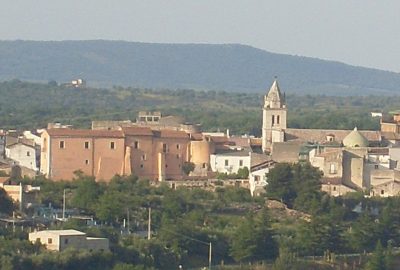
It was in San Nicandro that the first mass conversion to Judaism since the end of antiquity took place. All the converts emigrated to Israel shortly after 1948, so unfortunately there is nothing ...
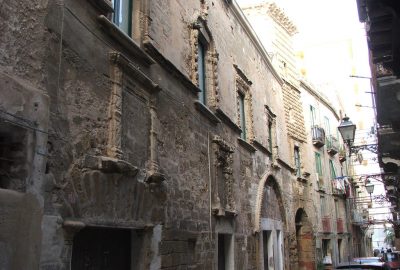
The communities of the southern peninsula were the wealthiest and best integrated in all of Italy during the Middle Ages. This was particularly true of Sicily, where more than 37,000 Jews lived, ...

The Jews first arrived in Ancona around 1000 C.E. In the fourteenth century, the city hosted a significant Jewish community, whose activities were organized around the port and commerce with the ...

The history of the Jews in Senigallia is similar to that of the Jews of Urbino or Pesaro. In the eighteenth century, the Jews numbered 600 of a total population of approximately 5,500 ...
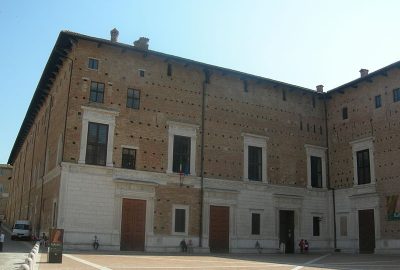
The first traces of a Jewish presence in Urbino date to the fourteenth century, when Daniel of Viterbo received authorization to work as a banker and merchant. The Jewish community prospered ...
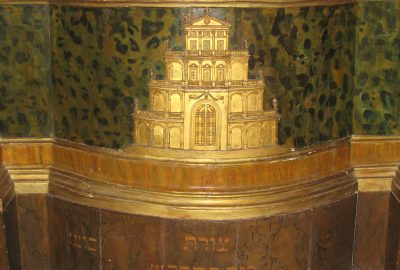
Documents attest to a Jewish presence in Pesaro dating back to 1214. The expulsion of the Jews from the papal states in 1569 led numerous Jewish families to Pesaro, which became the most ...
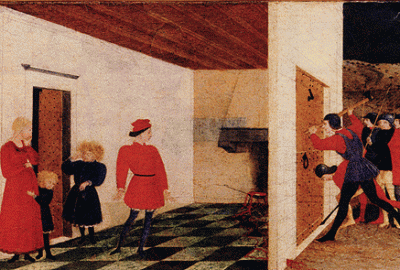
The presence of Jews in the Marches dates from as early as the twelfth century. The community developed especially after the expulsion of Jews from Spain, Sicily, and the Kingdom of Naples. There ...
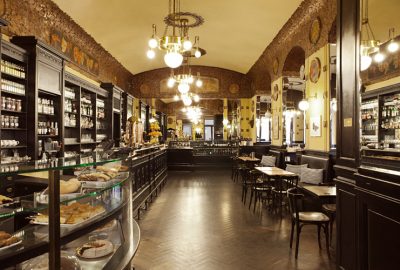
A rich and influential Jewish community lived in Trieste, a large port city of the Austro-Hungarian Empire that became Italian only after the First World War. During the nineteenth century and ...
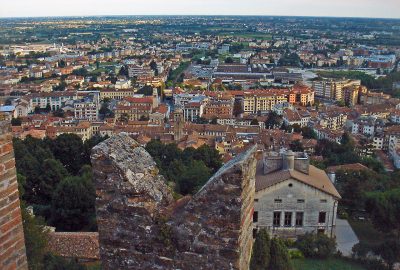
In this little town, as in so many other towns in Venetia, there was a small but flourishing Jewish community. One can see the street of the former synagogue, whose interior ornaments and ...
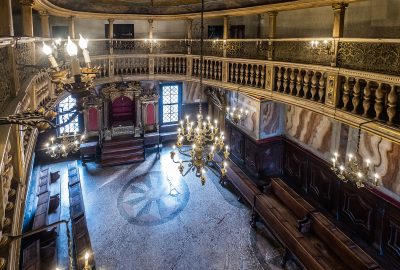
On 20 March 1516, Zaccaria Dolfin, an influential Venetian patrician, announced a radical turn in the history of the Jew of the Serenissima: “It is necessary to send all the Jews (zudei) to ...

In the fourteenth century, Padua was one of the great centers of medieval Judaism, with a celebrated rabbinical academy where students from all over Europe came to study. These students were also ...
The Veneto region, as its name suggests, makes a visit to the mysterious and inspiring Venice a must, even inspiring a certain William Shakespeare to set several of his greatest plays there ...
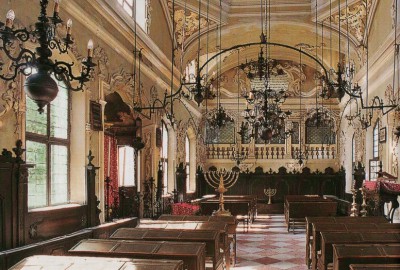
Under the protection of the Gonzaga dukes, Jewish life flourished in the city of Mantua during the course of centuries. At the beginning of the seventeenth century, some 7,000 Jews lived in the ...