Location
Lublin Plateau
The Lublin Plateau bears witness to ancient traces of Jewish life, as evidenced by the presence of 17th-century synagogues in Jozefow, Zamosc and Szczebrzeszyn and an 18th-century one in ...
The Lublin Plateau bears witness to ancient traces of Jewish life, as evidenced by the presence of 17th-century synagogues in Jozefow, Zamosc and Szczebrzeszyn and an 18th-century one in ...

Lancut is a small, pleasant city known for its Renaissance castle once belonging to the Lubomirskis. The town also possesses a Baroque synagogue, one of the most beautiful in Poland. Built ...
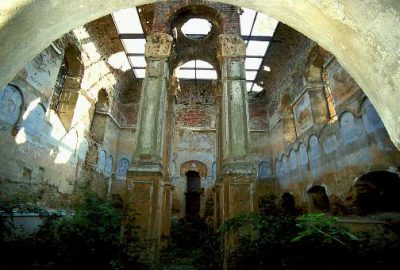
Jews settled in Rymanów so long ago that there exists no document mentioning their arrival. In the fifteenth and sixteenth centuries, the inhabitants of the city lived mainly from the cultivation ...
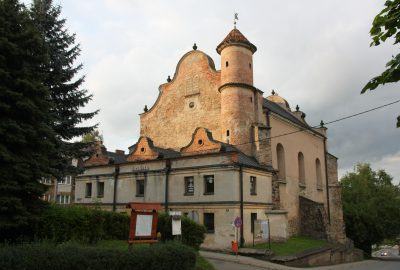
The small city of Lesko possesses one of the most beautiful fortified synagogues in the region, built in the sixteenth and seventeenth centuries, with a turret that gives it the look of a little ...

Jews began to settle in Rzeszów in the fifteenth century and, in the seventeenth century, built two synagogues, both of which remain, almost side by side. They are fairly easy to find, ...
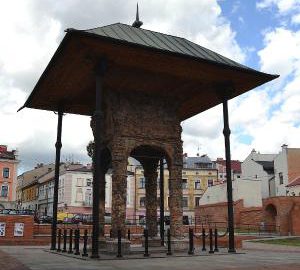
In Tarnów, half of the population was Jewish: between 20,000 and 25,000 people worked principally in the clothing and hat industries (sixty or so businesses), arts and crafts, and trade. Some ...
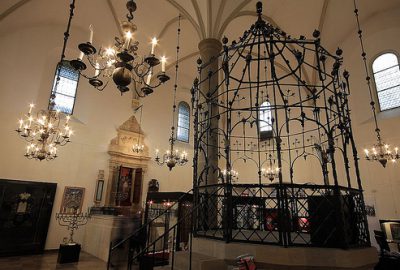
In 1335, King Casimir the Great founded an independent city near Kraków, Kazimierz, in which he permitted Jews to settle around Sukiernikow (Clothier) Street (now called Jozefa Street), next to ...
This vast region includes ancient traces of Jewish life in Lancut, Lesko, Przemysl, Rymanow, Rzeszow and Tarnow, the Ulma family museum in Markowa, major cities such as Krakow, but also the camps ...
From Treblinka, rather than return to Warsaw in the evening, you can travel on to Bialystok, near Belarus, a city with a Jewish tradition so strong that in 1913, Jews numbered 61,500, or 70% of ...
You’ll be amazed to discover on our page dedicated to the town of Bialystok the impressive number of synagogues it was home to, even if its name is best known today in popular Jewish ...
Located on the bank of the Ner, a tributary of the Warta in the region the Germans called Wartheland, Chelmno is where “gas trucks” were tested beginning 1941, an early form of ...
The Lower Vistula region is infamous in Jewish history for the many massacres perpetrated during the Holocaust, particularly in Chelmno. It is in this town that Claude Lanzmann’s film begins.
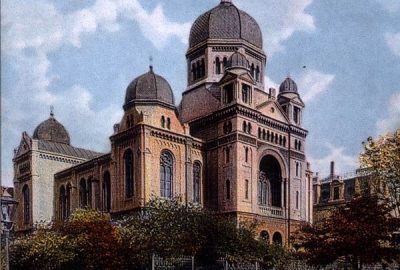
Lodz is a large Polish industrial city where a significant Jewish working class, along with merchants and rich industrialists, were concentrated in the nineteenth century. A fine representation ...
Jews began settling in Góra Kalwaria (Calvary Mountain) in 1795, and by a century later they had attained more than 50% of the city’s population. The Tsadik Isaac Meir Rothenberg ...
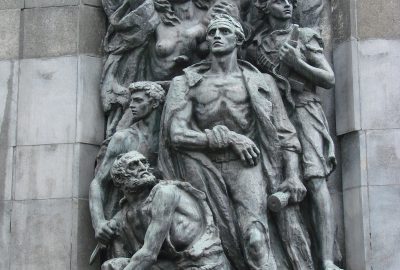
The name alone evokes the martyrdom of the ghetto following the April 1943 insurrection. Events here shall remain firmly fixed in the conscience of humanity. Jews settled in Warsaw beginning in ...
The region is rich in references to Jewish history, including Gora Kalwaria, long ago dubbed “the new Jerusalem”, the very large pre-war community of Lodz, and the capital Warsaw, ...
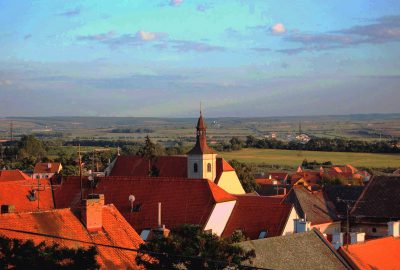
After Prague, until the nineteenth century the largest Jewish community in all the Czech lands lived in the city of Mikulov, south of Brno. Its yeshivoth were renowned throughout the region, even ...
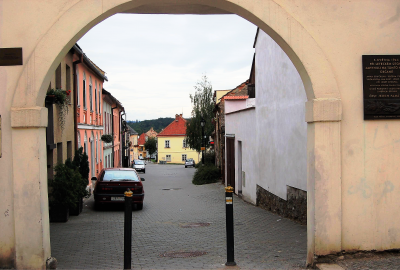
Boskovice is located nineteen miles north of Brno. This large center of Jewish culture and study of the Torah was for many years the headquarters of the chief Rabbinate of Moravia. The ...
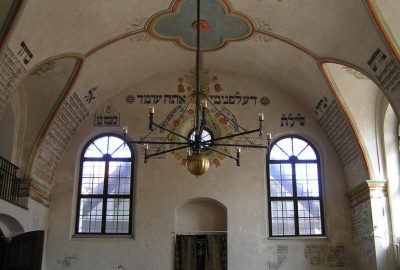
The city of Trebíc is located thirty-one miles north of Brno on the other side of the Jihlava River. Its Jewish quarter, near the city center, was one of the largest in the country: in the ...
A less famous region than Bohemia, Moravia boasts some very old Jewish places of worship of very different kinds, depending on local and regional influences.
The large village of Roudnice nad Labem twenty-five miles from Prague was one of the first small centers of Judaism in Bohemia and merits a brief visit. The oldest Jewish quarter, destroyed ...

Plzen is the principal center and beer capital of western Bohemia. The Jews were expelled from the city in 1504 and not permitted to return for more than two centuries. Following the industrial ...

There is a small Jewish quarter of about ten houses to the southwest of Kasejovice’s central square, linked to the rest of the city by a narrow, straight street. The , in the heart of ...
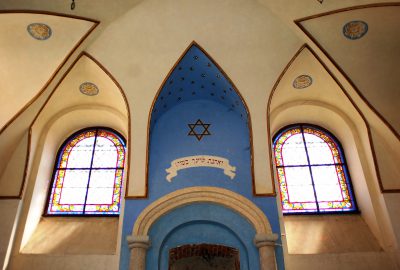
In Breznice in western Bohemia one can still see the former Jewish quarter created in 1570 by the local lord, Ferdinand of Loksany, and enlarged a century and a half later. The two streets ...
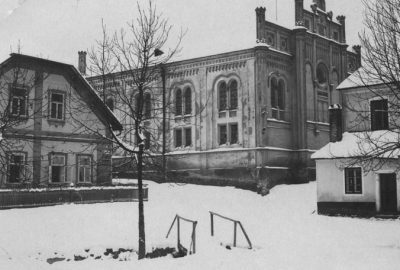
The small town of Golcuv Jenikov near Caslav had a significant Jewish quarter of some fifty homes to the south of the town’s central square. Most have kept their original appearance. ...
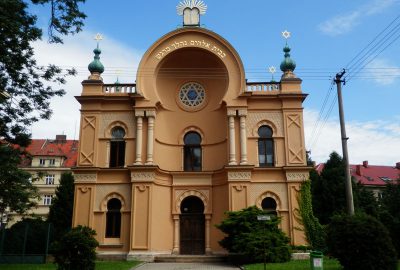
Those with a healthy curiosity should make a quick detour to the small town of Cáslav, located forty-four miles southeast of the capital. Forbidden to Jews until the middle of the nineteenth ...
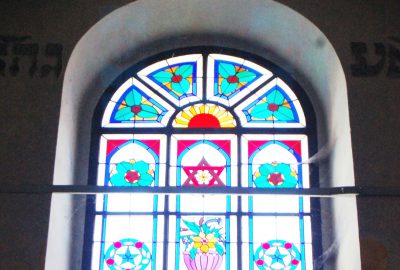
The city of Kolín, one of the most important places of Jewish remembrance in the Czech lands, is worth a trip to see the small streets of the Jewish quarter and the magnificent cemetery. Overrun ...
In the village of Drevikov, roughly sixty miles southeast of Prague, it is possible to see how Jews lived in the villages of Bohemia at the end of the nineteenth century, before their ...
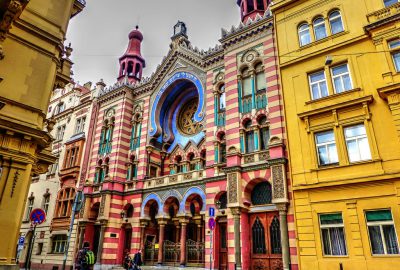
Stuccoed in pink, green or yellow, grand neo-Renaissance and neo-Gothic buildings line the Parizká, the Avenue of Paris. Since the fall of the wall, elegant boutiques have been flourishing on ...
What if you climbed on the shoulders of the Golem or travelled between Kafka’s lines through enchanting Prague or beyond its walls to discover all the traces of Jewish presence in many ...