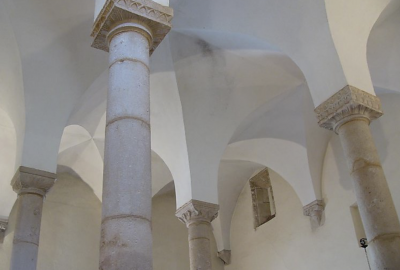
Location
Tomar
Although there was an organized community in Tomar at the turn of the fourteenth century, indicated by the inscription on the tombstone of Rabbi Joseph of Tomar, who died in Faro in 1315, it was ...
Although there was an organized community in Tomar at the turn of the fourteenth century, indicated by the inscription on the tombstone of Rabbi Joseph of Tomar, who died in Faro in 1315, it was ...
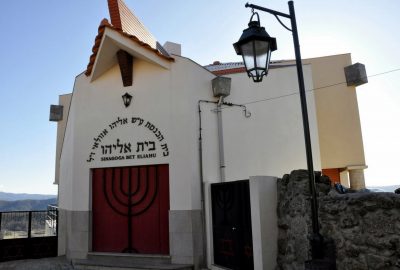
The little community of Belmonte of between 100 and 300 souls was “discovered” in 1920 by the engineer Samuel Schwarz. Its existence was revealed to the world by Frédéric ...
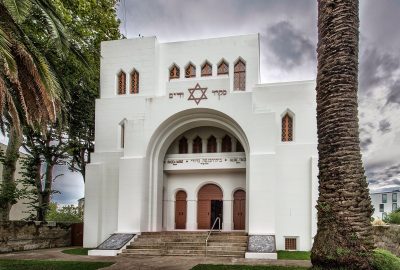
Porto is the capital of northern Portugal. It is the country’s second largest city after Lisbon. It is best known for its historic monuments and its wine. The Jewish presence dates back to ...
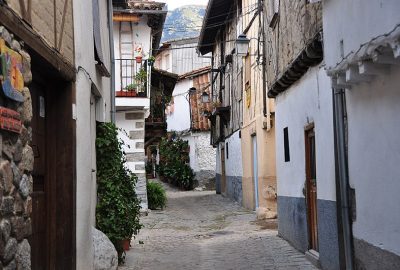
Although the Judería in Hervás was small, a local proverb that “in Hervás there are many Jews” made the quarter famous. It stood close to the Ambroz River near the town’s exit. ...
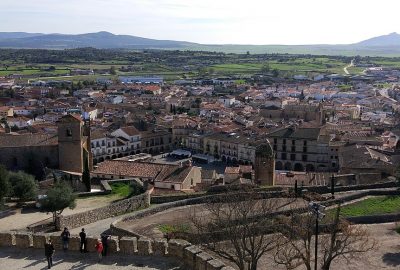
The community of Trujillo is first mentioned in 1290. Just before the expulsion, it had 150 members. All of them went to Portugal. Not long ago, construction in the back of a pharmacy brought to ...
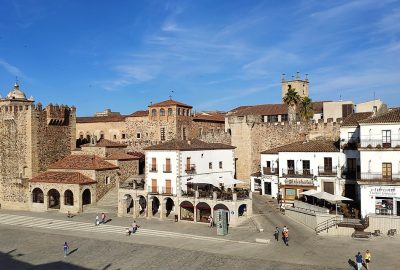
Cáceres had a fairly sizable Jewish presence after the Christian reconquest. In 1479, 100 married Jews were listed in a community with some 650 members. They lived in two juderías: the ...
It is likely the history of Spain’s Jews began in Estremadura. Vestiges from the third century bear witness to them, and, according to the twelfth-century chronicler Abraham ibn Daud, the ...

Seville’s Santa Cruz quarter, protected by the Alcazar, was formerly the city’s famous judería. If the English like to dine early compared to the French, they enjoy this meal at ...
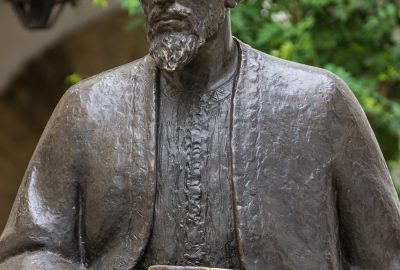
Homeland of Maimonides, Cordoba was under the Arab Caliphate of Abderahman III the greatest Andalusian juderia. Under the Muslim rule, the Jewish community lived in harmony with the conquerors, ...
Famed in the eleventh century for the influence of Talmudists such as Isaac ibn Gayata, Isaac Alfasi, and Joseph ibn Migas, who founded the so-called “Lucena School”, Lucena preserves ...
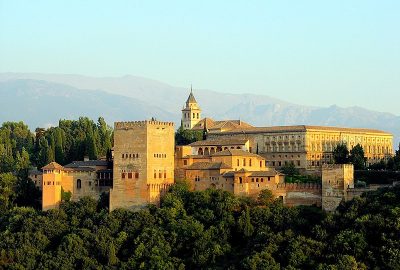
Granada’s splendor was at its apogee in the eleventh century, when Samuel ha-Nagid and his son Joseph were in charge of the kingdom. The large Jewish population exceeded 5,000 and reached ...
It is possible to date the presence of Jews in Andalusia to the Council of Elvira (303-09), when references were made to the need to separate Jews and Christians.

The call is clearly defined by a small square and the Carrer de la Call. It is one of Spain’s most important for the quality and richness of its houses, even if urban development work has ...
There have been Jews in the Balearic Islands since the Roman occupation. After Jaume I won the islands from the Arabs, many Jews arrived from Catalonia but also the south of France and North ...
Teruel became important as the supply center for Catalan-Aragónese troops sent out to conquer Valencia. The Jews here became specialized in weaving wool. The Lonja, or produce exchange, was open ...
In the Middle Ages, the powerful kingdom of Aragón comprised not only of Aragón itself but Catalonia, Valencia, and the Balearic Islands. It was home to numerous Jewish communities, especially ...
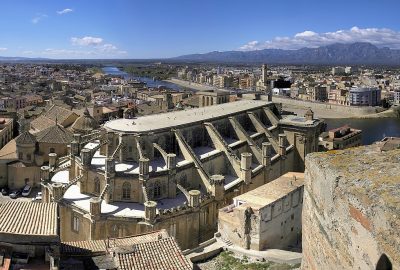
Tortosa was home to one of the peninsula’s oldest communities, as attested by a seventh-century headstone discovered in the nineteenth century and now on display in the cathedral cloister. ...

Standing on the trading route between Lérida and Tarragona, Valls had a thriving little community that was, however, almost annihilated in the pogroms of 1391, a few Jews remaining after… ...

The call major, which was active between the twelfth century and the riots of 1391, is Spain’s best-preserved Jewish quarter and the easiest to visit. It comprises a small zone between the ...
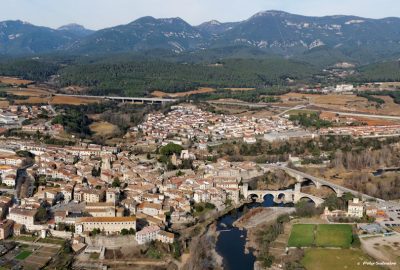
The presence of Jews in Besalú is attested in a document from 1229 in which Jaume I the Conqueror reserves to them the function of moneylender. In 1342, the community, hitherto linked to the one ...
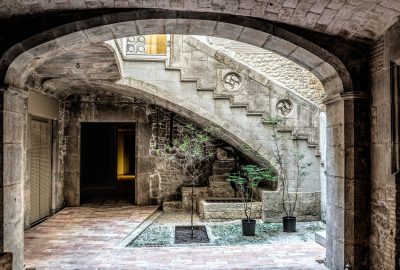
Gerona was the second most important community in Catalonia, both for its size (1000 men and women in the twelfth and thirteenth centuries, but only 100 or so in the fifteenth) and for the ...
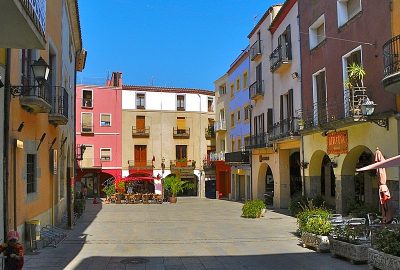
In the fourteenth century, and up to 1492, there was a large community in Castelló d’Empúries living around the Plaza Llana, in the calles de la Judería, del San Padre, and Peixetiries ...
The Jews settled in Catalonia in Roman times, and communities began to take shape in Barcelona and Gerona in the tenth century. By the twelfth century, there were five major Jewish centers: ...
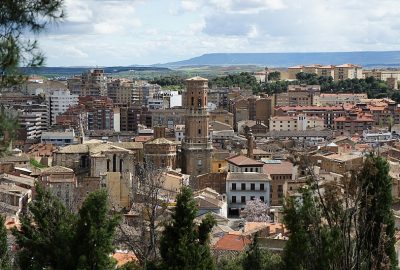
In the fifteenth century some 15% of Tudela’s population were Jews. There were two quarters, one around the Zaragaza gate, the other within the castle walls, but nothing remains ...
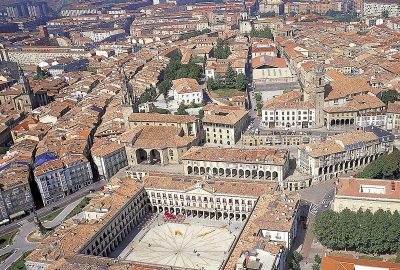
The town of Vitoria had 300 Jews in 1290 and 900 on the eve of the expulsion -the equivalent of 6 or 7% of the total population. Their main activities were tax collecting and medicine. In 1492 ...

Probably the most interesting judería in Galicia, Ribadavia has kept its old Jewish quarter despite later urban developments. Although it is known Jews were there as far back as the tenth ...
The historical province of Navarre, straddling the Spanish-French border, was violently disputed by the Castilians and counts of Champagne. It was also where Jews from Arab Spain came together ...
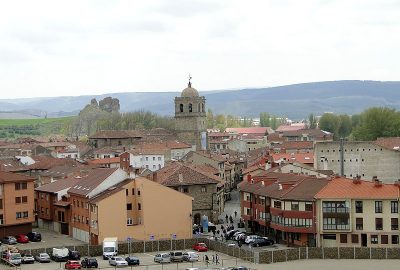
The earliest mention of Jewish shopkeepers in Aguilar de Campó, situated along the trading route toward the port of Cantabria, is from 1188. A Hebrew inscription can still be seen under the ...
A small Jewish community lived in Puente Castro until the twelfth century. It disappeared during the wars between Castile and León. The cemetery has yielded more than a dozen magnificent ...
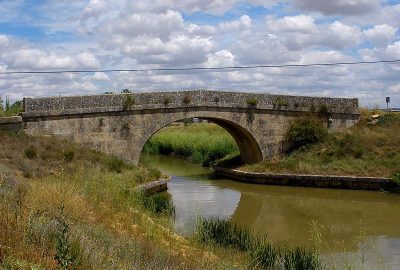
The village of Amusco is known to have had a community of some 300 Jews in the fifteenth century. The old synagogue is still here, surprisingly positioned on the village square next to the church ...