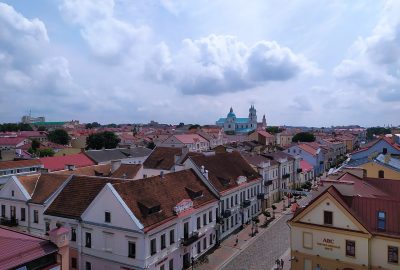
Location
Grodno
Grodno, seat of a Catholic bishopric, was once a major city within the Polish-Lithuanian Union, as evidenced by Farny, the beautiful Baroque Jesuit church that towers over Sovietskaya Square. ...
Grodno, seat of a Catholic bishopric, was once a major city within the Polish-Lithuanian Union, as evidenced by Farny, the beautiful Baroque Jesuit church that towers over Sovietskaya Square. ...
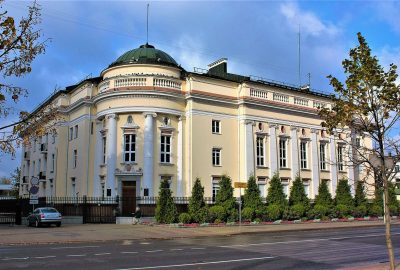
The first city across the Polish border, Brest is located on the right bank of the Bug River. Its name evokes the famous Brest-Litovsk Treaty of April 1918, whereby Trotsky’s Red Army put ...
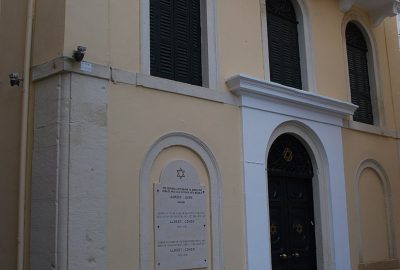
In the late 12th century, Jewish traveler Benjamin de Tudela encountered a lone Jew on Corfu. Three centuries later, however, Jews had become so numerous here that the Venetians, then in control ...
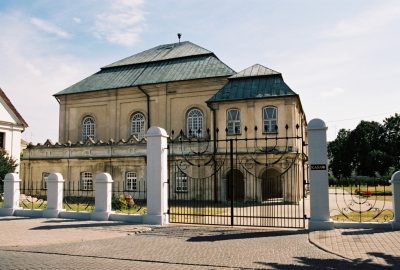
Jews began settling in Wlodawa in the seventeenth century. By the turn of the twentieth century, they numbered 3,670 (66% of the population), then 4,200 (67%) in 1921, and 5,650 (75%) in 1939. ...
The last Polish city before the Ukrainian border and former Austrian Fortress that fell to the Russians in the first World War, Przemysl is also a city with a strong Jewish community dating going ...
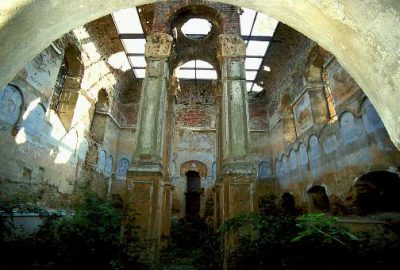
Jews settled in Rymanów so long ago that there exists no document mentioning their arrival. In the fifteenth and sixteenth centuries, the inhabitants of the city lived mainly from the cultivation ...
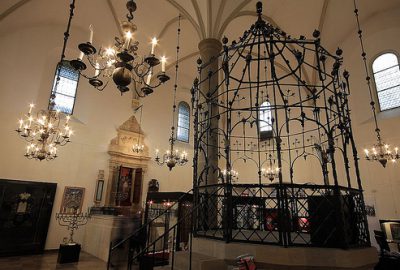
In 1335, King Casimir the Great founded an independent city near Kraków, Kazimierz, in which he permitted Jews to settle around Sukiernikow (Clothier) Street (now called Jozefa Street), next to ...

From Bialystok, a detour toward Tykocin is imperative: it has effectively preserved the structure and architecture of an old shtetl. This town, tiny today, was in times past more important than ...
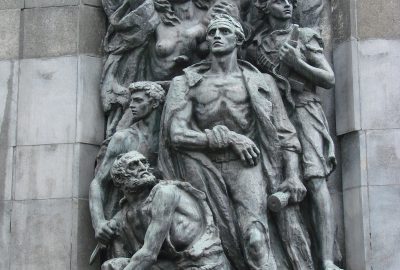
The name alone evokes the martyrdom of the ghetto following the April 1943 insurrection. Events here shall remain firmly fixed in the conscience of humanity. Jews settled in Warsaw beginning in ...
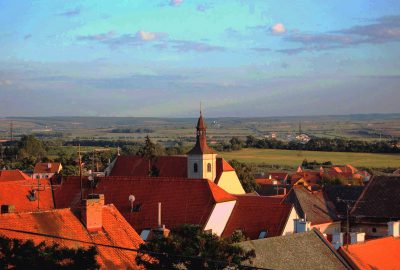
After Prague, until the nineteenth century the largest Jewish community in all the Czech lands lived in the city of Mikulov, south of Brno. Its yeshivoth were renowned throughout the region, even ...
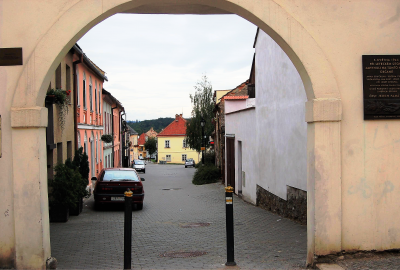
Boskovice is located nineteen miles north of Brno. This large center of Jewish culture and study of the Torah was for many years the headquarters of the chief Rabbinate of Moravia. The ...
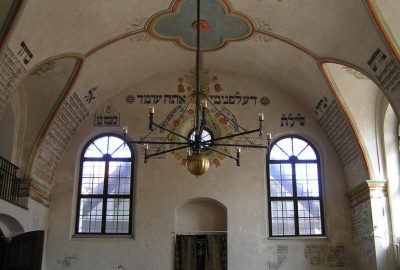
The city of Trebíc is located thirty-one miles north of Brno on the other side of the Jihlava River. Its Jewish quarter, near the city center, was one of the largest in the country: in the ...
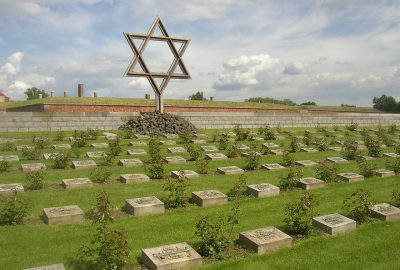
The lovely little garrison town of Terezín in the same region was created at the end of the eighteenth century during the reign of Joseph II. In 1942, the Nazis totally emptied the city of ...
The large village of Roudnice nad Labem twenty-five miles from Prague was one of the first small centers of Judaism in Bohemia and merits a brief visit. The oldest Jewish quarter, destroyed ...
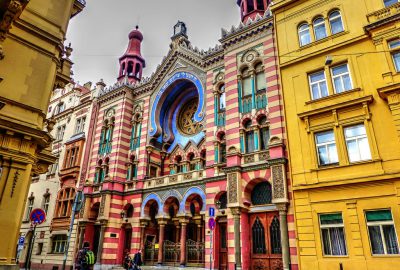
Stuccoed in pink, green or yellow, grand neo-Renaissance and neo-Gothic buildings line the Parizká, the Avenue of Paris. Since the fall of the wall, elegant boutiques have been flourishing on ...
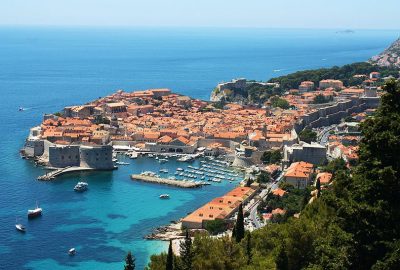
The earliest refugees from the Iberian Peninsula arrived in Ragusa (present-day Dubrovnik) at the end of the fifteenth century, at a time when the republic, still under nominal supervision by ...
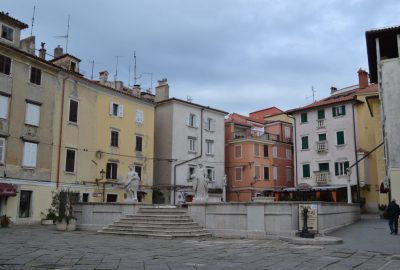
Piran is a former possession of the City of Doges, which explains its Venetian atmosphere. It contains some beautiful architecture, including a replica of the Campanile in the Piazza San Marco. ...
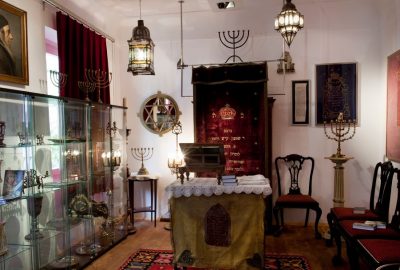
The only remaining traces of a prior Jewish presence in Ljubljana are the names of two narrow streets in the city center, Street of the Jews (Zidovska ulica) and Passage of the Jews ...

The Jews first arrived in Ancona around 1000 C.E. In the fourteenth century, the city hosted a significant Jewish community, whose activities were organized around the port and commerce with the ...

The history of the Jews in Senigallia is similar to that of the Jews of Urbino or Pesaro. In the eighteenth century, the Jews numbered 600 of a total population of approximately 5,500 ...
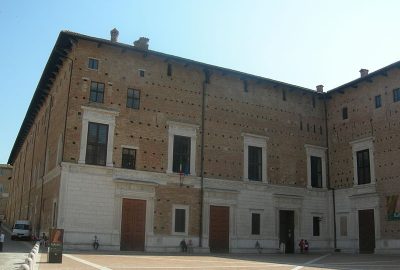
The first traces of a Jewish presence in Urbino date to the fourteenth century, when Daniel of Viterbo received authorization to work as a banker and merchant. The Jewish community prospered ...
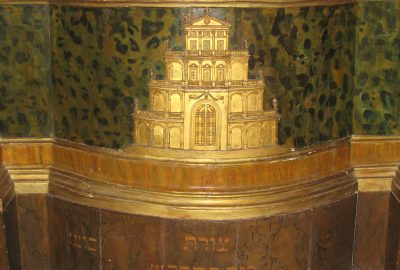
Documents attest to a Jewish presence in Pesaro dating back to 1214. The expulsion of the Jews from the papal states in 1569 led numerous Jewish families to Pesaro, which became the most ...
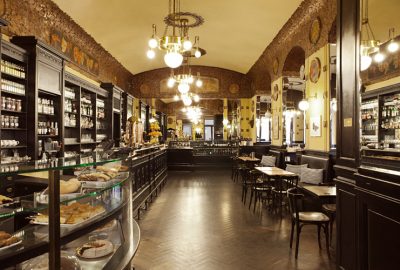
A rich and influential Jewish community lived in Trieste, a large port city of the Austro-Hungarian Empire that became Italian only after the First World War. During the nineteenth century and ...
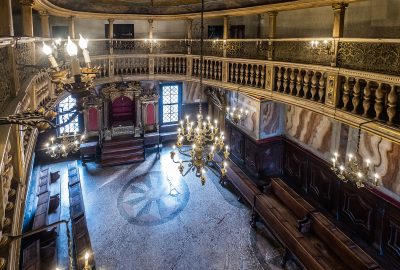
On 20 March 1516, Zaccaria Dolfin, an influential Venetian patrician, announced a radical turn in the history of the Jew of the Serenissima: “It is necessary to send all the Jews (zudei) to ...

In the fourteenth century, Padua was one of the great centers of medieval Judaism, with a celebrated rabbinical academy where students from all over Europe came to study. These students were also ...
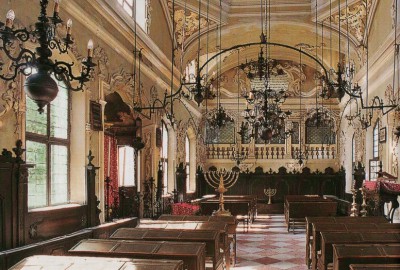
Under the protection of the Gonzaga dukes, Jewish life flourished in the city of Mantua during the course of centuries. At the beginning of the seventeenth century, some 7,000 Jews lived in the ...

Saluzzo’s small Jewish quarter maintains its former appearance in the area around Via Deportati Ebrei. In one of the courtyards on this street stands a building containing a on its third ...
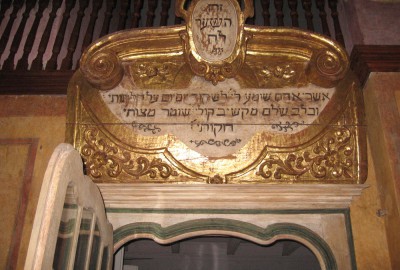
The most elegant of the region’s Baroque synagogues is found in the little city of Carmagnola near Turin. The city’s Jewish community was forced to live in a ghetto beginning in 1724. ...
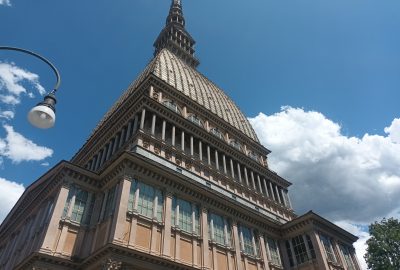
Turin is one of the finest examples of the crossroads of Jewish cultures: Ashkenazim from the north, Provençals following the expulsion, Sephardim following the Inquisition, Italians for 2 ...
Unjustly slighted as a tourist destination, Piedmont is one of the richest regions of Jewish heritage in Italy, with magnificent small Baroque synagogues like those of Carmagnola, Casale ...