Location
Saint Petersburg
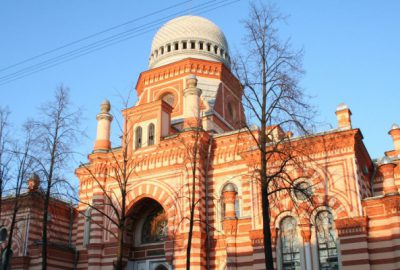
Despite the prohibition against Jews living in Russia, beyond a clearly defined zone, there were a few remarkable exceptions in the eighteenth century, particularly in the capital, Saint ...
Despite the prohibition against Jews living in Russia, beyond a clearly defined zone, there were a few remarkable exceptions in the eighteenth century, particularly in the capital, Saint ...
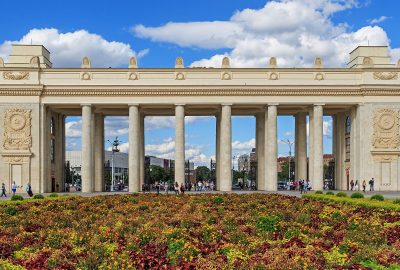
Due to the expulsion of Jews from Russia and their strict confinement within the “residential zone”, they were few Jews in Moscow prior to 1900, which explains the absence of a Jewish ...
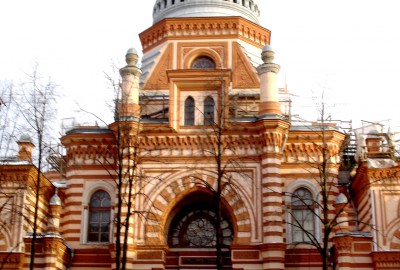
Until the early twentieth century, the history of Russia's Jews unfolded primarily in territories that no longer belong to the present-day Russian federation (Ukraine, Belarus, Bessarabia, and ...
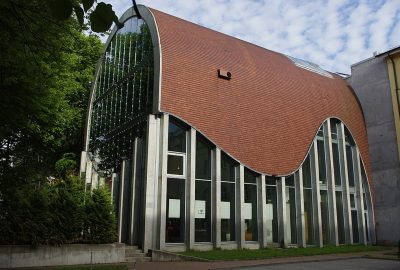
The modern synagogue is a low building, resembling a large majority of synagogues before the Shoah. The Jewish presence in the city of Tallinn seems to date from at least the 14th century, ...
The number of active Jewish communities in Latvia is much smaller since the Shoah. All information concerning them is likely to quickly prove obsolete, since demographic trends in the communities ...

Around 9,000 Jews live in Riga. Riga is also home to the only Jewish hospital in the former Soviet Union. The Latvian Society for Jewish Culture is the principal organization of the Jewish ...
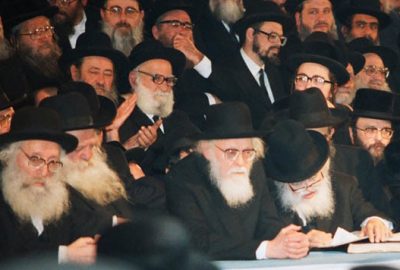
Panevezys is Lithuanian for Ponevezh, famous for its yeshiva that its prewar leader, Rav Yosef Kahaneman, reestablished following the war in Bnei Brak, the Orthodox quarter of Tel Aviv. ...

Klaipeda is the former German city of Memel, a place where Judaism came under the influence of the modern nineteenth-century Orthodoxy originating in Germany. The city is still home to some 300 ...
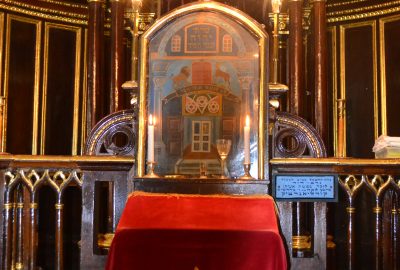
Nothing of the Jewish presence in Kaunas remains but the synagogue, whereas before the war there was a yeshiva, a kosher slaughterhouse, and a prison. The birthplace of Emmanuel Levinas, Kaunas ...
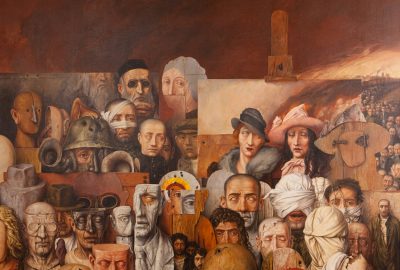
The capital of Vilnius, once known as the “Jerusalem of the east” has few Jewish monuments today. However, in the last few years, the Museum of the Gaon of Vilnius has made ...
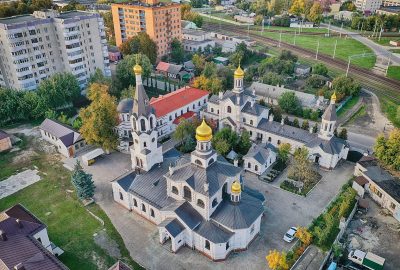
In 1897, 20,385 Jews lived in Gomel (54.8% of the population), as compared with 37,475 (43.7%) in 1926. Today, little remains of their life here. The Jewish quarter was located on the right bank ...
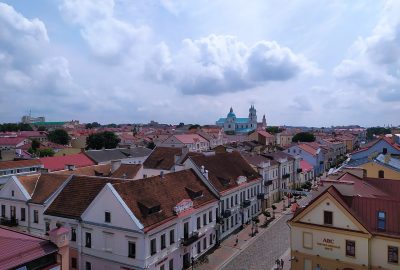
Grodno, seat of a Catholic bishopric, was once a major city within the Polish-Lithuanian Union, as evidenced by Farny, the beautiful Baroque Jesuit church that towers over Sovietskaya Square. ...
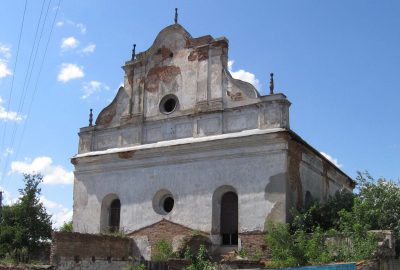
In the nineteenth century, more than 70% of Slonim’s population was Jewish. The ratio was 53% before the war. The ghetto was burned down between 29 June and 15 July 1942. At the ...
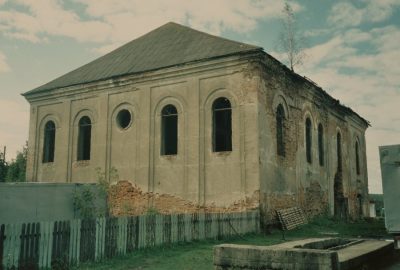
It is worth exiting the highway midway between Brest and Minsk and heading toward Slonim: in the middle of the village of Ruzhany, a beautiful synagogue still stands today. Its roof is in ...
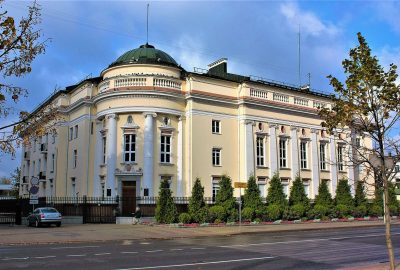
The first city across the Polish border, Brest is located on the right bank of the Bug River. Its name evokes the famous Brest-Litovsk Treaty of April 1918, whereby Trotsky’s Red Army put ...
The city of Bobruysk was once a typical Belarusian shtetl. In 1897, 20,759 Jews lived here (60.5% of the population), while in 1926, the Jewish community had a population of 21,558 (42%). To form ...
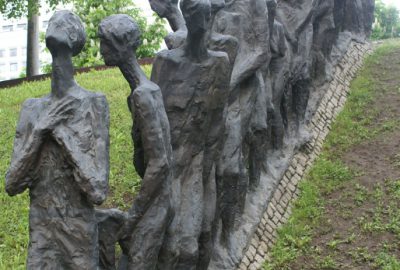
Minsk, the capital of Belarus, first welcomed Jews in the fifteenth century. They settled here to engage in the trade between Poland and Russia. After Poland was divided, the Jewish community ...
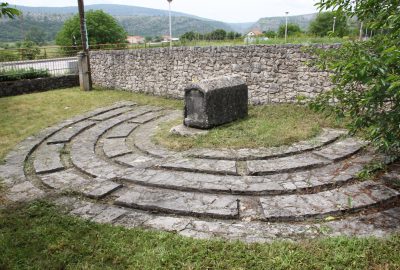
For nearly two centuries, Stolac was the destination for a pilgrimage to the grave of rabbi Moshe Danon. In 1820, Grand rabbi of Sarajevo, Moshe Danon, and ten other prominent members of the ...
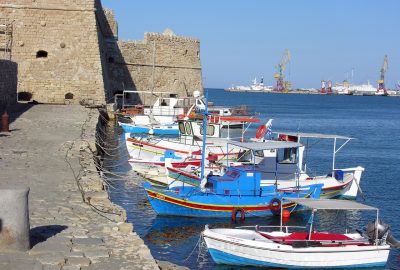
Within the Venetian outer walls of ancient Candia, the old Jewish quarter is found right beside the seafront. Four synagogues once stood in this district; its perimeter today is delimited by ...
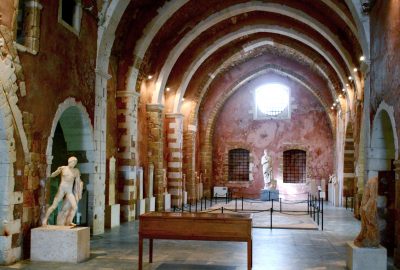
The oldest synagogue in Canea, , lives again after a half century of neglect. Raised from its ruins by Nicholas Stavroulakis, former director and founder of the Jewish Museum of Athens, it was ...
The Jews have a unique and turbulent history on Crete, one of the most important islands in the Mediterranean. Under the Byzantine Empire, Cretan Jews believed the hour of the final redemption ...
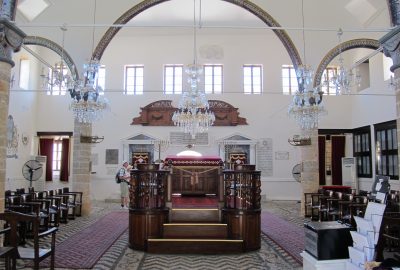
In the fourteenth century, a Jewish community settled behind the ramparts of Rhodes erected by the knights of Saint John after their flight from the Holy Land. These Jews had the strange destiny ...

Visiting the site in Delos is quite easy throughout the summer, the island being accessible by boat from nearby Mykonos. If one place attests to the presence of a Jewish community in Ancient ...
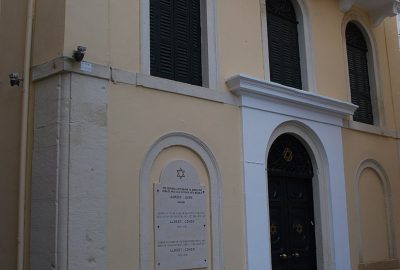
In the late 12th century, Jewish traveler Benjamin de Tudela encountered a lone Jew on Corfu. Three centuries later, however, Jews had become so numerous here that the Venetians, then in control ...
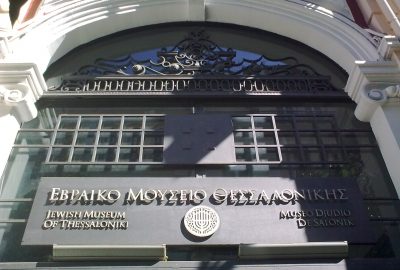
When David Ben Gurion moved to Thessaloníki to learn Turkish in 1910, he was surprised to discover a city like none found in “Eretz Israel”: The Shabbat marked the day of ...
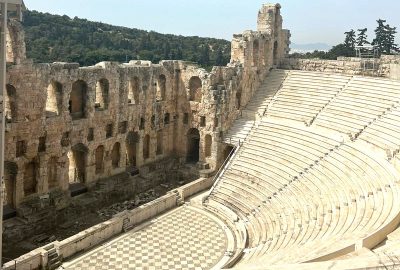
3,2,1… go! Set off on a marathon walk through time, 2500 years to be precise, to discover the monuments of Athens and its Jewish cultural heritage. Starting with the Panathenaic Stadium. An ...
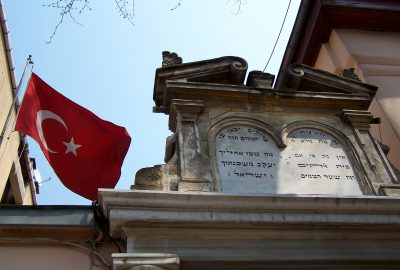
Sumptuous and decadent, immense and frenetic, Istanbul is “the world in one city”, as it is often described by Western travelers overwhelmed by the city’s splendor. The skyline ...
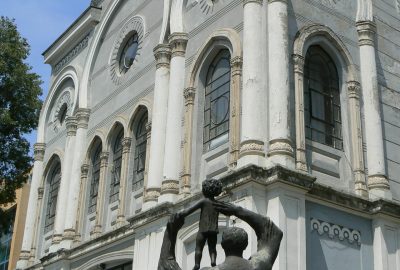
The synagogue here has been transformed into an art gallery. Built at the turn of the century following plans of the Italian architect Ricardo Toscani, during the 1960s it was completely remade ...
In the Plains region, Jewish life is maintained by the people of Plovdiv, which boasts a beautiful, colourful synagogue for its few hundred worshippers. Efforts are being made to revive ...
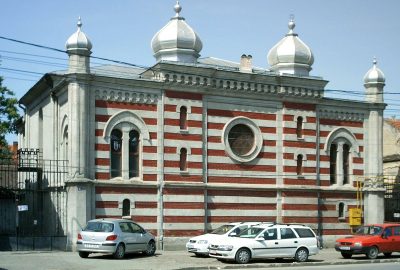
The first Jews probably settled in Timisoara in the 17th century. Gravestones were found in the city dating from that era. At the end of the conflict between the Austrians and the Turks, a Jewish ...