Location
Crete
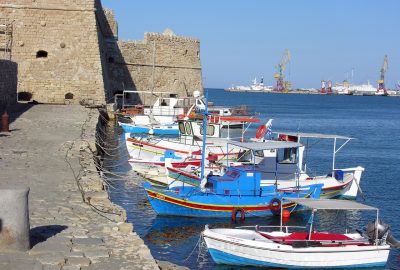
The Jews have a unique and turbulent history on Crete, one of the most important islands in the Mediterranean. Under the Byzantine Empire, Cretan Jews believed the hour of the final redemption ...
The Jews have a unique and turbulent history on Crete, one of the most important islands in the Mediterranean. Under the Byzantine Empire, Cretan Jews believed the hour of the final redemption ...
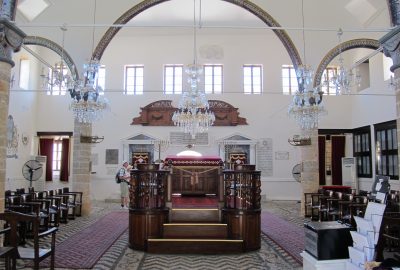
In the fourteenth century, a Jewish community settled behind the ramparts of Rhodes erected by the knights of Saint John after their flight from the Holy Land. These Jews had the strange destiny ...

Visiting the site in Delos is quite easy throughout the summer, the island being accessible by boat from nearby Mykonos. If one place attests to the presence of a Jewish community in Ancient ...
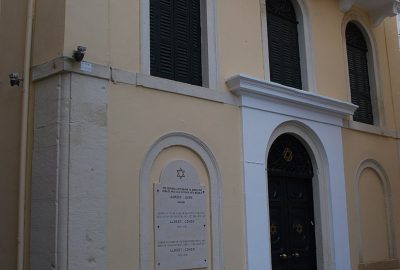
In the late 12th century, Jewish traveler Benjamin de Tudela encountered a lone Jew on Corfu. Three centuries later, however, Jews had become so numerous here that the Venetians, then in control ...
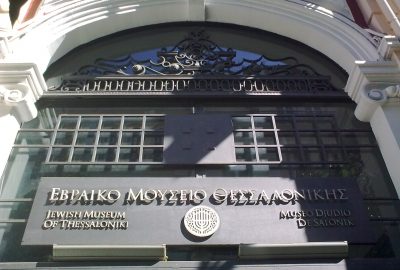
When David Ben Gurion moved to Thessaloníki to learn Turkish in 1910, he was surprised to discover a city like none found in “Eretz Israel”: The Shabbat marked the day of ...
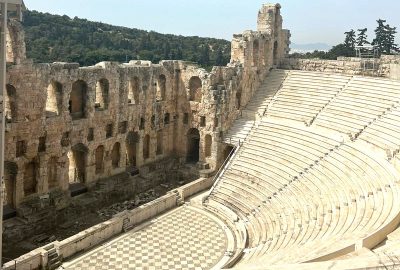
3,2,1… go! Set off on a marathon walk through time, 2500 years to be precise, to discover the monuments of Athens and its Jewish cultural heritage. Starting with the Panathenaic Stadium. An ...
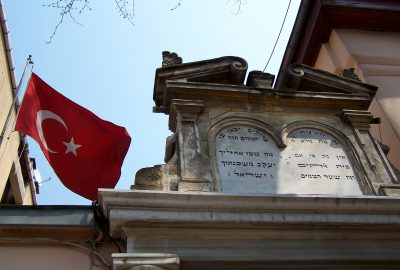
Sumptuous and decadent, immense and frenetic, Istanbul is “the world in one city”, as it is often described by Western travelers overwhelmed by the city’s splendor. The skyline ...

The Zion Synagogue dates from the nineteenth century. It is still active, but only a small minority of 300 to 400 Jewish inhabitants are still practicing. Restored in 2003, the synagogue is ...
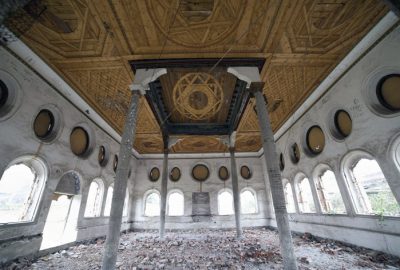
Some of the richest Sephardic families in Europe made their fortune in the small city of Samokov, located about thirty-seven miles south of Sofia. A branch of the Apollo family, which originated ...
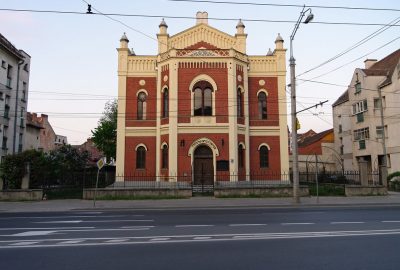
The Jewish presence in Sibiu probably dates back to the 15th century, when merchants worked with the city’s residents. However, it wasn’t until the middle of the 19th century that ...
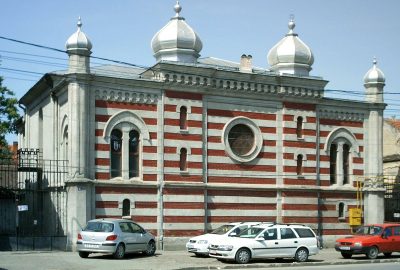
The first Jews probably settled in Timisoara in the 17th century. Gravestones were found in the city dating from that era. At the end of the conflict between the Austrians and the Turks, a Jewish ...
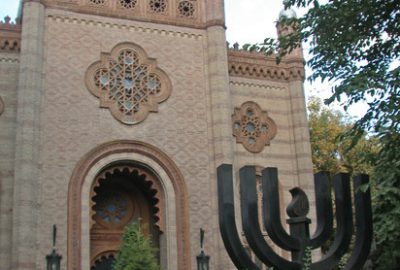
Jewish Bucharest has almost completely disappeared. Of a population estimated at 158,000 souls in 1948, there remain only 2,000 people today. Living across the four corners of the capital, they ...
Although its underground petroleum resources are today largely exhausted, Wallachia remains the country’s economic center. This region was first dominated by Hungary, but in 1330 it fell ...
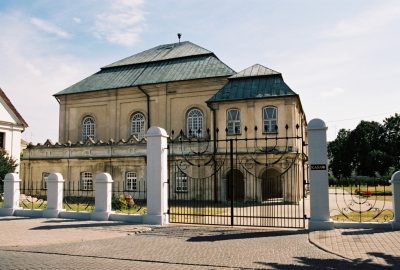
Jews began settling in Wlodawa in the seventeenth century. By the turn of the twentieth century, they numbered 3,670 (66% of the population), then 4,200 (67%) in 1921, and 5,650 (75%) in 1939. ...
In this region, the town of Wlodawa boasts a particularly interesting Baroque synagogue, built at the end of the 18th century. Nearby is the Sobibor camp, where many victims of the Holocaust were ...
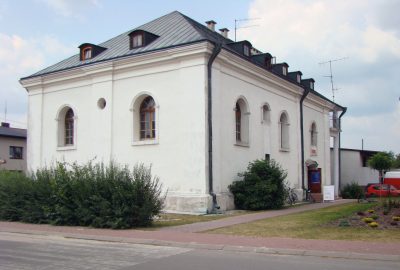
The city of Jozefów possesses a beautiful late-seventeenth century . It can be seen almost immediately upon arriving in the village, on the right and set back a bit in relation to the city center ...
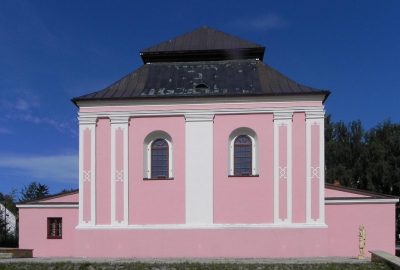
Szczebrzeszyn is today a small, tranquil city, with a Catholic church and city hall downtown. A jewish community sprang up in Szczebrzeszyn in the sixteenth century, while the was built here in ...
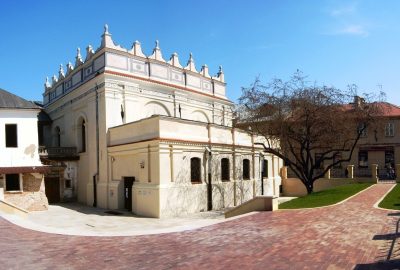
Zamosc is a magnificent example from the Polish Renaissance era. Built in the sixteenth and seventeenth centuries by Italian architects in the service of Kings Sigismund and Casimir, the city ...
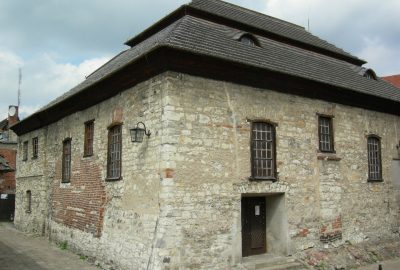
If one stop along the road from Lublin to Warsaw is a must, it is in the city of Kazimierz Dolny on the Vistula, first because it is a tourist city, with old houses, a magnificent rynek lined ...

An important city in eastern Poland, Lublin has preserved a very picturesque old quarter that offers a glimpse of what life was like here in the seventeenth century, with a city hall in the ...
The Lublin Plateau bears witness to ancient traces of Jewish life, as evidenced by the presence of 17th-century synagogues in Jozefow, Zamosc and Szczebrzeszyn and an 18th-century one in ...

Lancut is a small, pleasant city known for its Renaissance castle once belonging to the Lubomirskis. The town also possesses a Baroque synagogue, one of the most beautiful in Poland. Built ...
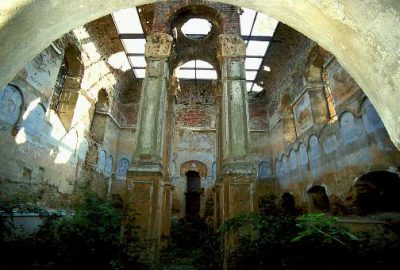
Jews settled in Rymanów so long ago that there exists no document mentioning their arrival. In the fifteenth and sixteenth centuries, the inhabitants of the city lived mainly from the cultivation ...
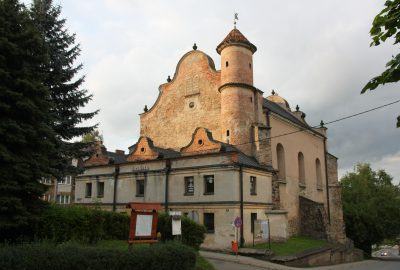
The small city of Lesko possesses one of the most beautiful fortified synagogues in the region, built in the sixteenth and seventeenth centuries, with a turret that gives it the look of a little ...

Jews began to settle in Rzeszów in the fifteenth century and, in the seventeenth century, built two synagogues, both of which remain, almost side by side. They are fairly easy to find, ...
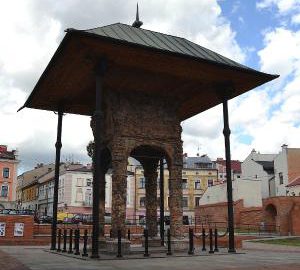
In Tarnów, half of the population was Jewish: between 20,000 and 25,000 people worked principally in the clothing and hat industries (sixty or so businesses), arts and crafts, and trade. Some ...
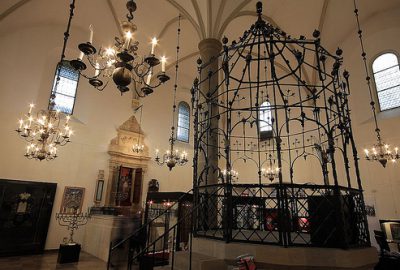
In 1335, King Casimir the Great founded an independent city near Kraków, Kazimierz, in which he permitted Jews to settle around Sukiernikow (Clothier) Street (now called Jozefa Street), next to ...
This vast region includes ancient traces of Jewish life in Lancut, Lesko, Przemysl, Rymanow, Rzeszow and Tarnow, the Ulma family museum in Markowa, major cities such as Krakow, but also the camps ...
From Treblinka, rather than return to Warsaw in the evening, you can travel on to Bialystok, near Belarus, a city with a Jewish tradition so strong that in 1913, Jews numbered 61,500, or 70% of ...
You’ll be amazed to discover on our page dedicated to the town of Bialystok the impressive number of synagogues it was home to, even if its name is best known today in popular Jewish ...