Site
Ephraim Palace
Poststraße 16, 10178 Berlin Tel: +49 (0) 30 24002162 Museum Ephraim-Palais | Stadtmuseum Berlin
Poststraße 16, 10178 Berlin Tel: +49 (0) 30 24002162 Museum Ephraim-Palais | Stadtmuseum Berlin
Paviljoensgracht 72, 2512 BR The Hague Tel: +31 (0) 70 346 3123 Museum Het Spinozahuis | Kom op bezoek bij Spinoza
2 Impasse Baudin, 34500 Béziers Tel: +33 (0) 4 67 28 22 89 Cathédrale Saint-Nazaire (ville-beziers.fr)
1 Rue de la Barralerie, 34000 Montpellier Le Mikvé | Montpellier Tourisme
36, rue aux Juifs, 76000 Rouen Tel : + 33 2 35 52 48 09 La Maison Sublime (visitezlamaisonsublime.fr)
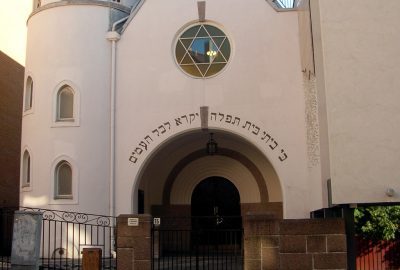
It was not until the law passed in 1814, prohibiting the entry of Jews into Norway, was revoked in 1851, that Jews could officially settle in Oslo. A small Jewish community was organised and ...
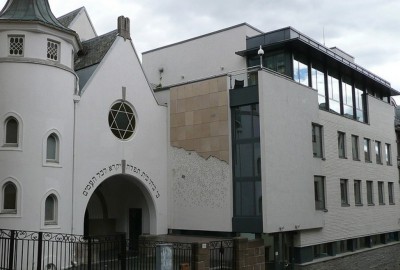
Visitors walking on the street named after Norway's national poet Henrik Wergeland (1808-45) will be reminded that it was Wergeland who was behind the law that allowed Jews to immigrate to this ...
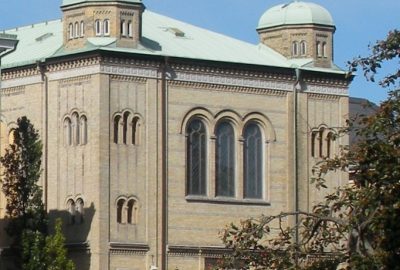
Jews have lived in Göteborg since 1782. The Conservative (masorti) rite synagogue is located at the same address as the community center. There is also an Orthodox minyan in Göteborg. ...
The large university city of Uppsala does not have a Jewish community, but it does have a Jewish studies department.
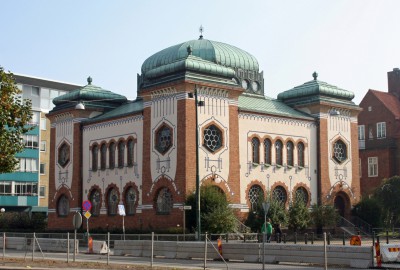
Sweden's Jewish community is the most important one in Scandinavia, as much in terms of the number of practicing faithful (18000-20000) as culturally. In February 2000, the Swedish capital hosted ...
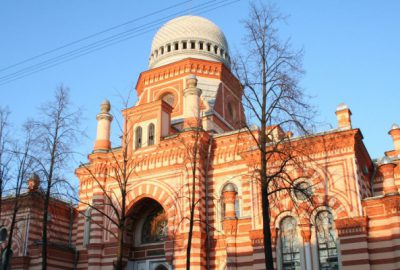
Despite the prohibition against Jews living in Russia, beyond a clearly defined zone, there were a few remarkable exceptions in the eighteenth century, particularly in the capital, Saint ...
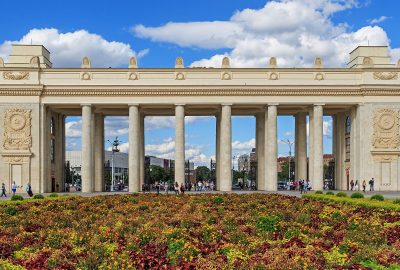
Due to the expulsion of Jews from Russia and their strict confinement within the “residential zone”, they were few Jews in Moscow prior to 1900, which explains the absence of a Jewish ...
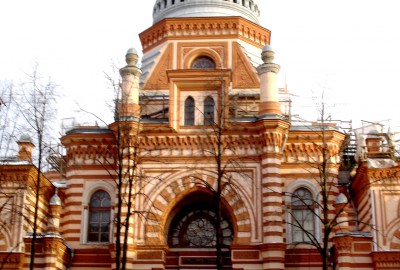
Until the early twentieth century, the history of Russia's Jews unfolded primarily in territories that no longer belong to the present-day Russian federation (Ukraine, Belarus, Bessarabia, and ...
The number of active Jewish communities in Latvia is much smaller since the Shoah. All information concerning them is likely to quickly prove obsolete, since demographic trends in the communities ...

Around 9,000 Jews live in Riga. Riga is also home to the only Jewish hospital in the former Soviet Union. The Latvian Society for Jewish Culture is the principal organization of the Jewish ...
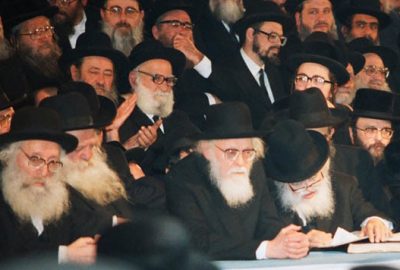
Panevezys is Lithuanian for Ponevezh, famous for its yeshiva that its prewar leader, Rav Yosef Kahaneman, reestablished following the war in Bnei Brak, the Orthodox quarter of Tel Aviv. ...

Klaipeda is the former German city of Memel, a place where Judaism came under the influence of the modern nineteenth-century Orthodoxy originating in Germany. The city is still home to some 300 ...
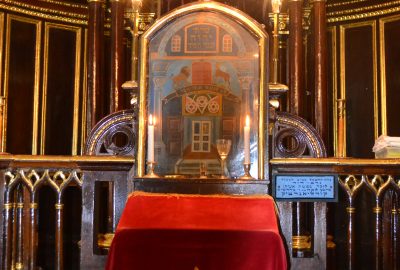
Nothing of the Jewish presence in Kaunas remains but the synagogue, whereas before the war there was a yeshiva, a kosher slaughterhouse, and a prison. The birthplace of Emmanuel Levinas, Kaunas ...
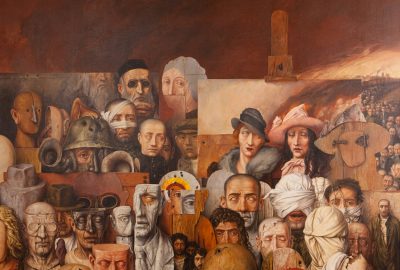
The capital of Vilnius, once known as the “Jerusalem of the east” has few Jewish monuments today. However, in the last few years, the Museum of the Gaon of Vilnius has made ...
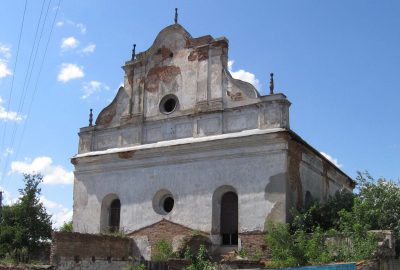
In the nineteenth century, more than 70% of Slonim’s population was Jewish. The ratio was 53% before the war. The ghetto was burned down between 29 June and 15 July 1942. At the ...
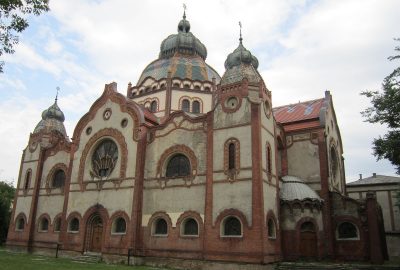
The Jewish presence in Subotica probably dates back to the 18th century, when the town was founded. There was a synagogue at the end of that century. Many of Subotica’s Jews took part in ...
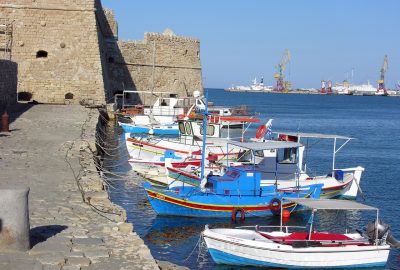
Within the Venetian outer walls of ancient Candia, the old Jewish quarter is found right beside the seafront. Four synagogues once stood in this district; its perimeter today is delimited by ...
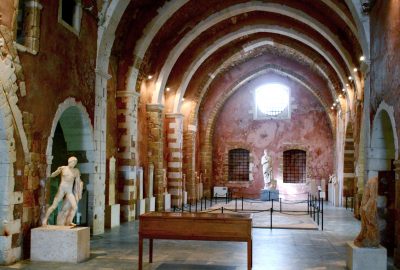
The oldest synagogue in Canea, , lives again after a half century of neglect. Raised from its ruins by Nicholas Stavroulakis, former director and founder of the Jewish Museum of Athens, it was ...
The Jews have a unique and turbulent history on Crete, one of the most important islands in the Mediterranean. Under the Byzantine Empire, Cretan Jews believed the hour of the final redemption ...