Location
lasi
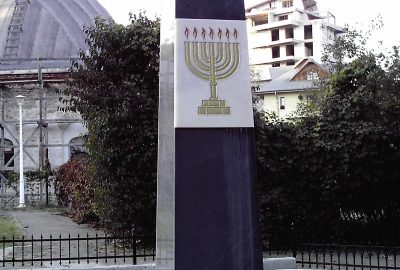
The city of lasi, Moldavia’s capital since the sixteenth century, is surrounded by little towns of pastel-colored houses and whitewashed, thatched cottages. Long ago, places like Bivolari, ...
The city of lasi, Moldavia’s capital since the sixteenth century, is surrounded by little towns of pastel-colored houses and whitewashed, thatched cottages. Long ago, places like Bivolari, ...
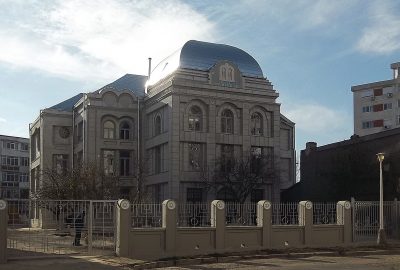
The city of Galati has been a major Romanian trade hub since the seventeenth century. In 1868, it was the theater for acts of vandalism against Jews following accusations of their having ...
Founded in 1329 by Bodgan I, the principality of Moldavia pitted all those who coveted it against one another -Turks, Austrians, Poles, Cossacks and Russians – for over five centuries. ...
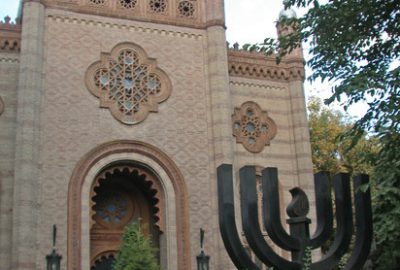
Jewish Bucharest has almost completely disappeared. Of a population estimated at 158,000 souls in 1948, there remain only 2,000 people today. Living across the four corners of the capital, they ...
Although its underground petroleum resources are today largely exhausted, Wallachia remains the country’s economic center. This region was first dominated by Hungary, but in 1330 it fell ...
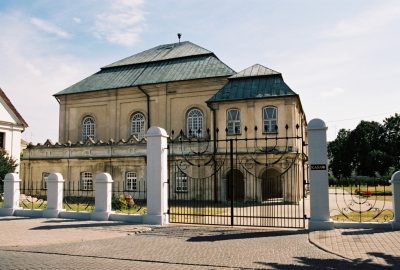
Jews began settling in Wlodawa in the seventeenth century. By the turn of the twentieth century, they numbered 3,670 (66% of the population), then 4,200 (67%) in 1921, and 5,650 (75%) in 1939. ...
In this region, the town of Wlodawa boasts a particularly interesting Baroque synagogue, built at the end of the 18th century. Nearby is the Sobibor camp, where many victims of the Holocaust were ...
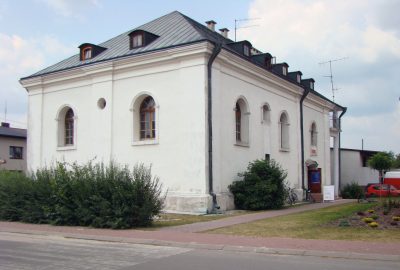
The city of Jozefów possesses a beautiful late-seventeenth century . It can be seen almost immediately upon arriving in the village, on the right and set back a bit in relation to the city center ...
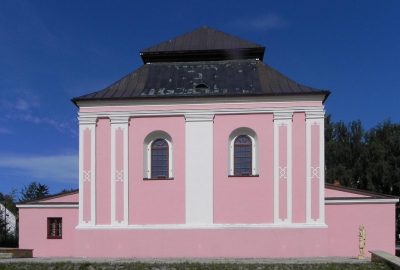
Szczebrzeszyn is today a small, tranquil city, with a Catholic church and city hall downtown. A jewish community sprang up in Szczebrzeszyn in the sixteenth century, while the was built here in ...
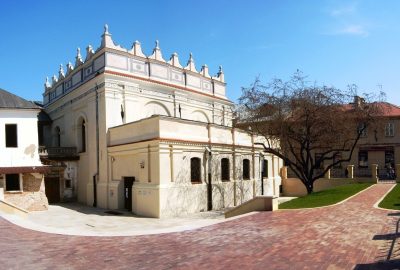
Zamosc is a magnificent example from the Polish Renaissance era. Built in the sixteenth and seventeenth centuries by Italian architects in the service of Kings Sigismund and Casimir, the city ...
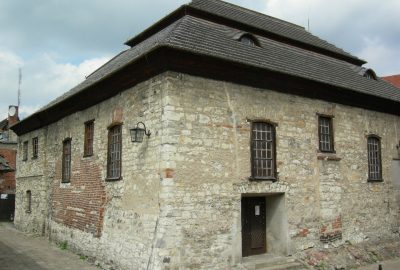
If one stop along the road from Lublin to Warsaw is a must, it is in the city of Kazimierz Dolny on the Vistula, first because it is a tourist city, with old houses, a magnificent rynek lined ...

An important city in eastern Poland, Lublin has preserved a very picturesque old quarter that offers a glimpse of what life was like here in the seventeenth century, with a city hall in the ...
The Lublin Plateau bears witness to ancient traces of Jewish life, as evidenced by the presence of 17th-century synagogues in Jozefow, Zamosc and Szczebrzeszyn and an 18th-century one in ...

Lancut is a small, pleasant city known for its Renaissance castle once belonging to the Lubomirskis. The town also possesses a Baroque synagogue, one of the most beautiful in Poland. Built ...
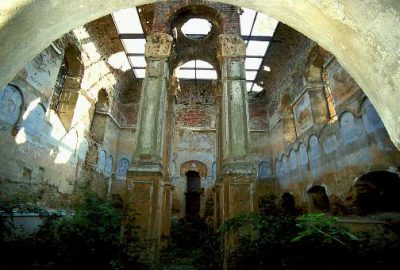
Jews settled in Rymanów so long ago that there exists no document mentioning their arrival. In the fifteenth and sixteenth centuries, the inhabitants of the city lived mainly from the cultivation ...
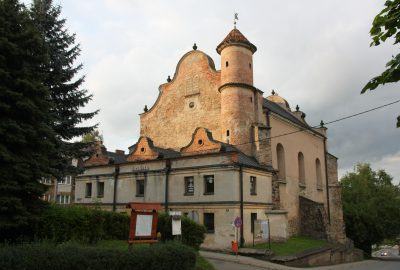
The small city of Lesko possesses one of the most beautiful fortified synagogues in the region, built in the sixteenth and seventeenth centuries, with a turret that gives it the look of a little ...

Jews began to settle in Rzeszów in the fifteenth century and, in the seventeenth century, built two synagogues, both of which remain, almost side by side. They are fairly easy to find, ...
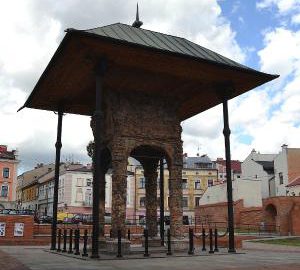
In Tarnów, half of the population was Jewish: between 20,000 and 25,000 people worked principally in the clothing and hat industries (sixty or so businesses), arts and crafts, and trade. Some ...
This vast region includes ancient traces of Jewish life in Lancut, Lesko, Przemysl, Rymanow, Rzeszow and Tarnow, the Ulma family museum in Markowa, major cities such as Krakow, but also the camps ...

From Bialystok, a detour toward Tykocin is imperative: it has effectively preserved the structure and architecture of an old shtetl. This town, tiny today, was in times past more important than ...
From Treblinka, rather than return to Warsaw in the evening, you can travel on to Bialystok, near Belarus, a city with a Jewish tradition so strong that in 1913, Jews numbered 61,500, or 70% of ...
You’ll be amazed to discover on our page dedicated to the town of Bialystok the impressive number of synagogues it was home to, even if its name is best known today in popular Jewish ...
Located on the bank of the Ner, a tributary of the Warta in the region the Germans called Wartheland, Chelmno is where “gas trucks” were tested beginning 1941, an early form of ...
The Lower Vistula region is infamous in Jewish history for the many massacres perpetrated during the Holocaust, particularly in Chelmno. It is in this town that Claude Lanzmann’s film begins.
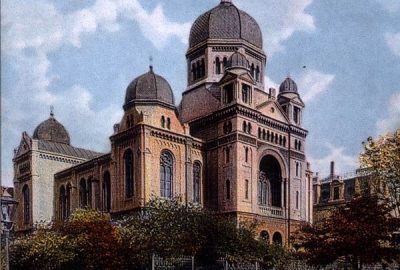
Lodz is a large Polish industrial city where a significant Jewish working class, along with merchants and rich industrialists, were concentrated in the nineteenth century. A fine representation ...
Jews began settling in Góra Kalwaria (Calvary Mountain) in 1795, and by a century later they had attained more than 50% of the city’s population. The Tsadik Isaac Meir Rothenberg ...
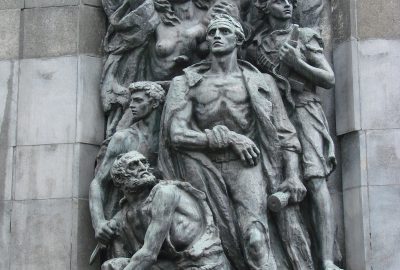
The name alone evokes the martyrdom of the ghetto following the April 1943 insurrection. Events here shall remain firmly fixed in the conscience of humanity. Jews settled in Warsaw beginning in ...
The region is rich in references to Jewish history, including Gora Kalwaria, long ago dubbed “the new Jerusalem”, the very large pre-war community of Lodz, and the capital Warsaw, ...
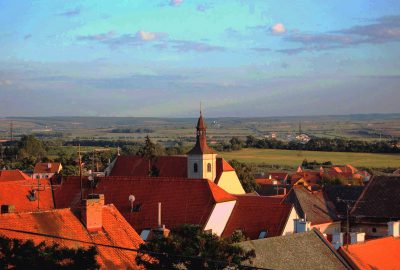
After Prague, until the nineteenth century the largest Jewish community in all the Czech lands lived in the city of Mikulov, south of Brno. Its yeshivoth were renowned throughout the region, even ...
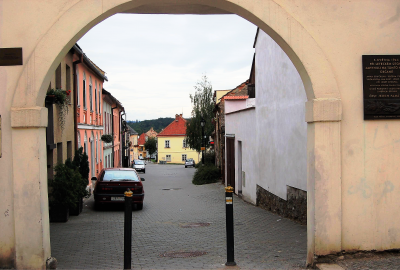
Boskovice is located nineteen miles north of Brno. This large center of Jewish culture and study of the Torah was for many years the headquarters of the chief Rabbinate of Moravia. The ...