
Location
Valls
Standing on the trading route between Lérida and Tarragona, Valls had a thriving little community that was, however, almost annihilated in the pogroms of 1391, a few Jews remaining after… ...
Standing on the trading route between Lérida and Tarragona, Valls had a thriving little community that was, however, almost annihilated in the pogroms of 1391, a few Jews remaining after… ...

The call major, which was active between the twelfth century and the riots of 1391, is Spain’s best-preserved Jewish quarter and the easiest to visit. It comprises a small zone between the ...
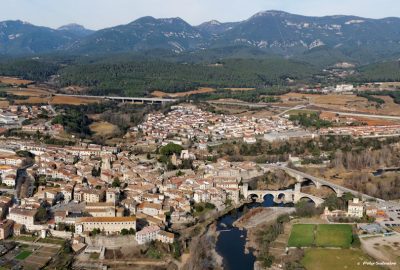
The presence of Jews in Besalú is attested in a document from 1229 in which Jaume I the Conqueror reserves to them the function of moneylender. In 1342, the community, hitherto linked to the one ...
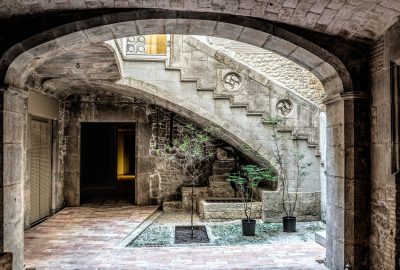
Gerona was the second most important community in Catalonia, both for its size (1000 men and women in the twelfth and thirteenth centuries, but only 100 or so in the fifteenth) and for the ...
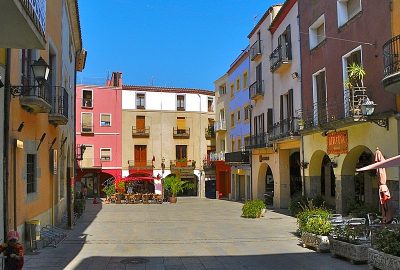
In the fourteenth century, and up to 1492, there was a large community in Castelló d’Empúries living around the Plaza Llana, in the calles de la Judería, del San Padre, and Peixetiries ...
The Jews settled in Catalonia in Roman times, and communities began to take shape in Barcelona and Gerona in the tenth century. By the twelfth century, there were five major Jewish centers: ...
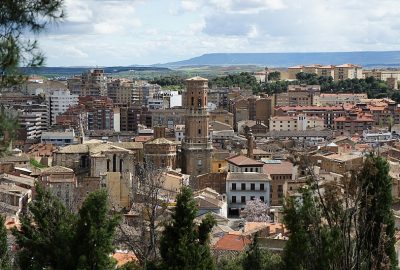
In the fifteenth century some 15% of Tudela’s population were Jews. There were two quarters, one around the Zaragaza gate, the other within the castle walls, but nothing remains ...
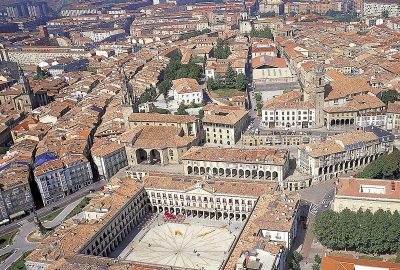
The town of Vitoria had 300 Jews in 1290 and 900 on the eve of the expulsion -the equivalent of 6 or 7% of the total population. Their main activities were tax collecting and medicine. In 1492 ...

Probably the most interesting judería in Galicia, Ribadavia has kept its old Jewish quarter despite later urban developments. Although it is known Jews were there as far back as the tenth ...
The historical province of Navarre, straddling the Spanish-French border, was violently disputed by the Castilians and counts of Champagne. It was also where Jews from Arab Spain came together ...
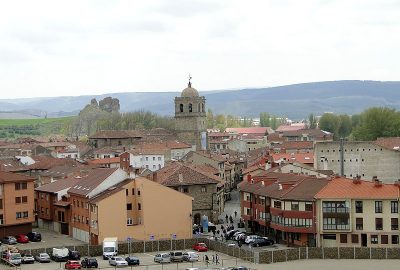
The earliest mention of Jewish shopkeepers in Aguilar de Campó, situated along the trading route toward the port of Cantabria, is from 1188. A Hebrew inscription can still be seen under the ...
A small Jewish community lived in Puente Castro until the twelfth century. It disappeared during the wars between Castile and León. The cemetery has yielded more than a dozen magnificent ...
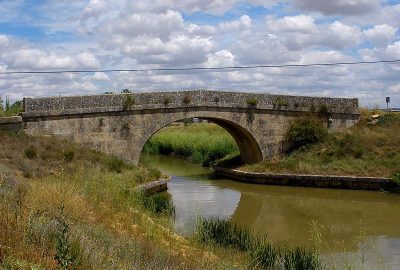
The village of Amusco is known to have had a community of some 300 Jews in the fifteenth century. The old synagogue is still here, surprisingly positioned on the village square next to the church ...
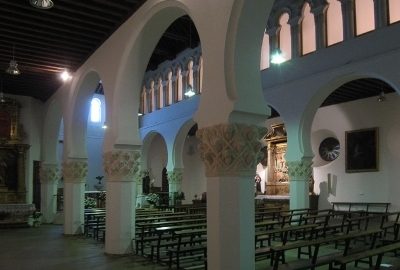
Segovia was home to one of the biggest communities in the Kingdom of Castile. It produced important figures like Abraham Senior and his son-in-law Meyer Melamed, who served the Catholic monarchs ...
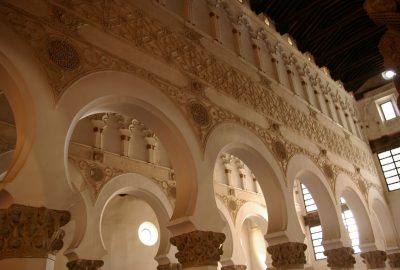
The “Sephardic Jerusalem” is known around the world for the beauty of its synagogues and its Jewish quarter. The memory of the community has remained vivid in Toledo; historians have ...
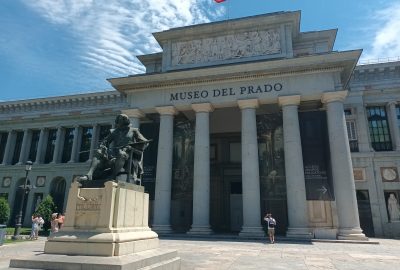
In the film A Monkey in Winter, Jean Gabin and Jean-Paul Belmondo debate whether the Prado is a museum surrounded by a garden or a garden on which a museum is placed. What is certain is that the ...
The presence of Jews in Castile and León is attested as far back as the tenth century. Over the centuries that followed, the rulers granted the Jews the same rights and duties as of the ...
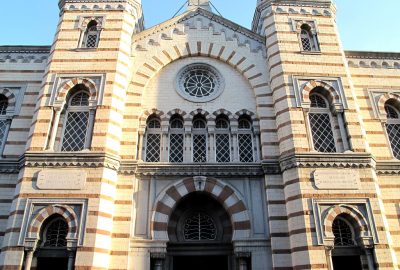
Liege is a city known, like Ghent, for its large university population, but also for its cathedral, its waffles, and its film makers, the Dardenne brothers. The Jewish presence in Liege seems to ...
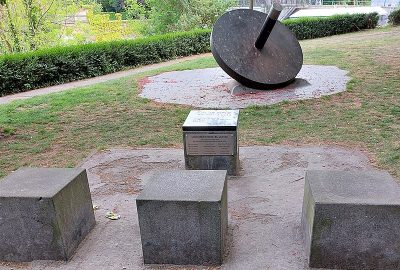
Ghent is a city known, like Liège, for its student life but also as an important cultural centre, its port, and its ancient textile activity. The Jewish presence in Ghent seems to date back to ...
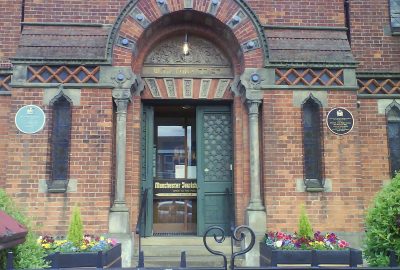
With 30,000 Jews, Manchester, known mostly for its 2 famous football teams, has the highest Jewish population in Great Britain after London. The Jewish presence in Manchester seems to date from ...
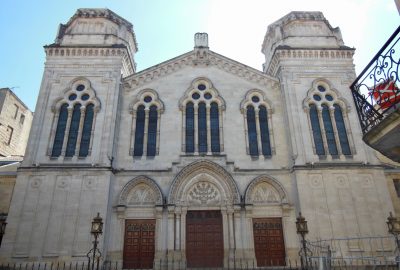
For three centuries, the cellars of tumbledown houses in the old town were home to a hidden Jewish community, that of the conversos who came here from Spain after 1474. Used to hiding their faith ...
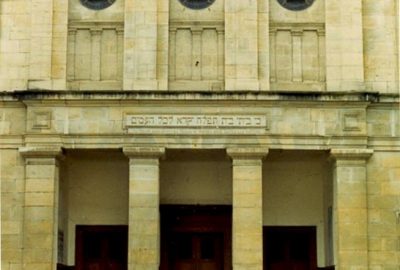
On the day of tishah b’ab commemoration of the destruction of the Temple of Jerusalem, the old synagogue resounds to these words in Spanish: “Hemos perdido Sion pero tambien hemos ...

After many years of English domination, the southwest was returned to France in the fifteenth century, at the end of the Hundred Years War. In an effort to stimulate growth in this ravaged ...
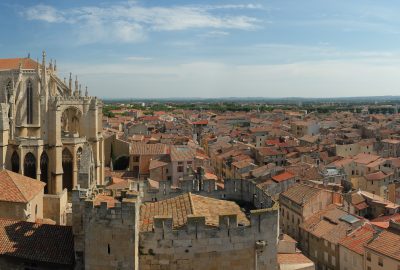
The (Musée d’Art et d’Histoire) in Narbonne has the oldest known inscription relating to the Jewish presence in France. It is an epitaph for the three children of Paragorus: Justus, ...

Occitanie is a very rich region geographically, thanks to its proximity to the Pyrenees and the Mediterranean, but it is also culturally rich. It brings together territories with very different ...

It was around 1298 that the Jews settled in Pézenas, coming from Spain, Portugal and Italy. In the trade of clothes and cattle, they added the activity of the sale of wool and sheets. In 1332, a ...

The traveler Benjamin of Tudela visited Montpellier in 1165. In his travel diaries, he noted the existence of Batey midrashot kevouot le-Talmud in the city. In addition to these intellectual ...
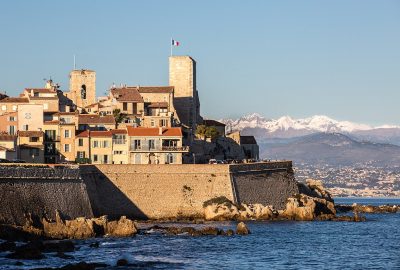
A seaside resort, Antibes is best known for its jazz festival. The Jewish community of Antibes-Juan-les-Pins was created in the 1960s, following the arrival of Jews from North Africa. The was ...
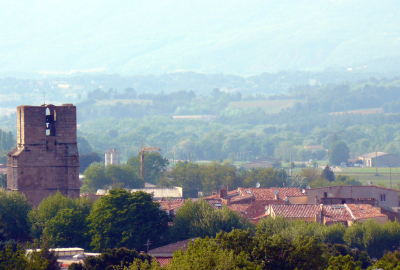
An important village in the Middle Ages -it has a studium papale– Trets had a Jewish community that lived in the present-day rue Paul Bert, known in those days as the carriera judaica or ...
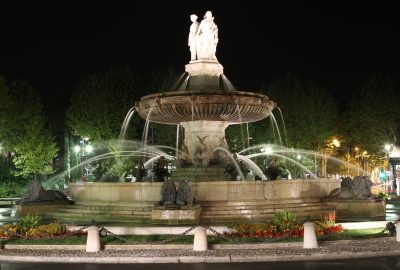
The census ordered in 1341 by Robert, count of Provence, gave the Jewish population of Aix at the times as 1205, representing the 203 families grouped together in the Jewish quarter. In her book ...