Location
Warsaw
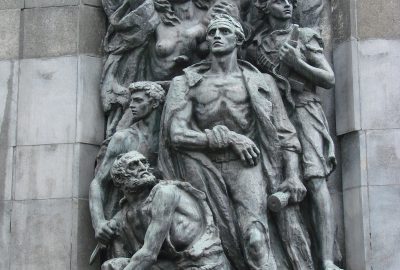
The name alone evokes the martyrdom of the ghetto following the April 1943 insurrection. Events here shall remain firmly fixed in the conscience of humanity. Jews settled in Warsaw beginning in ...
The name alone evokes the martyrdom of the ghetto following the April 1943 insurrection. Events here shall remain firmly fixed in the conscience of humanity. Jews settled in Warsaw beginning in ...
The region is rich in references to Jewish history, including Gora Kalwaria, long ago dubbed “the new Jerusalem”, the very large pre-war community of Lodz, and the capital Warsaw, ...
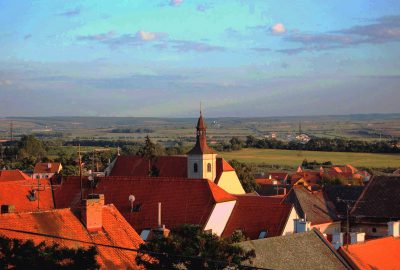
After Prague, until the nineteenth century the largest Jewish community in all the Czech lands lived in the city of Mikulov, south of Brno. Its yeshivoth were renowned throughout the region, even ...
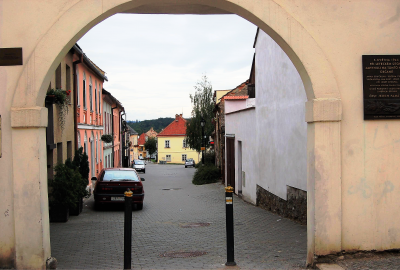
Boskovice is located nineteen miles north of Brno. This large center of Jewish culture and study of the Torah was for many years the headquarters of the chief Rabbinate of Moravia. The ...
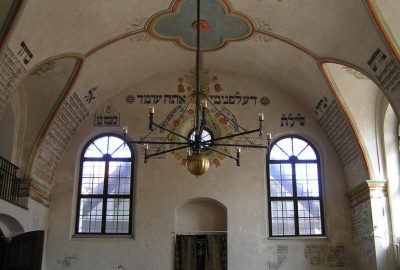
The city of Trebíc is located thirty-one miles north of Brno on the other side of the Jihlava River. Its Jewish quarter, near the city center, was one of the largest in the country: in the ...
A less famous region than Bohemia, Moravia boasts some very old Jewish places of worship of very different kinds, depending on local and regional influences.
The large village of Roudnice nad Labem twenty-five miles from Prague was one of the first small centers of Judaism in Bohemia and merits a brief visit. The oldest Jewish quarter, destroyed ...

Plzen is the principal center and beer capital of western Bohemia. The Jews were expelled from the city in 1504 and not permitted to return for more than two centuries. Following the industrial ...

There is a small Jewish quarter of about ten houses to the southwest of Kasejovice’s central square, linked to the rest of the city by a narrow, straight street. The , in the heart of ...
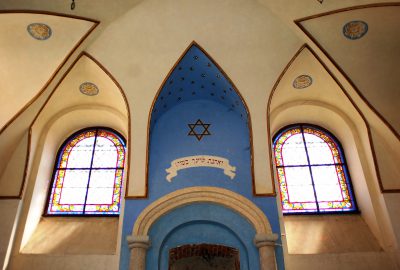
In Breznice in western Bohemia one can still see the former Jewish quarter created in 1570 by the local lord, Ferdinand of Loksany, and enlarged a century and a half later. The two streets ...
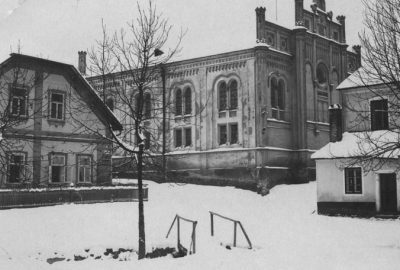
The small town of Golcuv Jenikov near Caslav had a significant Jewish quarter of some fifty homes to the south of the town’s central square. Most have kept their original appearance. ...
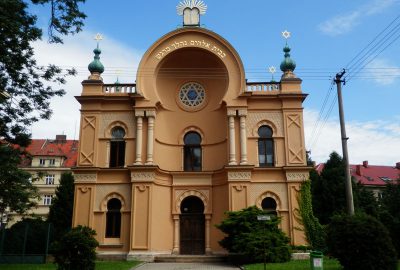
Those with a healthy curiosity should make a quick detour to the small town of Cáslav, located forty-four miles southeast of the capital. Forbidden to Jews until the middle of the nineteenth ...
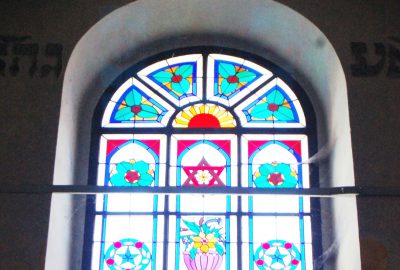
The city of Kolín, one of the most important places of Jewish remembrance in the Czech lands, is worth a trip to see the small streets of the Jewish quarter and the magnificent cemetery. Overrun ...
In the village of Drevikov, roughly sixty miles southeast of Prague, it is possible to see how Jews lived in the villages of Bohemia at the end of the nineteenth century, before their ...
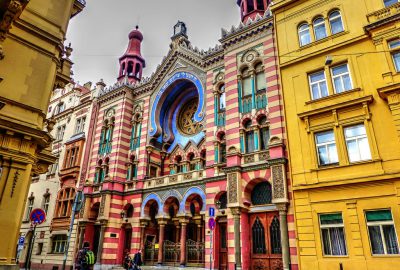
Stuccoed in pink, green or yellow, grand neo-Renaissance and neo-Gothic buildings line the Parizká, the Avenue of Paris. Since the fall of the wall, elegant boutiques have been flourishing on ...
What if you climbed on the shoulders of the Golem or travelled between Kafka’s lines through enchanting Prague or beyond its walls to discover all the traces of Jewish presence in many ...
In this region, you can visit ancient synagogues in Bardejov, Kosice and especially the sublime Presov synagogue. Unfortunately, there are fewer traces of Jewish life in Stropkov.

Half a day will suffice to see the in Szeged, one of the most interesting ones in Hungary (1903). With its Baroque dome, Roman columns, and Byzantine-inspired bellows, the monumental building is ...
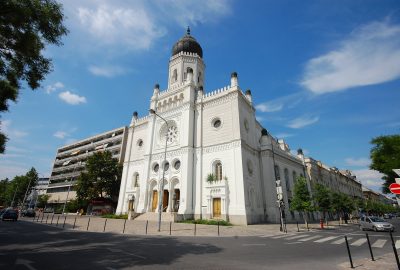
Kecskemét is worth a stop for its two synagogues. The largest is in (nineteenth-century) Romantic style. Today it houses the , where expositions and conferences are regularly held on technical ...
The region is famous for its rebbes, heads of Hasidic communities whose followers revered their thaumaturgical and magical powers. The city of Sátorajújhely, where 4,000 Jews lived in 1939, ...

Built in 1795, the looms over the old Jewish quarter with its elegant white facade. With the Protestant church on the other side of the small valley, it symbolizes the religious balance of a ...
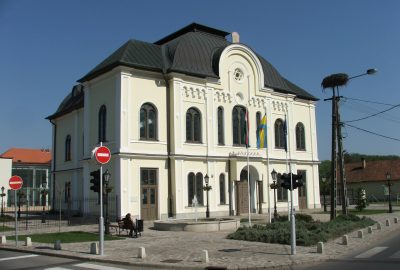
In the seventeenth century, the Jews of Galicia and Silesia (modern-day Poland and Ukraine) were drawn to this region by trade in tokaj, a syrupy, amber-tinted wine very popular at the courts of ...
This region of rolling hills punctuated by vineyards merits a two-day visit for memory’s sake. There remains, in fact, little evidence of Jewish life here, as most of it was eradicated by ...
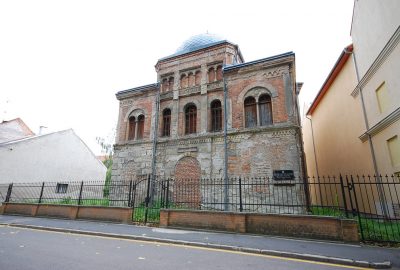
Within this Baroque city, where splendid thirteenth-century houses have been transformed into museums, restoration projects have brought two medieval synagogues back to life. Built in the early ...
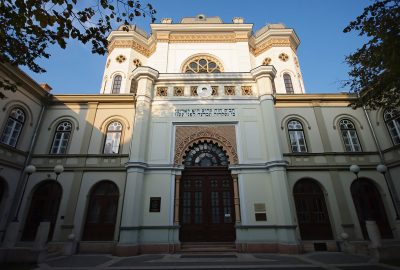
The immense gray dome of stands out against the industrial landscape. Completed in 1870, the structure reflects the prosperity of the city’s Jewish middle class -lawyers, bankers, and ...
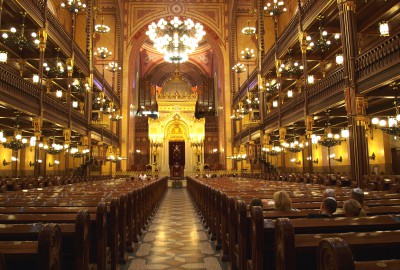
Visiting Budapest requires at least three days. The capital was born from the unification of three cities: Buda and Óbuda on the western shore of the Danube, and Pest on the eastern shores. ...
Archaeologists have recently unearthed traces of a Jewish presence in Salona (Solin), capital of Roman Dalmatia and sister city to Split, that dates as far back as the first centuries C.E. Salona ...
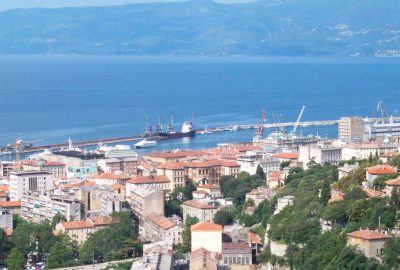
The Ashkenazic synagogue, built in the nineteenth century after a design by Hungarian architect Lipot Baumhorn, was destroyed in 1944. The Sephardic synagogue, built in 1928, is still used by the ...
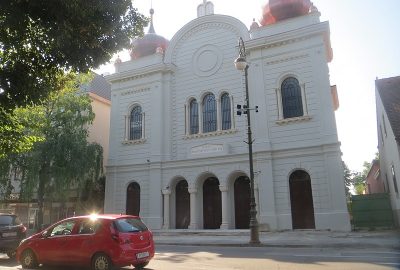
Varazdin is an important trading town located between Vienna and Trieste. The Jewish presence probably dates from the 18th century, mainly from Moravia, Hungary and Austria. They worked there ...
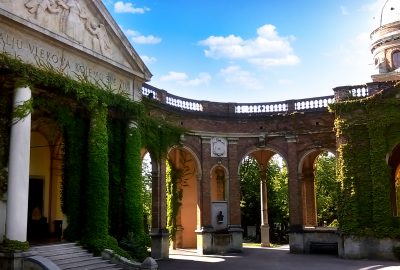
Zagreb is the capital of Croatia. The Jewish presence probably dates back to the 10th century, originating from surrounding areas but also from Spain and France. A place of prayer was mentioned ...