Location
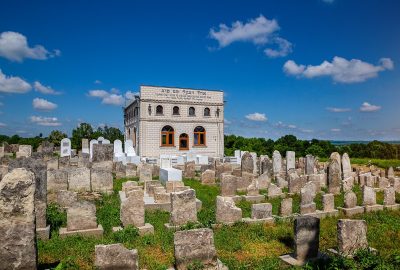
Medzhibozh
The terrifying war against Ukraine changes, of course, the function of these pages devoted to the Jewish cultural heritage of that country. Many of the places mentioned were razed to the ground ...
Ukraine / Eastern Galicia, Podolia, and Bukovina
The terrifying war against Ukraine changes, of course, the function of these pages devoted to the Jewish cultural heritage of that country. Many of the places mentioned were razed to the ground ...
The terrifying war against Ukraine changes, of course, the function of these pages devoted to the Jewish cultural heritage of that country. Many of the places mentioned were razed to the ground ...
The terrifying war against Ukraine changes, of course, the function of these pages devoted to the Jewish cultural heritage of that country. Many of the places mentioned were razed to the ground ...

Ukraine, the largest of the former Soviet Republics, is, along with Belarus and Lithuania, heir to the former "Pale of Settlement", the buffer zone designed t contain the Jews within the ...
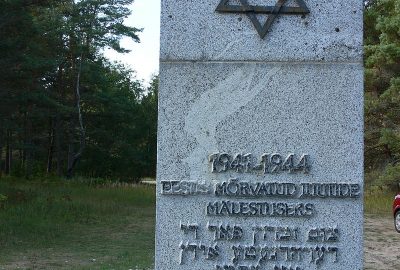
Of interest in Klooga is the Shoah Victims’ memorial. A concentration camp occupied the site and another was in Vaivara. Between August and September 1943, the 9,000 people still present in ...
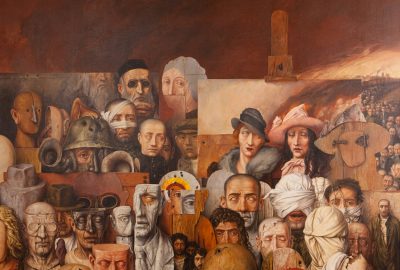
The capital of Vilnius, once known as the “Jerusalem of the east” has few Jewish monuments today. However, in the last few years, the Museum of the Gaon of Vilnius has made ...
The city of Bobruysk was once a typical Belarusian shtetl. In 1897, 20,759 Jews lived here (60.5% of the population), while in 1926, the Jewish community had a population of 21,558 (42%). To form ...
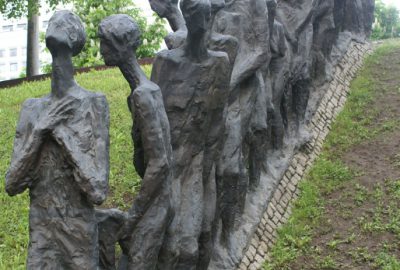
Minsk, the capital of Belarus, first welcomed Jews in the fifteenth century. They settled here to engage in the trade between Poland and Russia. After Poland was divided, the Jewish community ...
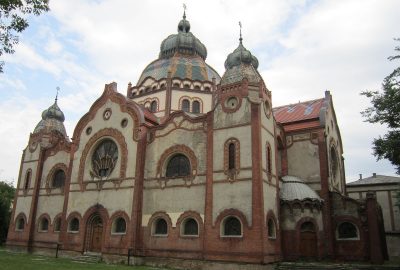
The Jewish presence in Subotica probably dates back to the 18th century, when the town was founded. There was a synagogue at the end of that century. Many of Subotica’s Jews took part in ...

The Jewish community of Voivodina’s capital was, until World War II, one of the most prosperous in all Yugoslavia. Present since the city was founded in the late seventeenth century and ...

The Jewish presence probably dates back to Roman times. However, administrative records show a Jewish presence in Nis from the 17th century onwards. 800 Jews lived in Nis at the turn of the 20th ...
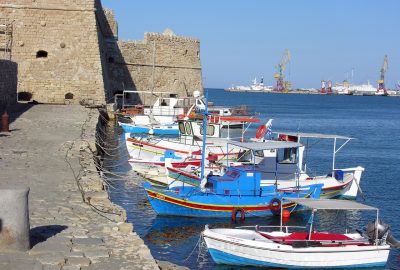
Within the Venetian outer walls of ancient Candia, the old Jewish quarter is found right beside the seafront. Four synagogues once stood in this district; its perimeter today is delimited by ...
The Jews have a unique and turbulent history on Crete, one of the most important islands in the Mediterranean. Under the Byzantine Empire, Cretan Jews believed the hour of the final redemption ...
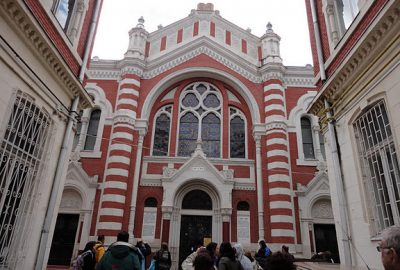
At the foot of huge Postavarul Mountain and the Poiana Brasov ski station, Brasoc unquestionably remains Transylvania’s most fascinating city, with its citadel, ramparts, and medieval ...
The spirit of Austro-Hungarian Cacania still breathes within the medieval cities that lie on the Transylvanian side of the Carpathians, populated until recently by Swabians and Saxons. Lynxes and ...
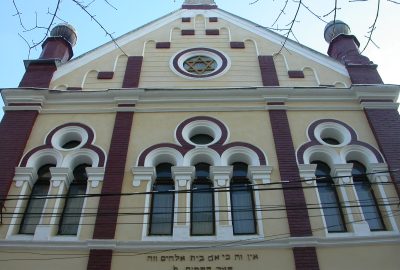
At the northern border of Transylvania lies Sighet Marmatiei, unquestionably the region’s most original and charming little city, where Romanian, Hungarian, Roma and Ruthenian ...
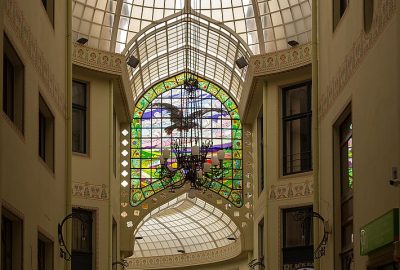
The community of Oradea, exterminated during the war, dates back to the 15th century. Today, a still works for the few Jews in the city. was inaugurated at the end of 2018 in the recently ...

Cluj is today Transylvania’s most important city. The Jewish presence became significant here only starting in the late eighteenth century. The community, divided between those of ...
North of Wallachia and west of Moldavia, at the center of the Carpathian arc, stretches Transylvania -the land “beyond the mountains”, also called Erdely in Hungarian and ...
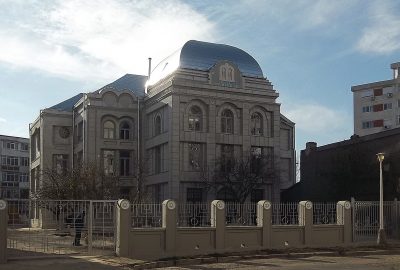
The city of Galati has been a major Romanian trade hub since the seventeenth century. In 1868, it was the theater for acts of vandalism against Jews following accusations of their having ...
For the purposes of this tourist and cultural guidebook, we will not linger on the extermination camps, which are “documents to barbarity”, as Walter Benjamin put it, and not to ...
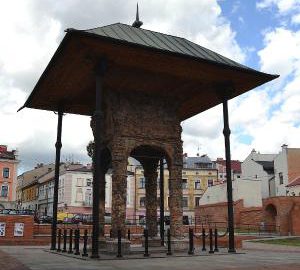
In Tarnów, half of the population was Jewish: between 20,000 and 25,000 people worked principally in the clothing and hat industries (sixty or so businesses), arts and crafts, and trade. Some ...
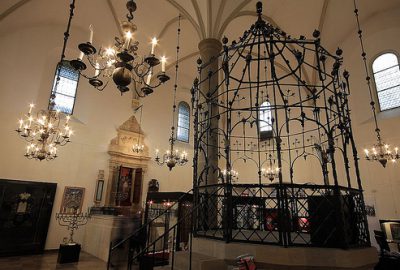
In 1335, King Casimir the Great founded an independent city near Kraków, Kazimierz, in which he permitted Jews to settle around Sukiernikow (Clothier) Street (now called Jozefa Street), next to ...

From Bialystok, a detour toward Tykocin is imperative: it has effectively preserved the structure and architecture of an old shtetl. This town, tiny today, was in times past more important than ...
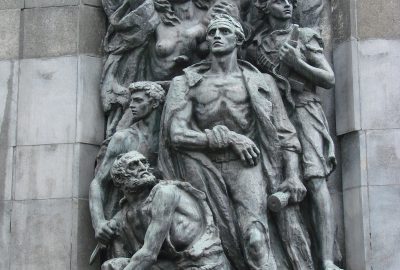
The name alone evokes the martyrdom of the ghetto following the April 1943 insurrection. Events here shall remain firmly fixed in the conscience of humanity. Jews settled in Warsaw beginning in ...
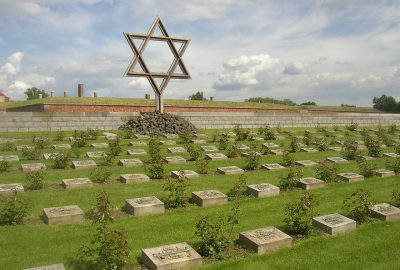
The lovely little garrison town of Terezín in the same region was created at the end of the eighteenth century during the reign of Joseph II. In 1942, the Nazis totally emptied the city of ...
The large village of Roudnice nad Labem twenty-five miles from Prague was one of the first small centers of Judaism in Bohemia and merits a brief visit. The oldest Jewish quarter, destroyed ...

Bardejov possessed a large Jewish quarter where some 5,000 Jews lived before World War II. This small medieval city of 35,000 inhabitants lies thirty-seven miles north of Presov, near the Polish ...
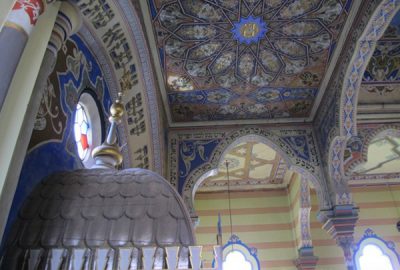
Not far from Kosice, Presov was also an important center of Jewish life. More than 6,000 Jews from the city and surrounding villages were killed during the war. Today fewer than 100 Jews live ...

The capital of eastern Slovakia, Kosice is a large industrial city of 250000 inhabitants. Its sizable Jewish community was almost totally annihilated during the Second World War. The city os now ...