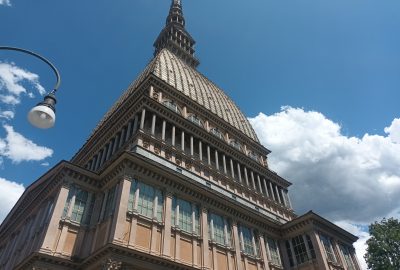
Location
Turin
Turin is one of the finest examples of the crossroads of Jewish cultures: Ashkenazim from the north, Provençals following the expulsion, Sephardim following the Inquisition, Italians for 2 ...
Turin is one of the finest examples of the crossroads of Jewish cultures: Ashkenazim from the north, Provençals following the expulsion, Sephardim following the Inquisition, Italians for 2 ...
Unjustly slighted as a tourist destination, Piedmont is one of the richest regions of Jewish heritage in Italy, with magnificent small Baroque synagogues like those of Carmagnola, Casale ...
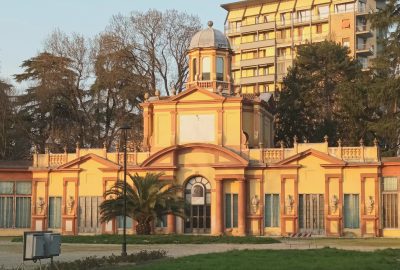
Modena has the great merit of being known for quite different monuments. Architectural and religious monuments, as in many Italian cities, and gastronomic masterpieces such as its famous vinegar. ...

Ferrara, a sublime city with a medieval centre listed as a World Heritage Site, does not appear to be a vast, museum-like enclosure encircled by a city. On the contrary, its historic centre is ...
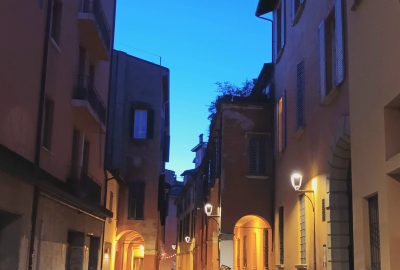
Bologna is famous for having been one of Europe’s leading cities in the Middle Ages. Thanks to its large population living within its walls, the wealth of local agriculture, the development ...
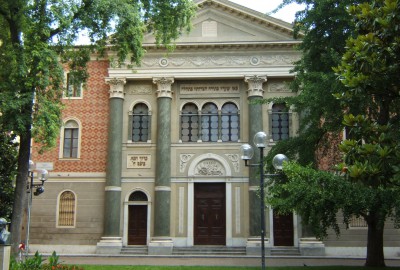
The rich region of Emilia-Romagna is definitely worth a week visit. Located on the south of the floodplain of the Po River, it includes cities like Bologna, home to a museum that is a model of ...
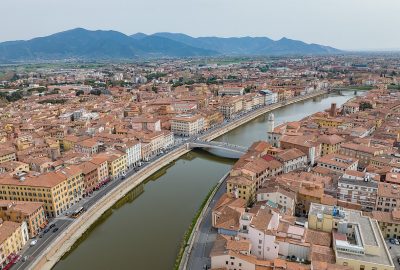
The Jewish presence in Pisa probably dates back to the 12th century, but could be older. Benjamin of Tudela described the city as follows: “All the inhabitants are courageous; no king or ...
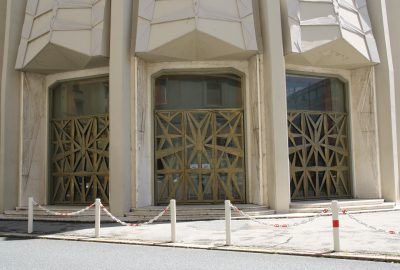
A visit to Livorno is required in the name of remembrance, even if the urban renewal projects of the early twentieth century around the port and the bombings of the Second World War in 1943-1944 ...

Siena’s ghetto was created at the same time as that of Florence in 1571. The large Jewish presence in the city is verified by documents from the beginning of the thirteenth century that ...
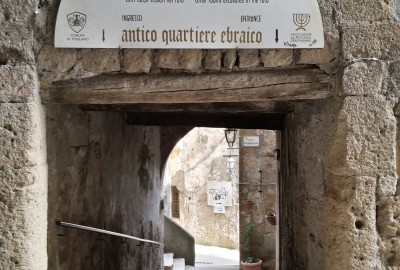
Located at the extreme south of Tuscany among the hills and cypresses, the borough of Pitigliano rises from a rocky pinnacle. Once called “little Jerusalem” by Tuscan Jews, the ...
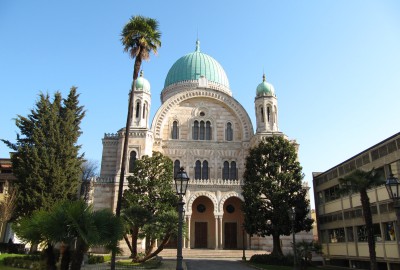
The former ghetto of Florence was located in the heart of the old city center near the market in a zone totally destroyed and the end of the twentieth century, situated today between Via ...
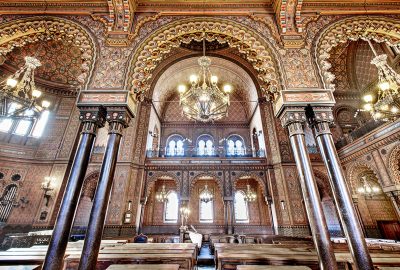
With cities like Livorno and Florence, Tuscany represents an important part of the history of Jewish life in Italy, although evidence of the longstanding Jewish presence here is less abundant ...
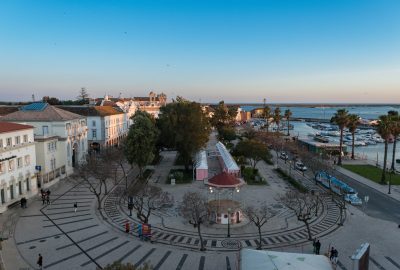
Capital of the Algarve region in southern Portugal, the city of Faro was home to a large Jewish community, expelled in 1497. A number of them continued to live there as conversos. Jews did not ...
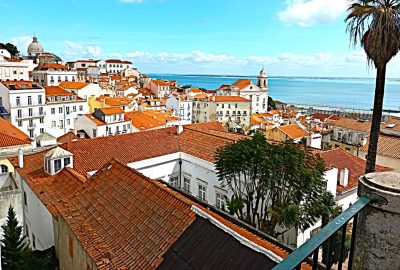
If Jews had to flee the city in the 16th century, Lisbon was also the city that welcomed Jews fleeing the Spanish Inquisition or the transit of Jews fleeing Nazism to the American continent. But ...
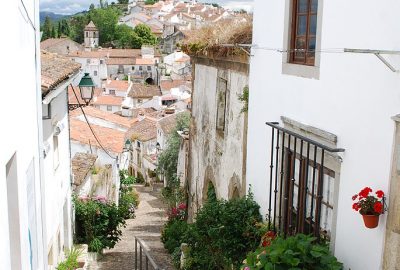
The Jews who lived within the walls of the little hilltop town of Castelo de Vide were engaged in the traditional activities of commerce, crafts, and sometimes medicine. The population grew after ...
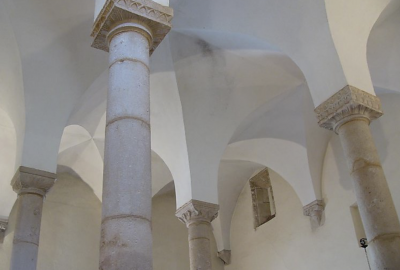
Although there was an organized community in Tomar at the turn of the fourteenth century, indicated by the inscription on the tombstone of Rabbi Joseph of Tomar, who died in Faro in 1315, it was ...
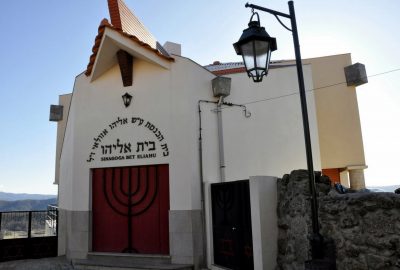
The little community of Belmonte of between 100 and 300 souls was “discovered” in 1920 by the engineer Samuel Schwarz. Its existence was revealed to the world by Frédéric ...
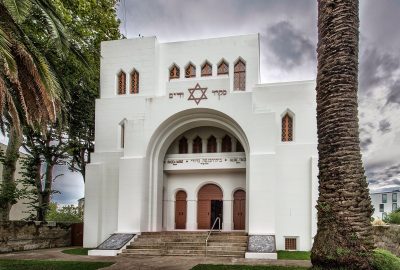
Porto is the capital of northern Portugal. It is the country’s second largest city after Lisbon. It is best known for its historic monuments and its wine. The Jewish presence dates back to ...
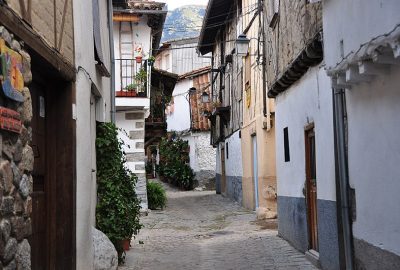
Although the Judería in Hervás was small, a local proverb that “in Hervás there are many Jews” made the quarter famous. It stood close to the Ambroz River near the town’s exit. ...
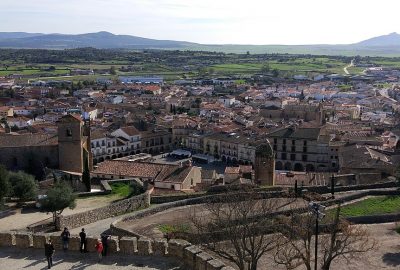
The community of Trujillo is first mentioned in 1290. Just before the expulsion, it had 150 members. All of them went to Portugal. Not long ago, construction in the back of a pharmacy brought to ...
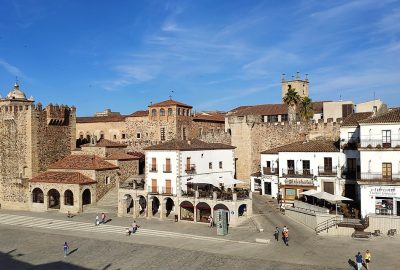
Cáceres had a fairly sizable Jewish presence after the Christian reconquest. In 1479, 100 married Jews were listed in a community with some 650 members. They lived in two juderías: the ...
It is likely the history of Spain’s Jews began in Estremadura. Vestiges from the third century bear witness to them, and, according to the twelfth-century chronicler Abraham ibn Daud, the ...

Seville’s Santa Cruz quarter, protected by the Alcazar, was formerly the city’s famous judería. If the English like to dine early compared to the French, they enjoy this meal at ...
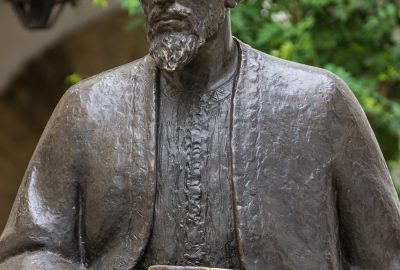
Homeland of Maimonides, Cordoba was under the Arab Caliphate of Abderahman III the greatest Andalusian juderia. Under the Muslim rule, the Jewish community lived in harmony with the conquerors, ...
Famed in the eleventh century for the influence of Talmudists such as Isaac ibn Gayata, Isaac Alfasi, and Joseph ibn Migas, who founded the so-called “Lucena School”, Lucena preserves ...
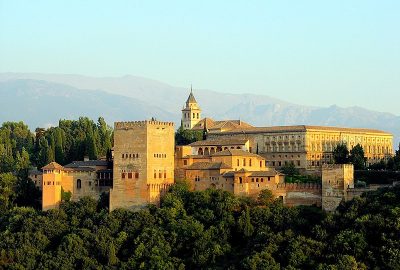
Granada’s splendor was at its apogee in the eleventh century, when Samuel ha-Nagid and his son Joseph were in charge of the kingdom. The large Jewish population exceeded 5,000 and reached ...
It is possible to date the presence of Jews in Andalusia to the Council of Elvira (303-09), when references were made to the need to separate Jews and Christians.

The call is clearly defined by a small square and the Carrer de la Call. It is one of Spain’s most important for the quality and richness of its houses, even if urban development work has ...
There have been Jews in the Balearic Islands since the Roman occupation. After Jaume I won the islands from the Arabs, many Jews arrived from Catalonia but also the south of France and North ...
Teruel became important as the supply center for Catalan-Aragónese troops sent out to conquer Valencia. The Jews here became specialized in weaving wool. The Lonja, or produce exchange, was open ...