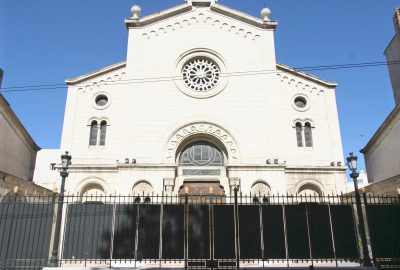
Location
Marseille
The Jewish presence in Marseille dates back at least to the 6th century as is attested by Grégoire de Tours, but probably dates back to the Roman Empire. One of their main commercial activities ...
France / Provence-Alpes-Côte d’Azur
The Jewish presence in Marseille dates back at least to the 6th century as is attested by Grégoire de Tours, but probably dates back to the Roman Empire. One of their main commercial activities ...
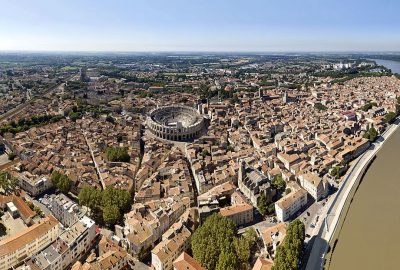
The medieval rue des Juifs is the present-day . As in Aix-en-Provence, the Jewish quarter was totally transformed and integrated into the town after the expulsion of the Jews from Arles in 1493. ...
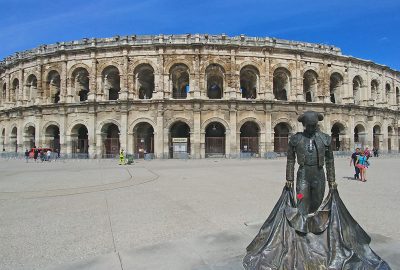
The Archaeological Museum (Musée Archéologique) possesses a funerary inscription stating “This is the sepulcher of the venerated sage Isaac”. has copies of three funerary inscriptions ...
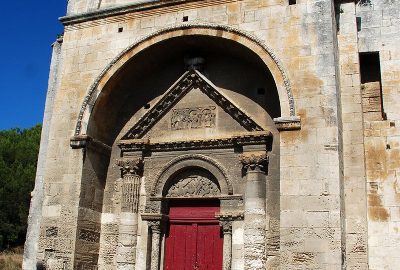
The only remaining trace of Tarascon’s Jewish community, which was large in the Middle Ages, is with its gray-fronted houses. Some of the houses have been restored. Not far from ...
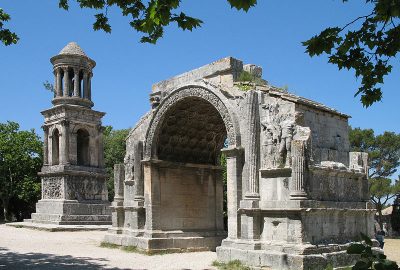
The Jewish cemetery is not far from the Saint Paul de Mausol monastery. Most of the tombstones date from the nineteenth century, although this was also the site of the medieval cemetery. The ...
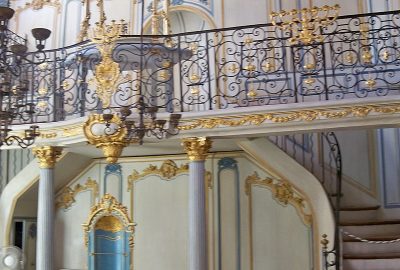
The Jewish presence in Cavaillon goes back to at least the thirteenth century. The Jews lived on rue Hébraïque, which became their obligatory residence in 1453 and has changed very little since. ...
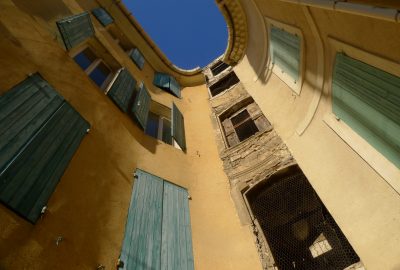
The Jewish presence in L’Isle-sur-la-Sorgue is attested from 1278 onwards and most probably dates from much earlier. Several families lived in the Villefranche district, where the is ...
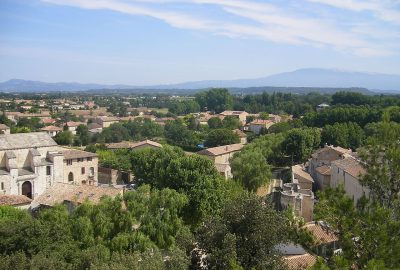
Pernes-les-Fontaines remained the capital of Comtat Venaissin until Pope John XXII bought back the rights over Carpentras from its bishop. Two elements reveal the Jewish presence in this town: ...
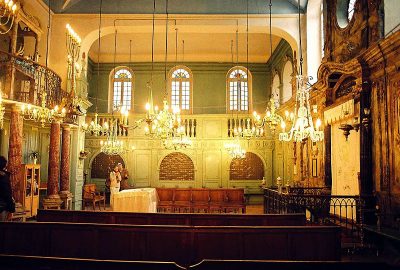
Carpentras had a Jewish population when it was yielded to the papacy by the king of France in 1274. In the fourteenth century, the Jewish quarter on rue Fournaque, near the town walls, was home ...

The first attestation of a Jewish presence in Avignon dates from the fourth century. It is a seal representing a five-branch menorah and bearing the inscription avinionensis. Jewish commercial ...

The term Provintçia in the Hebrew sources corresponds roughly to Provence and Languedoc. In the history of France’s Jews, this region is notable for the outstanding figures and works that ...

The Jewish community in the historical capital of the Gauls and, for historians, capital of the French Resistance, has now regained an undeniable dynamism. There are many notable sites ...
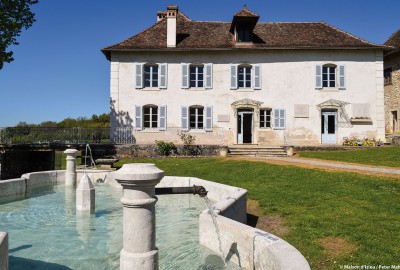
Jews lived in Roman Lugdunum but disappeared from Lyon because of the expulsions. It was only under the reign of Louis XV that a community was re-created with immigrants from Comtat Venaissin and ...

The Jewish presence in Hégenheim seems to date back at least to the 17th century. 14 Jewish families were counted in 1689. Jewish life developed there, the community growing to more than 400 ...

The Jewish presence in Colmar probably dates from the 13th century. Administrative documents confirm this presence. A synagogue was destroyed in 1279. The community grew, in particular thanks to ...
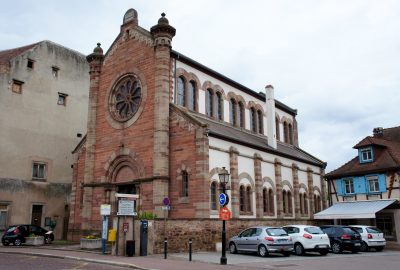
Traces of the old Jewish community can still be seen in this charming tourist town. On ruelle des Juifs, an arched doorway with an engraving in Hebrew signals the entrance to the old synagogue, ...
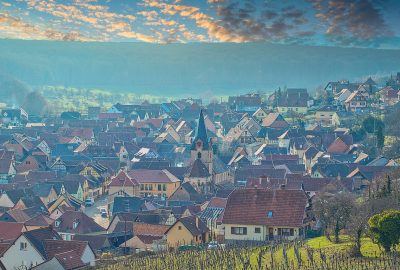
The Jewish presence in Rosenwiller dates back at least to the 14th century, a writing by Charles IV, mentioning the Jewish cemetery. A letter dealing with a dispute with a certain Haym de ...

In this suburb of Strasbourg, one can see a fine eighteenth-century mikvah. A room dedicated to Davis Sintzheim (the first Grand Rabbi of France and director of the Talmudic school ...
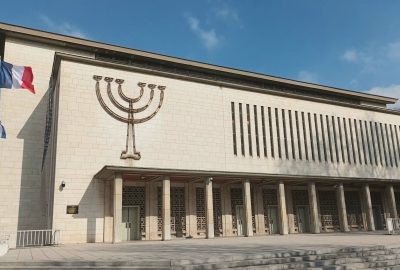
Strasbourg, the regional capital, is also home to the European Parliament, as witnessed by the European flags welcoming you at the train station. This magnificent city, at the heart of many ...

This small town lying in the shadow of an old abbey once had a very active community. You can still see the birthplaces of its two famous Jewish sons: the painter , who was born here in ...
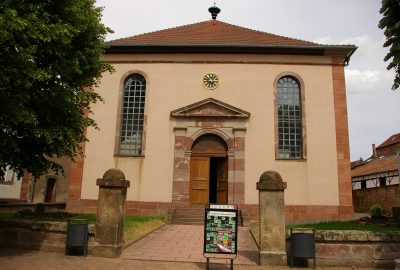
The Jewish presence in Bouxwiller seems to date from the 14th century. The princes of Hanau-Lichtenberg adopted Protestantism and were open-minded towards Judaism and its presence during the ...
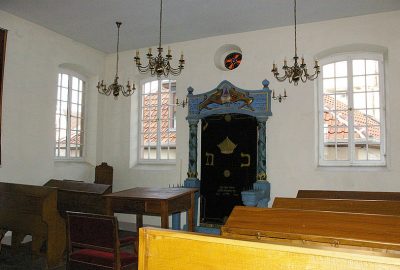
The Jewish presence in Pfaffenhoffen probably dates from the beginning of the 14th century. In 1683, the first synagogue in Pfaffenhoffen was built. However, it was destroyed shortly afterwards. ...
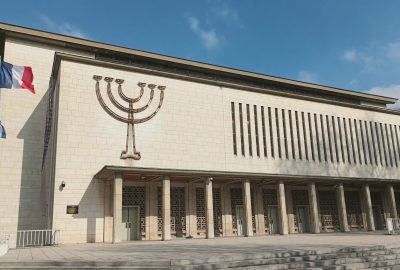
Alsace is rich in Jewish history. In the village of Schirrhoffen, for example, in around 1850, the population of 650 included some 450 Jews. Today, there are over 200 specific sites (synagogues, ...
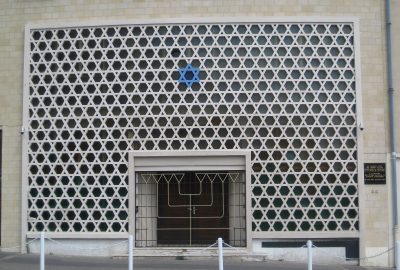
Traveling rabbis served the small local communities, made up of several or more families (some ten at Evreux and Lisieux, around two hundred at Le Havre). The only sizable community structure, a ...
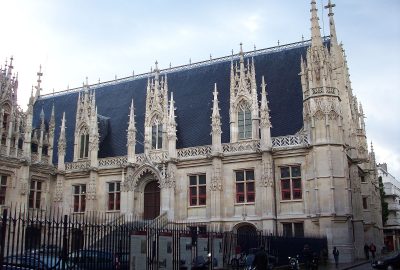
In medieval times, there was an intense intellectual life around the synagogue’s Talmudic school in what was called “Le Clos aux Juifs” (the Jews’ Enclosure). Contrary to ...
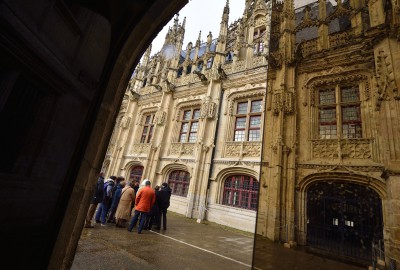
Jewish life in Normandy was focused around Caen and Rouen. The Jewish community lives in the region since the Roman empire until their expulsion in 1182. During the Middle Ages, Normandy was the ...
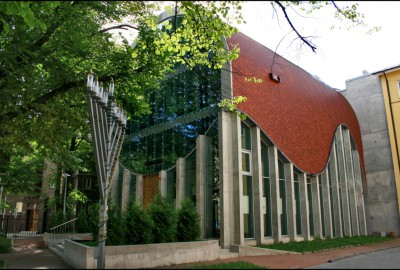
The Estonian Jewish community is the smallest of the Baltic states, and historically, the one that played the least important role in Yiddishland before the Shoah. Indeed, the community never ...
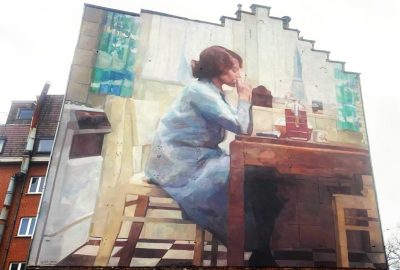
Brussels, the capital of the European institutions, a celebratory place appreciated by tourists, but also a city immortalised by the numerous comic strips born there, remains an amazing city. The ...
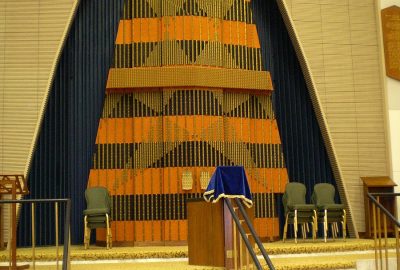
There is no historical record of organised Jewish communities in the British Isles before the Norman invasion of 1066, when King William encouraged Jews -mainly merchants and craftsmen- to follow ...

“Here is buried the body of Sieur Salomon de Perpignan, one of the founders of the Free Royal Drawing School established in the year 1767 of the glorious reign of Louis XV in the city of ...