Location
Brumath
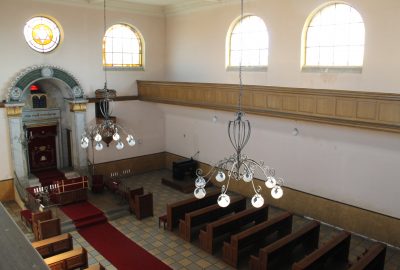
The first mention of a Jewish family in Brumath dates back to 1562. Documents from the end of the century mention the presence of a Jew named Susskind. In 1693, 4 Jewish families were registered ...
The first mention of a Jewish family in Brumath dates back to 1562. Documents from the end of the century mention the presence of a Jew named Susskind. In 1693, 4 Jewish families were registered ...
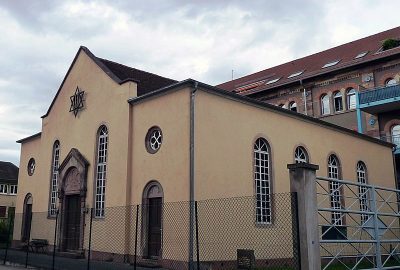
The Jewish presence in Benfeld dates back from the Roman Empire. During the Middle Ages, the community was lively and as important as the one in Strasbourg. The Jews were expelled from the city ...
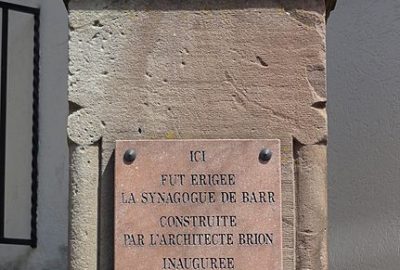
Banned from the communes attached to the bishopric of Strasbourg until the French Revolution, the Jews made a timid return to the region afterwards. Of the 800 Jews present in the surrounding ...
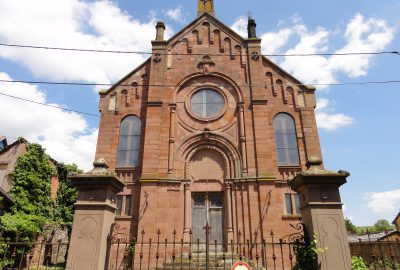
The Jewish community of Balbronn is registered in the censuses of the city since 1665. Some medieval houses of the city center still bear the traces of mezuzot. is located 47-48 ...
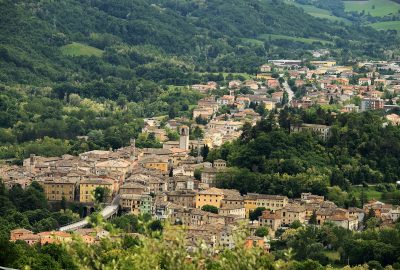
Jews settled in Pergola in the thirteenth century. The building that housed the synagogue can still be seen on Via Don Minzoni, 9. A Jewish cemetery was identified on the road ...
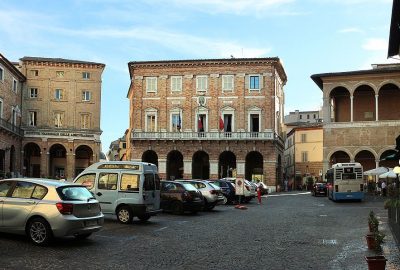
There are little remaining traces of the Jewish presence in Macerata. You can nevertheless visit the which contains archives mentioning the presence of a Jewish community in the city since ...
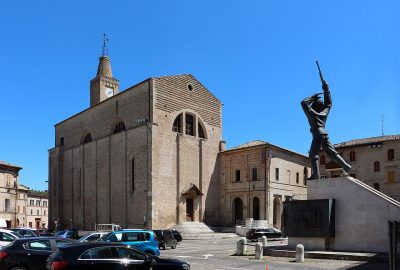
Jews settled in Corridonia in 1436. The only remaining trace of this community is the ghetto entry gate located Via Antonio Mollari.
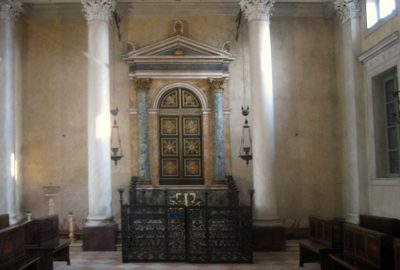
Sabbioneta is a special city: it was created in the sixteenth century by prince Vespasiano I Gonzaga Colonna according to the architectural principles of the Renaissance. In this ...
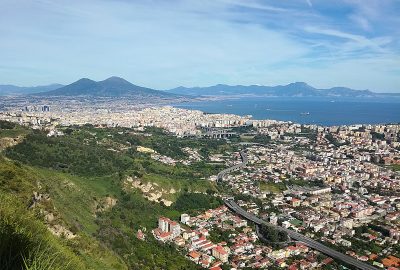
Naples is known for Mount Vesuvius, the volcanic enthusiasm of its people, the pages of Elena Ferrante and more recently, the films of the great director Paolo Sorrentino. The Neapolitan Jewish ...
A Jewish community established itself in Soragna when Jews were expelled from Parma in 1555 and from Piacenza in 1570. In front of the city’s castle, one can find the oratory dating from ...
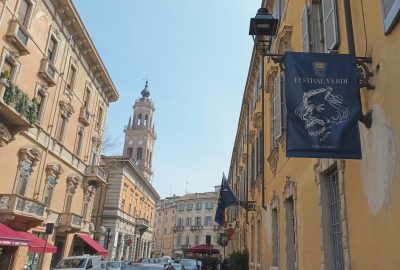
A famous inspiration for Stendhal, Parma is a city with a wealth of cultural institutions: museums, theatres and concert halls. It was also the regional birthplace of Verdi, who is celebrated ...
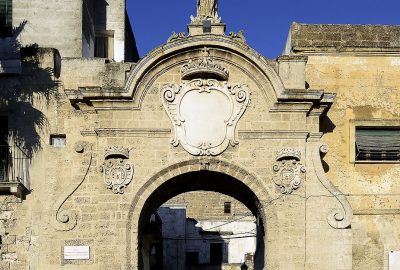
One of Oria’s gates, (or Porta Taranto) leads to the old giudecca of the city. The gate dates from the fifteenth century and bears a bronze mezuzah. There are no traces left of the Jewish ...
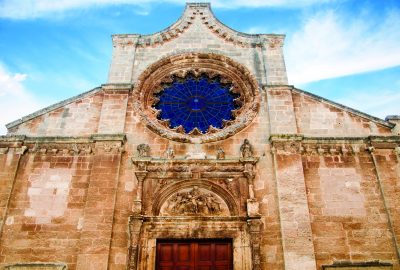
Historians believe – although the exact dates are still lacking – that there was a Jewish quarter in the small town of Manduria between the thirteenth and seventeenth centuries. It is ...

Lecce had one of the most prominent Jewish settlements in the Neapolitan kingdom before the expulsion of the Jews. Though there is no evidence of a Jewish presence prior to the 15th century, ...
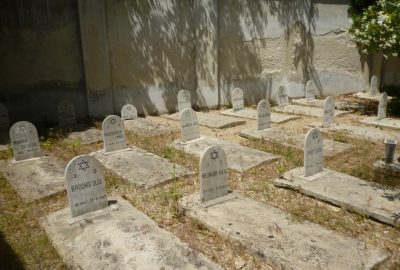
Unlike other cities in the region of Apulia, there are now very few traces of the Jewish presence in Bari, although we know that the community was very developed. The city was, in the 12th ...
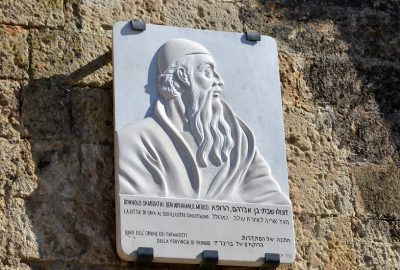
Thanks to its geographic position and the presence of Brindisi, Otranto, Bari, Trani and Barletta ports, Apulia has been a transit point for many Jewish exiles -most heading to Israel. This ...
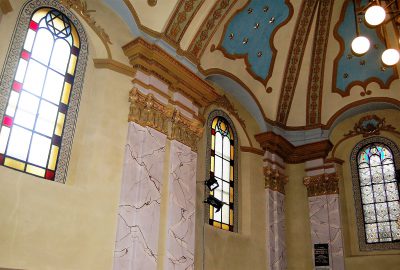
Rakovnik is located between Prague and Plzen; 32 miles west of Prague, and 30 miles northeast of Plzen. Jews are on record as living in Rakovnik since 1441. Between 1618 and 1621, three Jewish ...

Hermanuv Mestec is located in Bohemia, 56 miles south from Prague. The Jews began settling there in the fifteenth century, and the community reached its peak in the nineteenth century. The ...
The Jewish presence in Breclav dates to the sixteenth century. The ghetto, constructed in the seventeenth century, can still be visited. The neo-Roman style synagogue was built in 1888. Closed by ...
The presence of a Jewish settlement in Holešov dates back to at least the 16th century. Holešov hosted one of the most important Jewish communities in Moravia, a centre of culture and education. ...
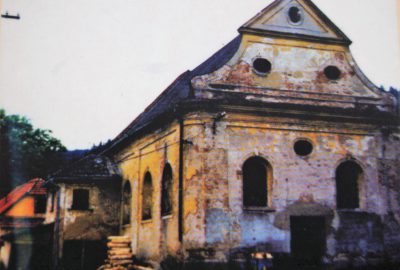
Jews began settling in Lomnice in 1656. The eighteenth-century ghetto is composed of a square where one can still see the rabbi house and yeshiva. The baroque-style was built in 1870 in the ...
Dolni Kounice is a small town of Moravia located 115 miles south of Prague. Jews began settling there in the Fifteenth century and part of the ghetto has been preserved. The Renaissance-style was ...

Polná is located in Bohemia, about 70 miles south-west of Prague. Jews started settling in Polná in the fifteenth century. The ghetto was created in the seventeenth century, some houses can still ...
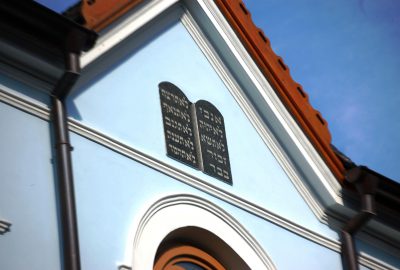
Hartmanice is located South-West of Bohemia, in a mountainous region close to the Austrian border. The , also called “Mountain Synagogue” was built in 1881 to welcome the growing ...
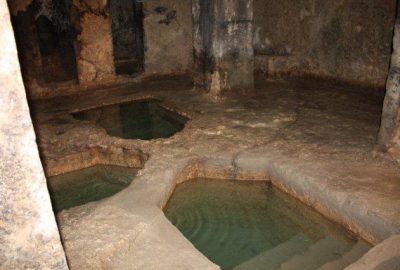
There is proof of a Jewish community in the Middle Ages in Sicily, particularly in the towns of Palermo, Messina, Taormina and Syracuse. This prosperous community was mainly in activities of ...
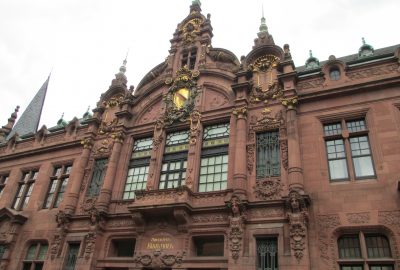
The library in this university town of Heidelberg on the banks of the Neckar River contains a collection of Hebrew manuscripts dating back to the twelfth, thirteenth, and fourteenth ...
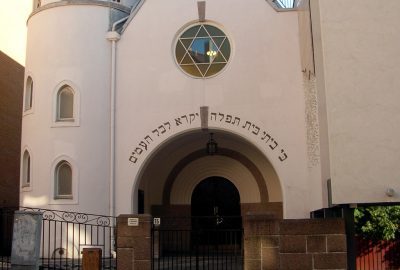
It was not until the law passed in 1814, prohibiting the entry of Jews into Norway, was revoked in 1851, that Jews could officially settle in Oslo. A small Jewish community was organised and ...
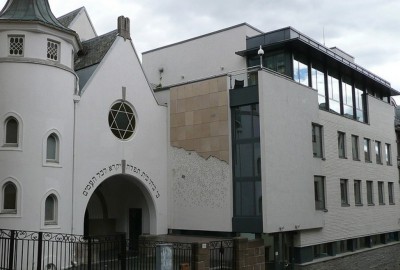
Visitors walking on the street named after Norway's national poet Henrik Wergeland (1808-45) will be reminded that it was Wergeland who was behind the law that allowed Jews to immigrate to this ...
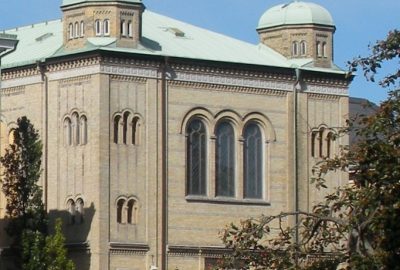
Jews have lived in Göteborg since 1782. The Conservative (masorti) rite synagogue is located at the same address as the community center. There is also an Orthodox minyan in Göteborg. ...